

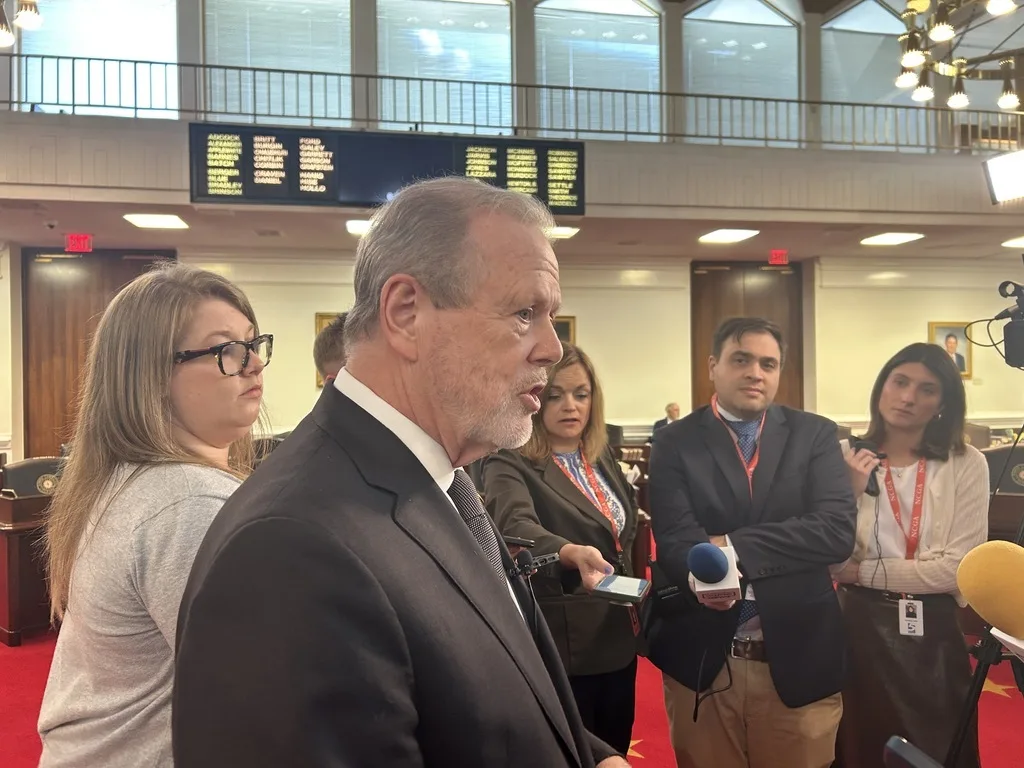
North Carolina lawmakers have presented an outline for a state budget after nearly a year of delays past the official deadline, yet several significant disagreements still hinder a finalized agreement. Senate leader Phil Berger and House Speaker Destin Hall have carved out a spending framework but have yet to resolve critical debates including the pace of personal income tax cuts, funding for a children’s hospital, and teacher salary increases.
The original deadline for passing the two-year budget expired more than 300 days ago, with no comprehensive plan in place. Senate Democratic Leader Sydney Batch has highlighted the delay by placing a digital clock outside her office counting up the time since the state’s budget was due. Despite the publicized progress, Batch remains skeptical and says the proposals so far seem designed more to appeal to political bases than to address pressing statewide needs.

Both Berger and Hall recently unveiled that the personal income tax rate will continue to decline but at a slower pace than initially planned. While some funding for a children’s hospital has been proposed, the level falls short of advocates’ expectations, and teacher raises are set to be smaller than what many lawmakers and the Democratic governor had sought. The leaders also plan to include two constitutional amendments on the ballot: one that would cap the personal income tax rate permanently at 3.5%, and another that would empower the legislature to restrict how much local governments can raise property taxes.
This budget framework aligns with a previously agreed overall spending plan of approximately $32.6 billion for the first year and $33.3 billion for the second year. However, lingering disputes about recovery funds—originally proposed at $725 million for Hurricane Helene recovery—and whether those funds should be included within the budget or handled through separate legislation remain a sticking point. Ultimately, the House’s preference to separate this recovery funding prevailed.
Lawmakers hope to finalize and put the budget up for a vote by mid-June. But with November elections approaching, delays in budget approval may generate voter frustration. As the budget negotiations progress, statewide priorities such as healthcare, disaster recovery, and innovation programs remain under scrutiny, emphasizing the complexities lawmakers face in reaching a comprehensive agreement.