

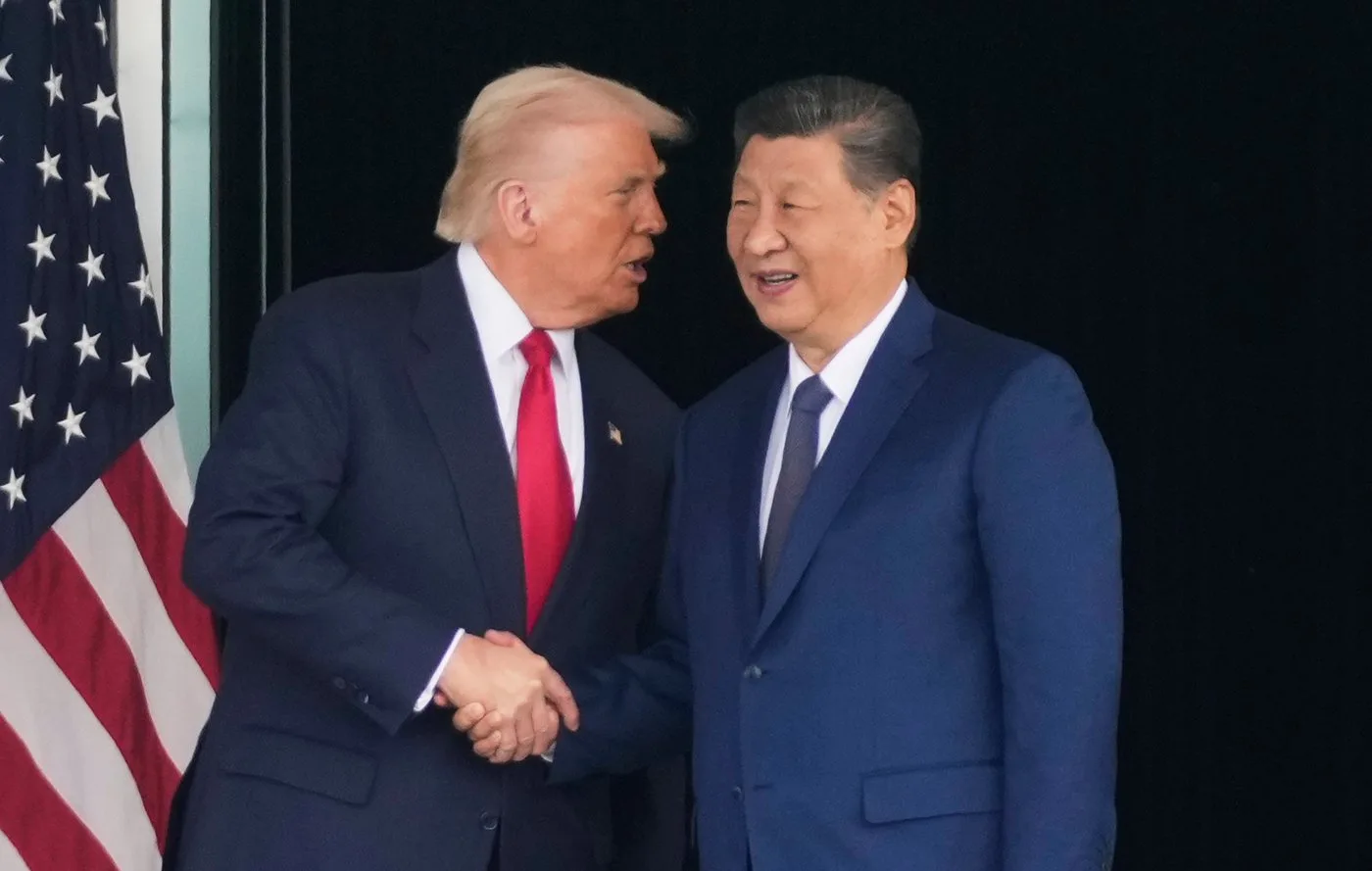
President Donald Trump arrived in Beijing for a high-stakes summit with Chinese leader Xi Jinping, focusing on stabilizing the economic relationship between the United States and China. While the tone of the talks remained cautiously optimistic, the underlying issues that have strained bilateral trade—such as tariffs, rare earth materials, and emerging technologies like artificial intelligence—continue to pose significant challenges.
The summit appears set to extend a trade truce reached the previous October, with limited concrete policy shifts expected. China is likely to announce plans to increase purchases of American soybean, beef, and Boeing airplanes, reflecting U.S. efforts to bolster domestic agriculture and manufacturing sectors. Additionally, U.S. officials have proposed establishing a Board of Trade to facilitate ongoing dialogue and manage economic disputes more effectively.

Despite President Trump’s statements about increased U.S. business with China, data tells a more complex story. Last year, China’s purchases of American products declined by nearly $50 billion compared to 2022, partially due to Beijing halting soybean imports amid past trade confrontations. Over the same period, the United States’ import share from China shrunk dramatically, dropping from 22% at the start of Trump’s first term to just 7.5% in early 2026. This shift reflects China rerouting U.S.-bound goods through other Asian countries and American companies relocating supply chains to Vietnam and India, driven in part by the intensifying competition in sectors such as artificial intelligence and semiconductor technologies sourced increasingly from Taiwan.
Brett Fetterly, a China-focused consultant, stated that the paramount outcome of the summit would be achieving stability and preserving space for further engagement rather than producing sweeping trade deals immediately. Yet, the rivalry extends beyond trade imbalances to include sensitive areas like AI development, electric vehicle industries, and broader geopolitical factors such as the conflict in Iran, which continue to complicate bilateral relations.
Efforts to narrow the U.S. trade deficit with China, which stood at $202 billion last year, remain a central aim of American policymakers. The proposed Board of Trade could serve as a mechanism to manage ongoing tensions, maintain communication channels, and support the gradual rebuilding of trust between the nations.