

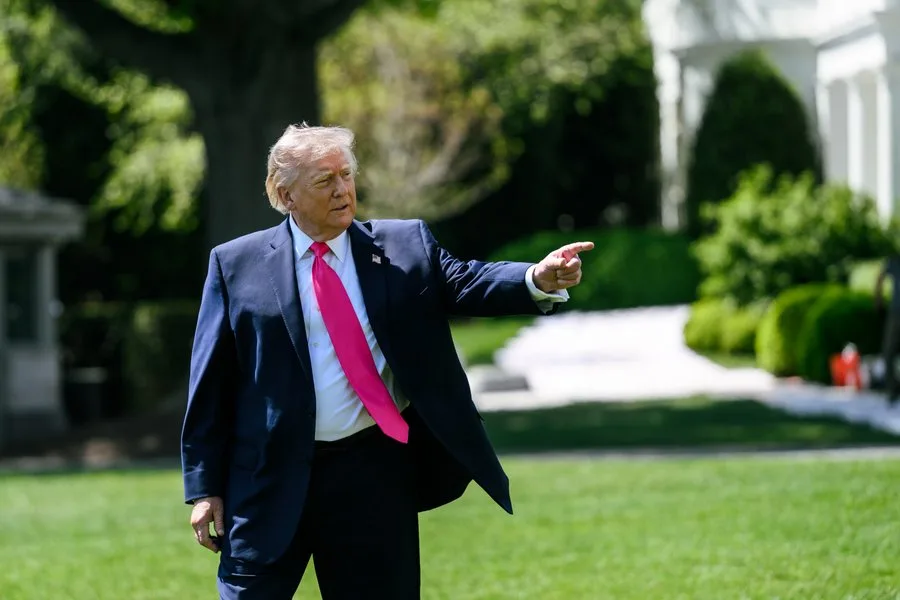
Bipartisan US lawmakers urged President Donald Trump to confront Chinese President Xi Jinping about Americans detained in China during their upcoming meetings. They warned that Beijing’s use of political detentions and coercive tactics poses risks not only to those held but also to American families and broader national interests.
In a letter from the Congressional-Executive Commission on China (CECC), lawmakers highlighted China’s increasing reliance on what they described as “hostage diplomacy,” exit bans, and transnational repression targeting US citizens, lawful permanent residents, and their relatives. Key signatories of the letter included Senator Dan Sullivan, Representative Chris Smith, Senator Jeff Merkley, and Representative James McGovern.

The letter specifically named four cases for Trump to address with Xi Jinping. Pastor Mingri “Ezra” Jin, a Protestant leader imprisoned in China, was cited alongside Dr. Gulshan Abbas, a Uyghur physician serving a two-decade sentence meant to intimidate her activist sister in the US. Uyghur entrepreneur Ekpar Asat and Gao Zhen, a lawful permanent resident accused over artwork created in America, were also mentioned. Gao’s US-citizen child has reportedly been prevented from returning home to New York City.
The CECC argued that highlighting individual detention cases during diplomatic talks is a “low-cost, high-return” strategy to raise the cost of repression and protect American citizens. The commission recommended that the State Department maintain a regularly updated list of political prisoners and exit-ban detainees to prioritize these cases in senior-level discussions with Chinese officials.
Alongside these individuals, an addendum attached to the letter named several other prominent detainees and activists, including Hong Kong democracy advocate Chow Hang-tung, Uyghur scholar Ilham Tohti, Chinese journalist Zhang Zhan, Christian pastor Wang Yi, Tibetan monk Konchog Choedrag, and commentator Dong Yuyu.
In a related development, Senator Bernie Sanders expressed support for the planned US-China talks on artificial intelligence, emphasizing global unpreparedness for the rapid growth of AI technology. While his comments focused on technology, the broader diplomatic context underscores the complexity of US-China relations covering diverse issues from human rights to strategic competition.