

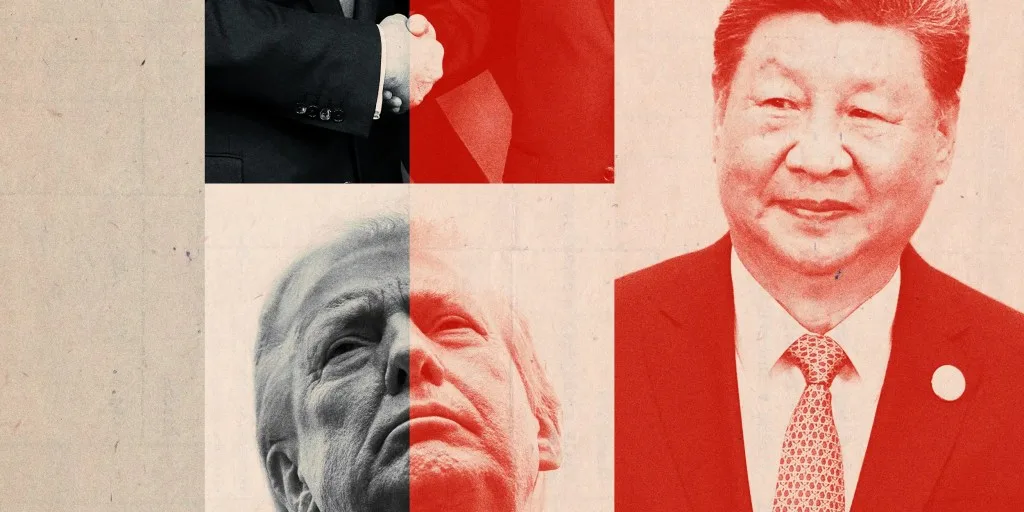
Donald Trump’s first trip to China since 2017 arrives at a moment marked by significant shifts in global power dynamics and his own political vulnerabilities. Unlike his previous visit, Trump now faces diminished influence as he attempts to engage Chinese President Xi Jinping on critical issues including the conflict in Iran, trade tensions, artificial intelligence, and Taiwan’s status.
The ongoing war involving Iran casts a long shadow over the talks. Trump’s decision to align the U.S. with Israel against Iran has fueled a global economic strain and eroded his domestic political standing, creating a sense of urgency to end the conflict before upcoming elections. In contrast, Xi enjoys a consolidated grip on power after securing an unprecedented third term, positioning China as a more confident global actor less pressured by the Middle East crisis.

China’s strategic calculations differ substantially from those of the United States. While Beijing shares an interest in terminating the conflict to stabilize oil supplies passing through the Strait of Hormuz and to avoid recession risks, its stronger energy independence reduces the urgency felt by the U.S. Moreover, China may stand to strengthen its regional influence if Iran negotiates an outcome that enhances its military or nuclear capabilities, potentially counterbalancing American presence in the Middle East.
As a result, Trump’s approach hinges on persuading Xi to exert diplomatic pressure on Iran, effectively requesting China to assist in resolving an increasingly complicated and detrimental situation for the U.S. Meanwhile, Beijing has encouraged diplomatic talks with Tehran but remains unwilling to act solely in Washington’s interest, reflecting a broader shift in China’s assertiveness on the world stage.
Trade negotiations also reveal Trump’s weakened hand. The recent Supreme Court invalidation of many tariffs he imposed has reduced his leverage to threaten economic measures against China. Additionally, China’s signaling of readiness for further economic confrontation and adoption of new legal tools to counter U.S. sanctions show a nation prepared to push back and defend its interests rigorously.
This combination of geopolitical tension and economic rivalry sets a challenging stage for the summit. Trump enters talks pressed by urgent domestic and foreign policy setbacks while Xi leverages greater stability and strategic foresight. The outcome depends on China’s willingness to navigate these complicated issues amidst evolving global power dynamics.