

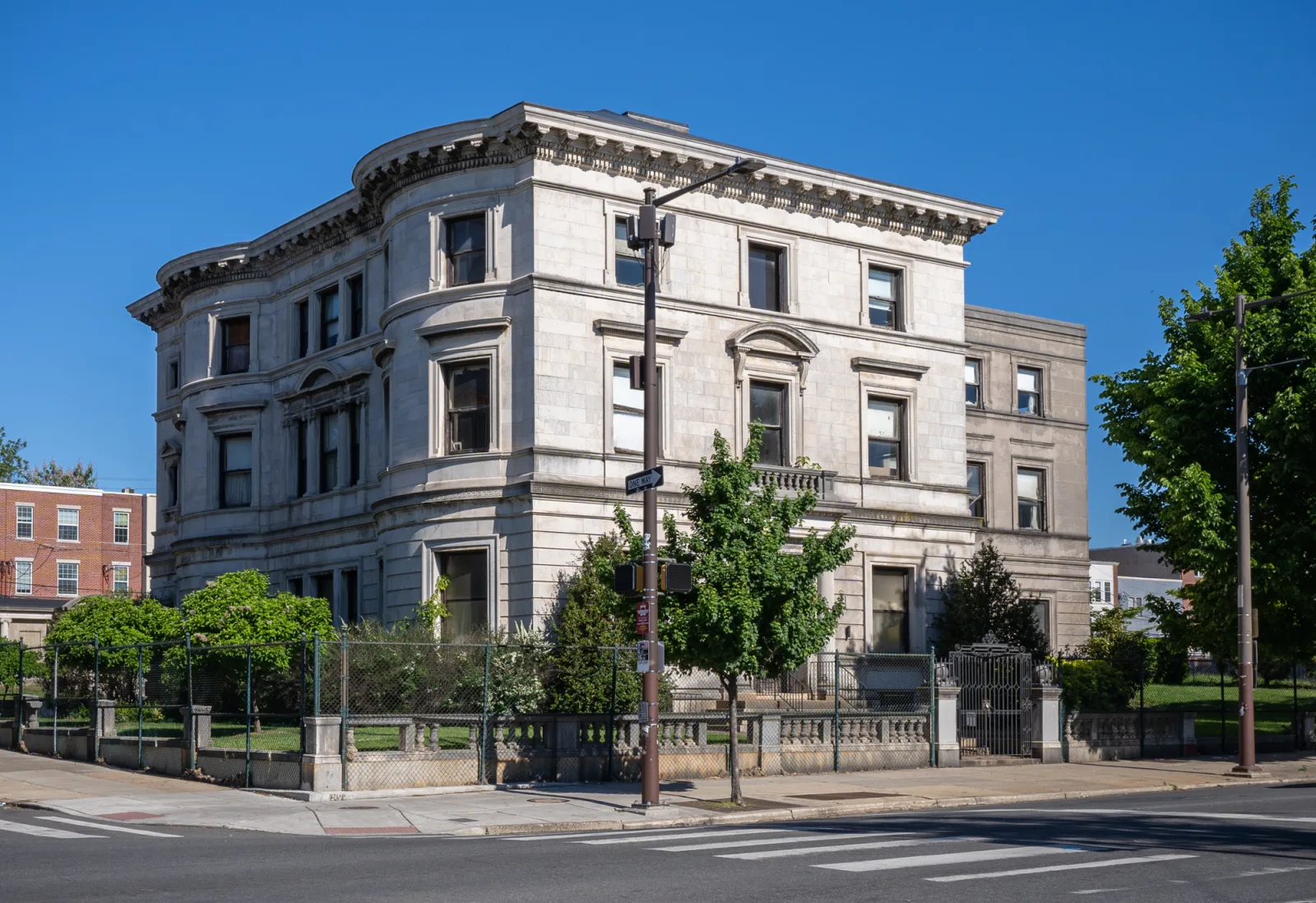
The Philadelphia Historical Commission recently approved the rehabilitation of the long-neglected Alfred Edward Burk Mansion, a historic Italian Renaissance property vacant for over three decades. Owned by Temple University for more than fifty years, the mansion at North Broad and Jefferson Streets has awaited restoration since a fire in the mid-1990s halted its use.
The planned restoration will focus on structural and aesthetic repairs, including replacing windows and doors, restoring the stone balustrade along the perimeter, and revitalizing the landscaping and walkways. Accessibility upgrades are also a key part of the project, along with a proposed rear addition to expand usable space while respecting the property’s historic character.

Constructed in 1909 by architects Simon and Bassett, who also designed notable Philadelphia buildings such as the Lit Brothers Store and the Manufacturers Club, the Burk Mansion holds local landmark status, having been listed on the Philadelphia Register of Historic Places since 1971. Its historic significance was further documented in the Historic American Buildings Survey a year later.
Separately, the Commission granted conceptual approval for a three-story addition to the former Ice Machine House at 40 Spring Garden Street. This industrial complex originally dates from the late 19th century and served various manufacturing functions, including as part of the Philadelphia Warehousing and Cold Storage Company. The owners intend to convert the building, known as Building D, into a mixed-use residential property, preserving its red brick and stone detailing while adding new living space.
The Commission also reviewed a nomination to the National Register of Historic Places for the De Long Hook and Eye Company Factory located at 21st and Clearfield Streets. This factory was once among the nation's leading producers of sewing accessories during the early 20th century. The nomination process involves both state-level oversight by the Pennsylvania Historical and Museum Commission and consultation with the local government, where the Philadelphia Historical Commission represents the city’s preservation interests.
These decisions reflect ongoing efforts to balance preservation with adaptive reuse in Philadelphia’s historic urban fabric, combining heritage conservation with modern needs such as accessibility and residential development.