

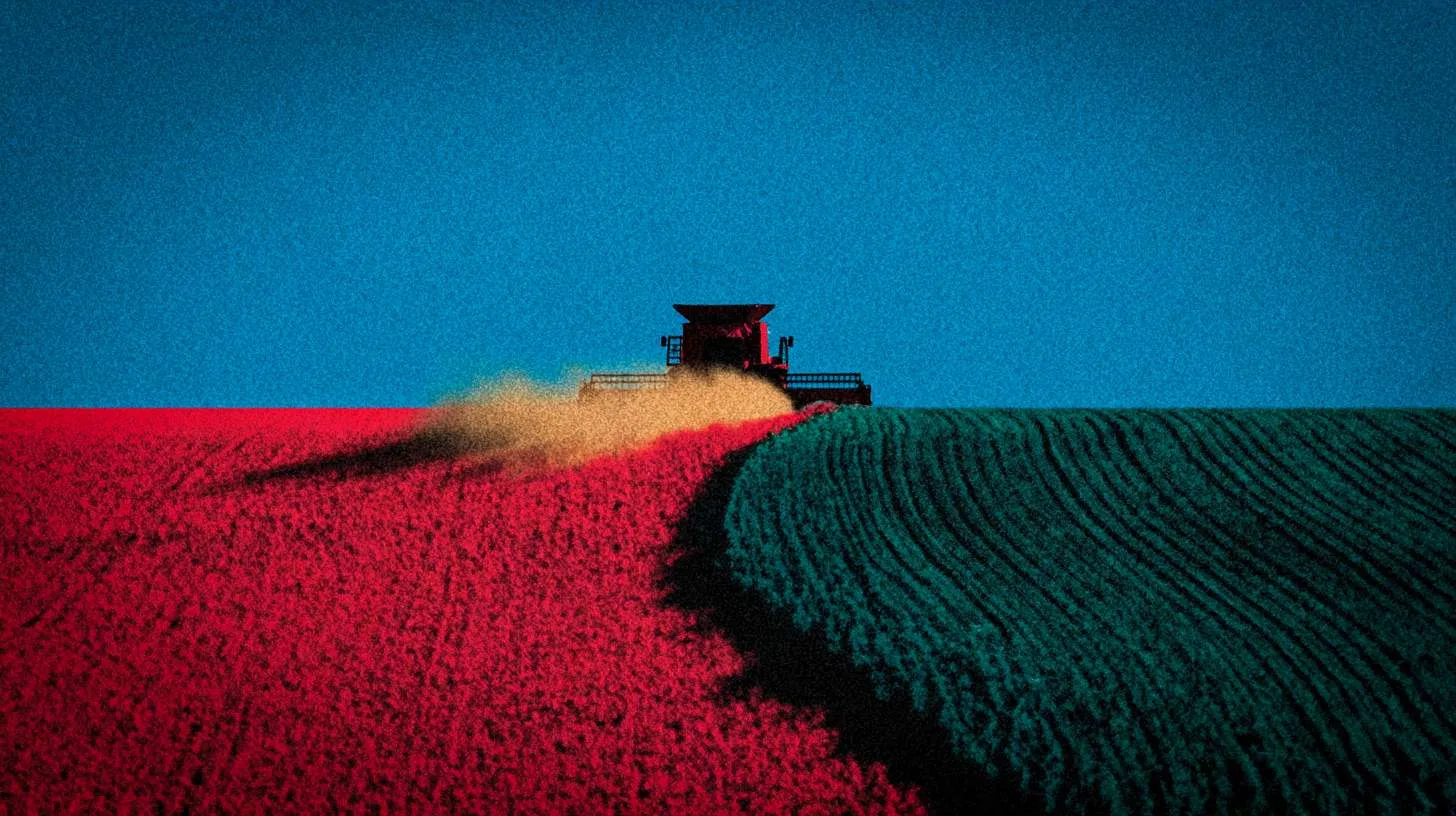
American farmers faced a severe blow as U.S. agricultural exports to China fell by nearly $15 billion in the year ending February 2026, according to a recent analysis by North Dakota State University’s Agricultural Trade Monitor. This drop surpasses the losses during Trump’s first term by about $5 billion and highlights the extensive impact of the trade war on farming communities.
The soybean market endured the harshest impact, with exports to China plummeting from over $12 billion in 2024 to just $3 billion in 2025—a decline of approximately 75 percent. Tariffs implemented during Trump’s presidency played a direct role in this downturn. Chinese retaliatory tariffs on American agricultural products, initially set as high as 147 percent, compounded the effects, severely reducing demand in China for U.S. farm goods.

While the overall loss in sales is substantial, the impact varied across regions. The Corn Belt, Great Plains, California, and Texas saw the brunt of the damage, with Iowa farmers particularly hard hit, losing about $1.2 billion in exports bound for China. The study points out that the figures reflect lost exports specifically to China, not a total loss in all exports. Some of the corn, wheat, soy, and pork that would have gone to China likely found alternative markets in Mexico, Canada, or Japan, partially offsetting losses but not fully compensating farmers.
In response to the agricultural sector's distress, the Trump administration authorized an $11 billion bailout in December, signaling acknowledgment of the trade war’s failure to protect U.S. farm interests. Researchers at NDSU are preparing a further analysis to assess how much redirected trade softened the overall impact on farmers’ incomes.
Looking ahead, there remains cautious optimism. The authors note that agricultural exports could recover swiftly and even surpass 2024 levels by $4 to $5 billion if the trade framework discussed at a recent summit in Beijing is fully implemented. However, China has yet to confirm its participation in this agreement, leaving the future of U.S. farm exports uncertain.