

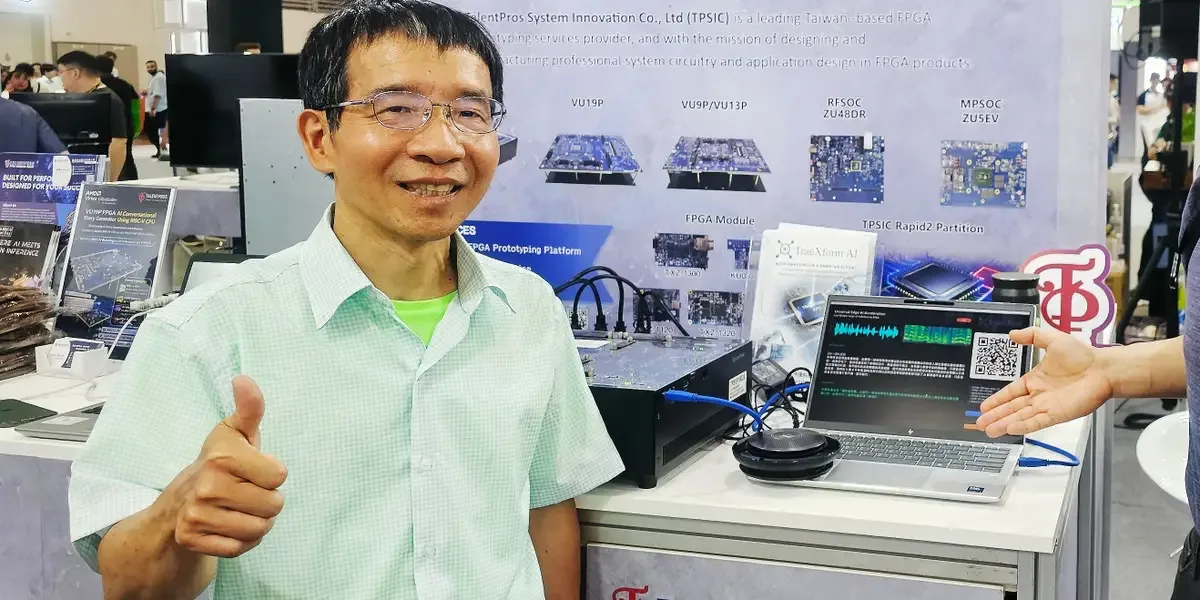
Stephen Huang, a seasoned chip designer with experience at Apple, Amazon, and MediaTek, chose to start a new chapter in his mid-50s by founding Tranxform AI, a Taiwan-based startup focused on creating power-efficient AI chips. Motivated by the surge in AI interest following ChatGPT’s release, Huang saw a market ripe for specialized hardware designed to run AI workloads outside of massive data centers.
Tranxform AI, which currently employs around 40 people, is advancing its first chip with plans for completion next year. Unlike many new companies that rely heavily on software expertise, Huang emphasizes his decades of semiconductor experience as a strategic advantage. Designing system-on-a-chip (SoC) solutions requires a mastery of complex hardware-software tradeoffs, a skill Huang believes takes years to perfect.

Huang draws inspiration from industry icons like Morris Chang, who founded Taiwan Semiconductor Manufacturing Company (TSMC) in his 50s, affirming that age can be a benefit in the hardware sector. Hardware startups often prioritize experience, especially in semiconductor design, where long-term knowledge translates to better product balance and efficiency.
Founding Tranxform meant leaving behind a stable career and comfortable life in the US to relocate to Taiwan, a move initially challenging for his family. However, with Huang’s two sons grown and independent, the timing became easier, and as Tranxform met key milestones, family support strengthened. Huang sees the risks as justified given the accelerating demand for specialized AI chips capable of delivering high performance while minimizing power consumption.
The AI hardware market is gaining momentum, with venture funding for AI and machine-learning chip startups increasing significantly, reaching billions annually. Huang’s vision aligns with a broader industry trend where companies seek faster, more energy-efficient processors to handle increasingly sophisticated AI models outside of traditional data centers.