

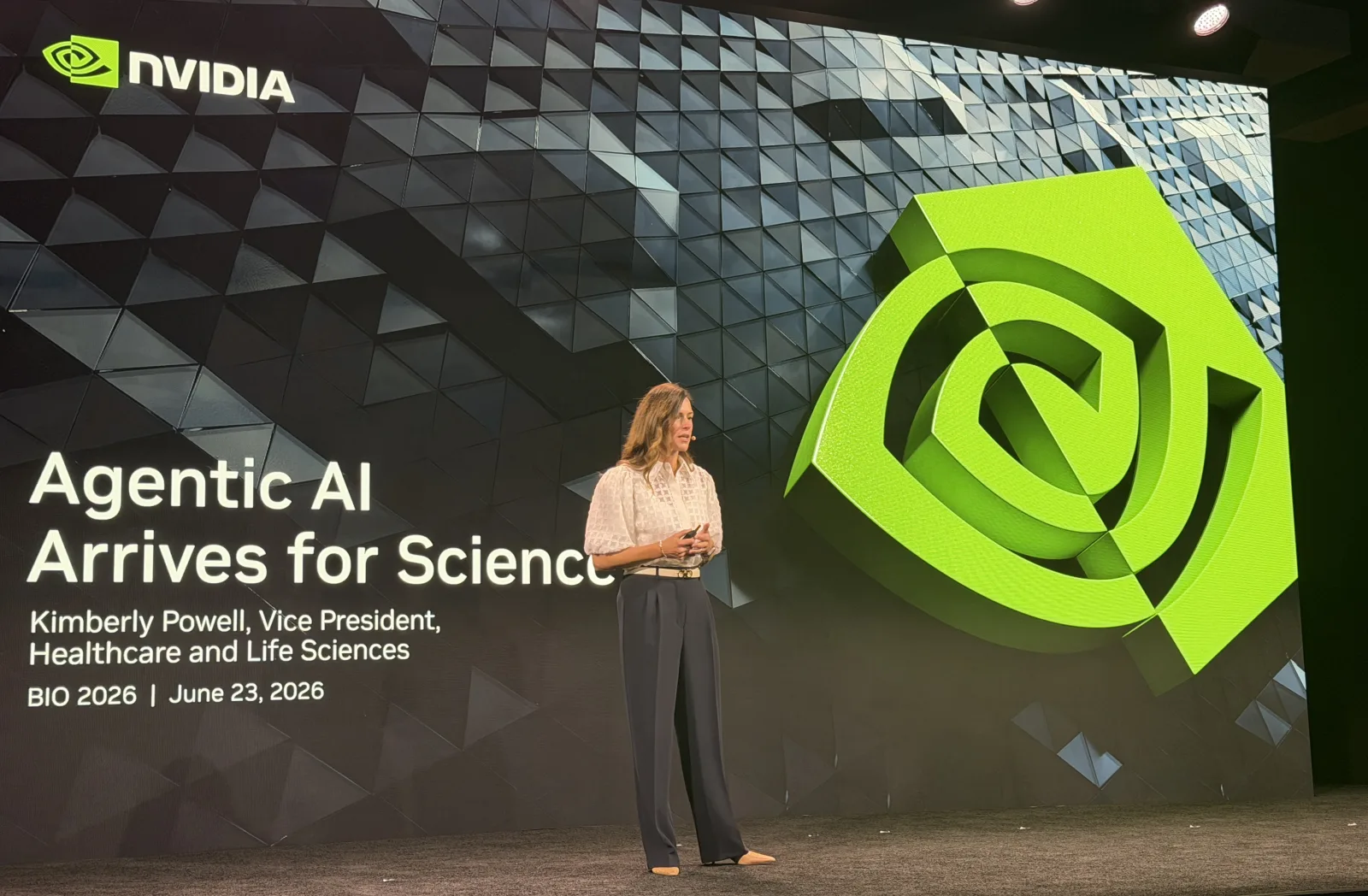
Nvidia unveiled its BioNeMo Agent Toolkit as a groundbreaking development designed to revolutionize biotechnology by harnessing agentic artificial intelligence. Unlike traditional AI that generates outputs based on prompts, agentic AI systems act autonomously, reasoning, planning, and executing scientific tasks end-to-end. This shift promises to boost productivity in research and development across biology, chemistry, genomics, and lab automation.
The biotech industry is undergoing what Nvidia describes as the fastest platform transformation in life sciences history. This evolution parallels past scientific milestones such as the advent of the microscope and gene sequencing, but with a critical difference: the new AI-powered instruments do not just observe or measure; they actively perform experiments and optimize workflows. Nvidia’s BioNeMo Agent Toolkit leverages large language models configured as “AI scientists” tailored for life sciences applications.

At the core of Nvidia’s strategy is the integration of generative AI with a structured, multi-agent framework. This allows AI “agents” to manage complex tasks, combining literature review, protein design, and lab automation into continuous, coordinated processes. The BioNeMo platform builds on Nvidia’s existing infrastructure—GPUs, CUDA libraries, and domain-specific platforms such as MONAI and Parabricks—and extends it with tools for security, memory management, and task orchestration specialized for biotech workflows.
Kimberly Powell, Nvidia’s healthcare and life sciences lead, highlighted that this agentic AI represents a fundamental change in software design for biotech. Instead of traditional graphical interfaces or linear pipelines, biotech applications will evolve into networks of autonomous agents collaborating across digital and physical laboratory environments. This will enable thousands of companies in the sector to develop customized AI agents that address their unique challenges.
The BioNeMo Agent Toolkit targets three critical capabilities for life science teams:
- Transforming large language models into domain-specific AI agents capable of handling complex biology and chemistry tasks.
- Optimizing performance and cost efficiency of AI-driven workflows in research settings.
- Enabling automation from initial literature surveys through to experimental design and laboratory execution.