

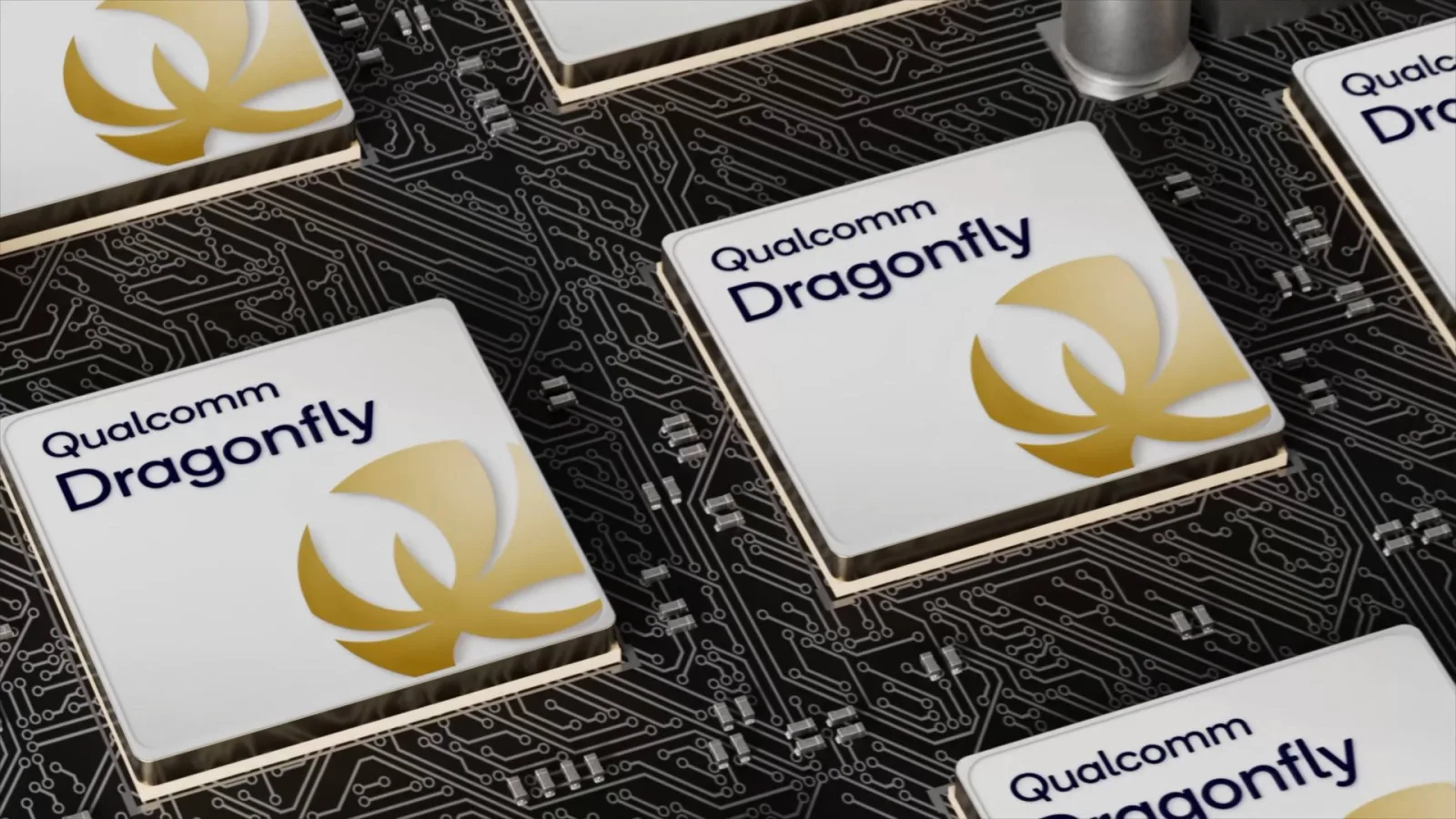
Qualcomm has rolled out its Dragonfly brand as a full-stack data center platform designed to accelerate artificial intelligence workloads. The ecosystem merges cutting-edge AI compute accelerators, custom silicon CPUs, breakthrough memory technologies, and robust networking components to serve the demands of evolving AI factories and large-scale computing environments.
The Dragonfly AI accelerator line is central to the platform’s capabilities. Following the earlier AI200 and AI250 releases, Qualcomm plans to introduce the AI300 series by 2028. These next-generation accelerators will feature Qualcomm’s second-generation Hybrid Memory Cube technology (HBC Gen2), delivering a dramatic increase in effective memory bandwidth—up to a 54-fold improvement over the AI200—and enhanced energy efficiency compared to traditional GPU memory solutions.

Additionally, the AI300 accelerators will support both air and direct liquid cooling options at the rack level and integrate innovations such as UALink (Ultra Accelerator Link) and ESUN (Ethernet Scale-Up Networking), enabling horizontal and vertical scalability through copper and optical interconnects. Qualcomm expects these advances to boost performance per watt by four to eight times relative to existing GPU-based systems, particularly for large language models and multimodal AI inference tasks.
Complementing the compute accelerators, Qualcomm’s Dragonfly platform extends to custom CPUs like the Dragonfly C1000 and innovative memory solutions such as Dragonfly HBC. Together, these components create a cohesive environment optimized for disaggregated and agentic AI workloads encountered in modern data centers.
On the connectivity front, Qualcomm plans to expand its offerings with diverse interconnect technologies, including die-to-die connections, copper and optical links, and campus-wide reach solutions, all designed to minimize latency and maximize throughput across distributed compute resources.
The commercial sampling of the AI300 accelerators and accompanying technologies is slated for 2028, positioning Qualcomm Dragonfly as a scalable, all-encompassing compute ecosystem aimed at powering the next wave of AI innovation in data centers worldwide.