

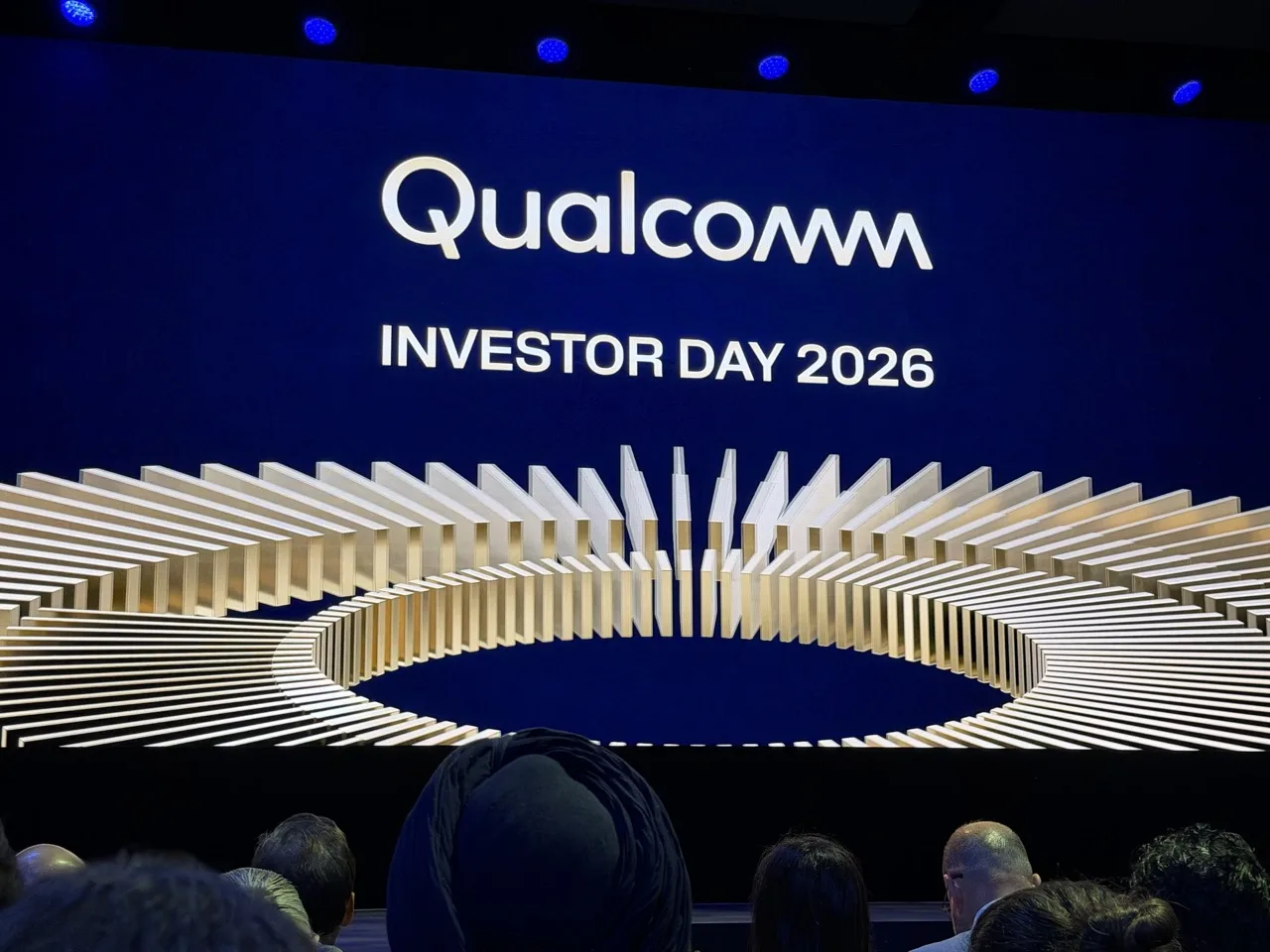
Qualcomm's Investor Day 2026 highlighted the company’s ambitious plan to reshape data center infrastructure with new, custom-built AI accelerators and CPUs tailored for what it calls the agentic AI era. Central to this strategy is a novel High Bandwidth Compute (HBC) technology that promises to improve memory performance and efficiency by stacking memory directly on compute tiles, rather than relying on traditional High Bandwidth Memory (HBM) over an interposer.
This HBC approach addresses a key bottleneck in AI performance: memory footprint and bandwidth. Qualcomm claims that its design reduces power consumption and latency, delivering better performance per watt by eliminating the "HBMC tax" associated with moving data across an interposer. The company targets launching this innovation with its AI250 generation in 2027, followed by a second-generation HBC expected to include integrated fabrics such as ESUN and UALink for enhanced connectivity and scalability.

The event also underscored Qualcomm’s growing footprint in data centers, including its recent acquisition of Modular, bolstering its AI capabilities. Qualcomm’s dual focus on custom silicon for both connectivity—leveraging technology from Alphawave—and new CPU architectures forms a comprehensive stack aimed at handling the memory- and compute-intensive demands of next-generation AI workloads. Key executives emphasized the need for a reimagined infrastructure to support agentic AI, where systems operate autonomously with advanced reasoning capabilities.
Highlighting industry partnerships, Qualcomm shared a message from Satya Nadella, pointing to the collaboration between Qualcomm and Microsoft, which spans devices, AI agents, and data center technologies. This relationship further validates Qualcomm’s approach to integrating its AI accelerators and high bandwidth memory solutions into broader AI ecosystems.
Overall, Qualcomm’s roadmap signals a strategic pivot toward highly integrated, energy-efficient silicon designed for complex AI tasks, marking a significant move beyond its traditional mobile processor roots into large-scale data center deployments optimized for next-generation AI challenges.