

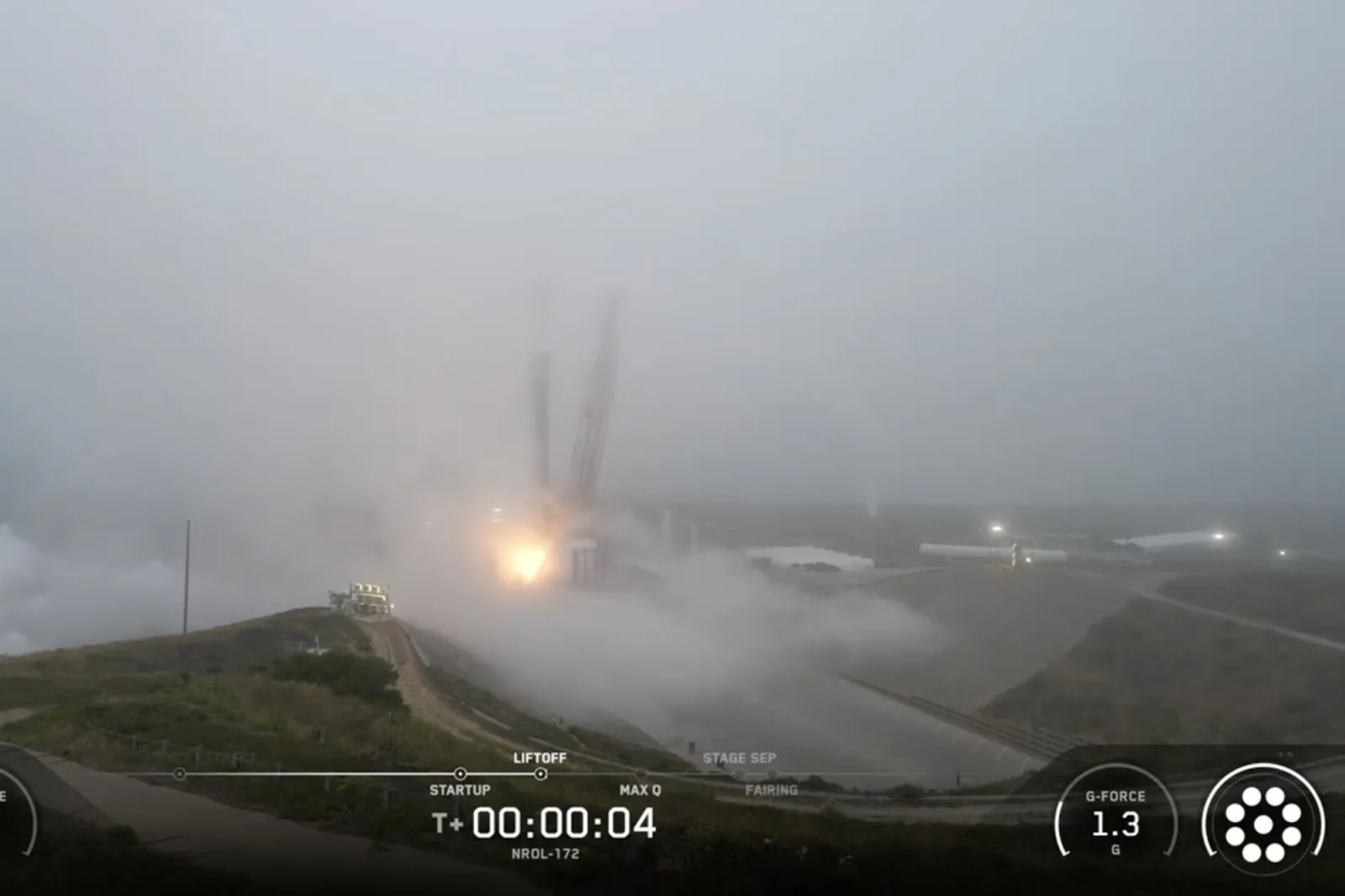
A SpaceX Falcon 9 rocket launched from Vandenberg Space Force Base at night, carrying a classified payload for the National Reconnaissance Office (NRO). This mission marks a continued shift in the agency’s strategy from deploying large, infrequent satellites to launching numerous small satellites that enhance intelligence, surveillance, and reconnaissance capabilities.
The rocket lifted off from Space Launch Complex-4 and the first-stage booster successfully landed on a droneship in the Pacific Ocean shortly after liftoff. While the NRO withheld details about the number of satellites or exact mission tasks, the launch falls under the agency’s proliferated architecture—a network of multiple small satellites operating as a constellation to ensure rapid revisit times and increased observational persistence.

According to NRO leadership, the agency has rapidly transitioned from conceptualizing this dispersed satellite approach to operational success in just a few years. Last year alone, their constellation collected hundreds of thousands of intelligence observations, marking a substantial increase in data volume and frequency. The distributed system also improves resilience and security by making it more difficult for adversaries to disrupt U.S. reconnaissance capabilities.
This latest mission, designated NROL-172, represents the 13th launch in support of this proliferated satellite architecture. The NRO anticipates a busy launch schedule in the coming years, with multiple upcoming missions planned through 2029 to expand and innovate this growing network.
Winged by SpaceX’s reusable Falcon 9 technology, the NRO continues to deploy satellites not only from Vandenberg but other global launch sites. The agency’s recent history shows more than 200 satellites launched in recent years, underscoring its commitment to this new operational model. The last NRO launch from Vandenberg took place earlier this year, and more SpaceX launches from the Central Coast region are expected as part of the agency’s strategic rollout.