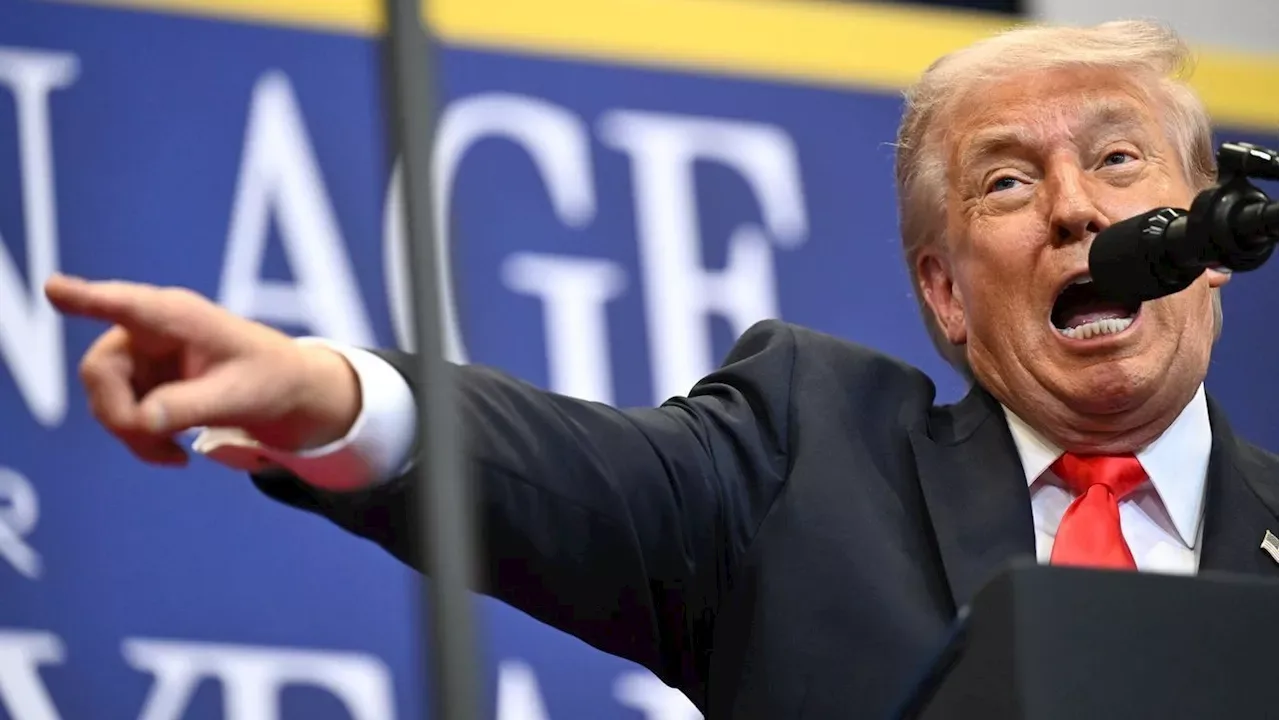
The Pentagon announced Friday that it would remove 5,000 troops from Germany, where more than 36,000 American service members are currently stationed. Trump said the following day he would pursue reductions that go "a lot further" than the Pentagon's plan. The drawdown marks a significant shift in U.S. defense posture on a continent that has hosted American forces since World War II.
The United States typically maintains between 80,000 and 100,000 troops across Europe, with Germany serving as the strategic hub. Italy hosts more than 12,000 troops and the United Kingdom another 10,000, according to Pentagon figures from December. U.S. European Command (EUCOM), established in 1947, oversees military operations across roughly 50 countries and territories. The Pentagon has offered limited detail about which specific units or operations would be affected by the announced reduction.

Germany has assumed particular importance in the American defense architecture. The country hosts the headquarters of both U.S. European and Africa commands, Ramstein Air Base, and a medical center in Landstuhl. Critically, U.S. nuclear weapons are deployed there as well. Approximately 100 nuclear bombs are stationed at bases across Europe—in Belgium, Germany, Italy, the Netherlands, and Turkey, and possibly in the United Kingdom—according to a March estimate from the Federation of American Scientists.
Republican congressional leaders have expressed concern about the drawdown. Sen. Roger Wicker of Mississippi and Rep. Mike Rogers of Alabama warned that removing troops would send "the wrong signal to Vladimir Putin" as Russia continues its war in Ukraine. They called instead for repositioning forces eastward to allied nations closer to Russian territory. Wicker and Rogers also noted that European allies have made "substantial investments to host U.S. troops," and disclosed that the Pentagon canceled plans to deploy one of the Army's long-range fires battalions to Germany.
The Trump administration's National Defense Strategy, released in January, frames the shift as part of a broader reordering of priorities. The document states that while the U.S. "will remain engaged in Europe," it "must prioritize defending the U.S. Homeland and deterring China." It argues that European nations are substantially more powerful than Russia and capable of shouldering greater defense responsibilities. Germany's economy alone "dwarfs that of Russia," the strategy notes.
Germany has already begun modernizing its military since Russia's 2022 invasion of Ukraine. The country established a 100 billion euro special fund for the Bundeswehr and announced plans to raise military personnel from approximately 180,000 to 260,000. Berlin also aims to expand its reserve force to around 200,000, more than double current levels. Defense Minister Boris Pistorius acknowledged Friday that Europe must assume greater responsibility for its own security while emphasizing that equipment procurement and infrastructure development are accelerating.
The tension between Trump and German Chancellor Friedrich Merz adds another dimension to the dispute. Merz last week accused the U.S. of being "humiliated" by Iran and criticized Washington for lacking a clear strategy in the region. U.S. Gen. Alexus Grynkewich, commander of U.S. and NATO forces in Europe, has previously told Congress that maintaining a substantial military presence on the continent enables power projection globally, including support for operations in Africa and against Iranian targets in the Middle East.