

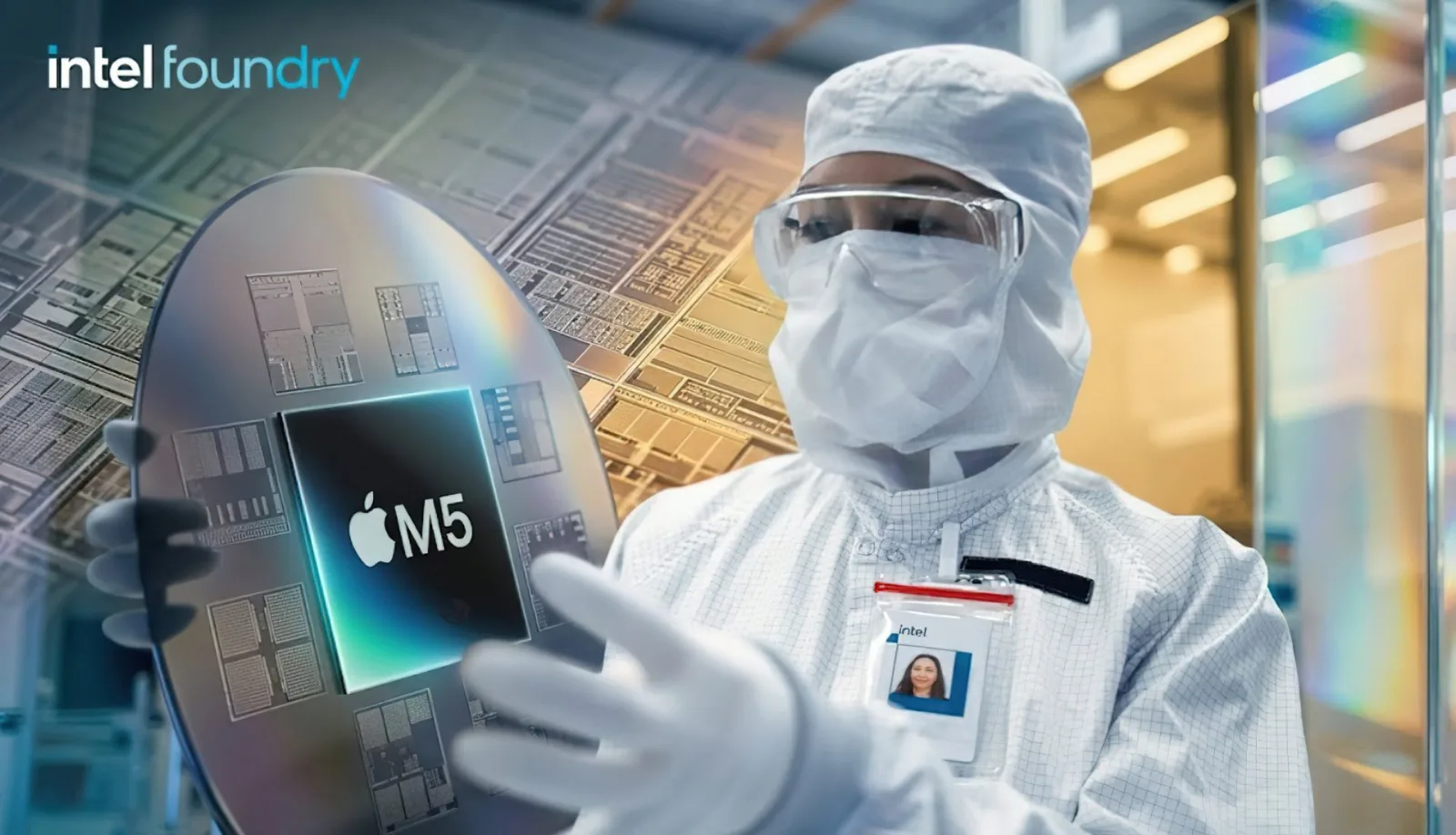
Intel’s rumored agreement to manufacture chips for Apple could ignite a surge in demand for advanced semiconductor fabrication and bonding machinery, industry analysts suggest. This deal, reportedly valued at up to $10 billion, would mark a significant shift for Apple, which currently relies mainly on Taiwan’s TSMC for chip production.
Bank of America estimates that Intel’s equipment purchases could reach €4.6 billion if the deal includes Apple’s flagship iPhone chips, substantially boosting orders for leading semiconductor equipment suppliers.

ASML, the Dutch firm exclusively producing extreme ultraviolet (EUV) lithography machines essential for cutting-edge chip fabrication, stands to benefit the most. In the case Intel produces iPhone chips, it may need to acquire as many as 15 EUV machines, pushing ASML’s equipment sales to Intel to nearly €4.6 billion. For scenarios excluding the iPhone, this spend could be closer to €1.8 billion.
Additionally, BE Semiconductor, another Dutch company specializing in hybrid bonding technology crucial for chip packaging and assembly, could see a surge in demand. If Apple’s iPhone production is part of the deal, Intel might order up to 182 hybrid bonding machines – more than twice the projected 80 machines Intel plans to buy from 2024 to 2030. Otherwise, orders might remain limited to about 15 machines.
The Intel-Apple collaboration reportedly emerged after more than a year of negotiations, with details on which chip models or technologies Intel would produce still unclear. However, the potential impact on the semiconductor manufacturing equipment market is already under close scrutiny.
This development comes as chipmakers face pressure to expand capacity amid growing demand from sectors like artificial intelligence, pushing players like Intel to aggressively market packaging and fabrication services. Intel’s pursuit of Apple’s chip business reflects strategic moves by both companies to diversify supply chains and control production ahead of future technology trends.