

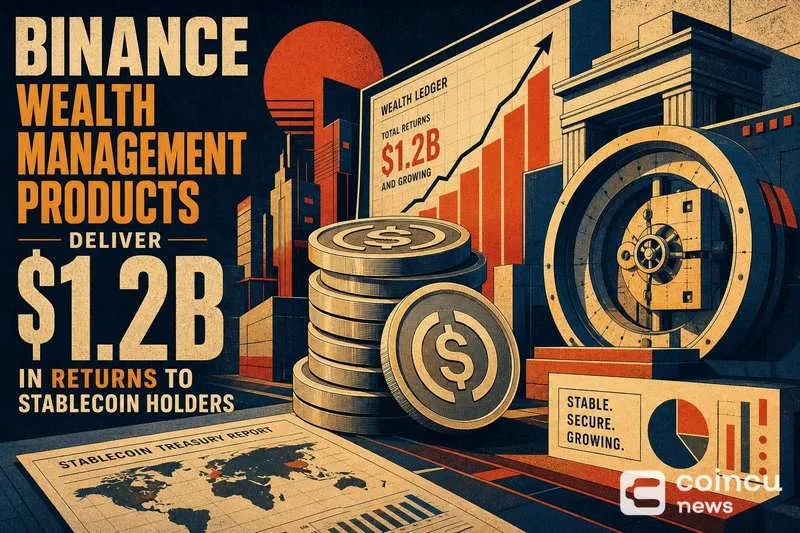
Binance announced that its wealth management products have delivered returns exceeding $1.2 billion to users holding stablecoins. This milestone highlights the growing role of centralized exchange yield programs in attracting and retaining stablecoin deposits from retail and institutional investors alike.
The returns stem from Binance’s suite of yield-focused offerings within its Earn platform, which includes flexible savings, locked staking, and structured products. These products allow stablecoin holders—such as those invested in USDT and USDC—to earn passive income by lending assets or supplying liquidity, a mechanism increasingly popular among crypto users prioritizing capital preservation and steady yields.

Despite the headline figure, Binance has not detailed the timeframe over which these distributions took place nor broken down the contribution from each product type. It also remains unclear how many users benefited or what average yields they received. Furthermore, Binance has not clarified whether the $1.2 billion represents gross returns before platform fees or net amounts finally credited to holders, a distinction that could significantly affect users’ actual earnings.
The significance of this announcement lies in the rising demand for stablecoin-based yield products on centralized platforms. Stablecoins uniquely appeal to crypto investors seeking lower volatility while still engaging with DeFi-like returns in a simpler, custodial environment. Binance’s claim of over $1.2 billion in payouts coincides with increased stablecoin activity on exchanges, including notable large-scale transfers and deposits from institutional and governmental actors, signaling broader market acceptance.
Still, experts caution that reported yields alone do not reflect the risks of custodial lending or staking on centralized exchanges. Users should consider factors like platform solvency, fee structures, and underlying asset liquidity. The absence of detailed methodology behind Binance’s report leaves questions about the sustainability and reliability of such returns.