

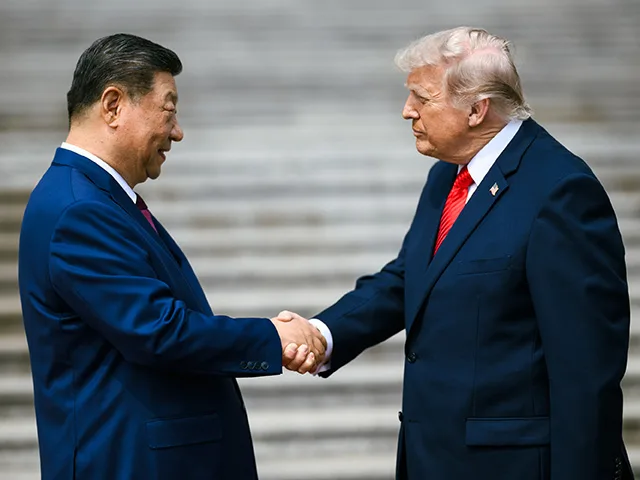
Pastor Ezra Jin Mingri, founder of Beijing’s underground Zion Church, returned to the United States following his release from Chinese prison. This development came roughly two months after President Donald Trump personally raised Jin’s case during a diplomatic meeting with Chinese President Xi Jinping. Jin, who had been detained amid one of China’s largest religious crackdowns in decades, was reunited with his family in Los Angeles on Independence Day.
Jin’s arrest was part of broader actions against religious leaders in China, with reports labeling it a significant crackdown on Christian congregations. His detention drew international criticism as Western governments and human rights groups accused Beijing of misusing national security laws to silence dissent and curtail religious freedom. Jin’s daughter, Grace Jin Drexel—a national security analyst in the U.S. Senate Republican Policy Commission—advocated alongside various organizations for his release.

The pastor’s case gained prominence after President Trump disclosed during his return flight from Beijing that he had urged Xi Jinping to consider freeing Jin. Trump also mentioned Hong Kong pro-democracy activist Jimmy Lai but noted that Lai’s release would be far more complicated due to his lengthy prison sentence under controversial charges. Jin’s family credited the Trump administration’s direct involvement with securing his freedom and expressed hope for improved conditions for people of faith in China, as well as for better U.S.-China relations.
Ezra Jin originally founded Zion Church to provide unimpeded worship under God’s authority, independent of government control—a move that eventually brought persecution from communist authorities. Jin relocated his family to the U.S. in 2018 to avoid persecution but returned to China despite the risks. His daughter revealed that she had been separated from him for six years amid his activism and imprisonment.
While Jin’s release marks a hopeful sign, many challenges remain. Human Rights Watch highlighted that several members of Zion Church are still detained, emphasizing ongoing repression of religious communities in China. The case continues to draw attention to the precarious position of underground churches within the country’s stringent political environment.