

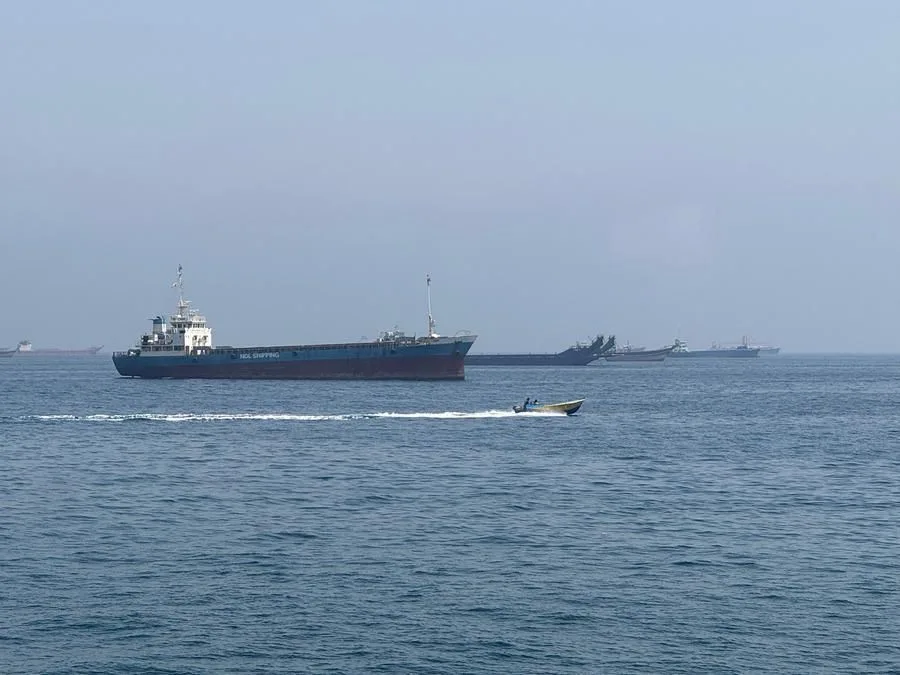
Iran’s Islamic Revolutionary Guard Corps (IRGC) intercepted three oil tankers attempting to navigate the southern Strait of Hormuz, a critical chokepoint for global oil shipments. One tanker caught fire following an explosion, forcing the other two vessels to retreat. This action highlights rising tensions in the strategically vital waterway amid ongoing military confrontations between Iran and the United States.
The IRGC accused the tankers of being provoked by what it described as the "child-killing American army," warning that any ship attempting to pass without Iran’s authorization would face similar consequences. The Strait of Hormuz is a narrow passage where a significant portion of the world’s oil supply transits, making any conflict there particularly impactful on global energy markets.

These developments occurred amid continuous US military strikes targeting Iranian infrastructure. The US military launched attacks for the twelfth consecutive night, focusing on sites in western Iran near Ahvaz, Ramshir, and Andimeshk, as well as a power station adjacent to the Bushehr nuclear facility. The strikes reportedly resulted in at least two fatalities near the Iraqi border town of Shalamcheh.
The US Central Command framed the operations as efforts to reduce Iran’s capacity to threaten both civilian and commercial vessels traversing the region. Washington has explicitly warned that any Iranian attacks on ships passing through the Strait will trigger retaliatory strikes on Iranian infrastructure. US President Donald Trump stated that for every attack on a vessel, the US would respond by bombing and destroying one Iranian bridge or power plant, including those around Tehran.
In response, Iran’s Foreign Minister Seyed Abbas Araghchi stated that Tehran would follow an "eye for an eye" policy, pledging a strong and decisive reaction to any aggression, including attacks on Iranian infrastructure.
The standoff reflects the broader strategic rivalry between the US and Iran, centered on control over maritime routes essential to global commerce and geopolitical influence in the Middle East.