

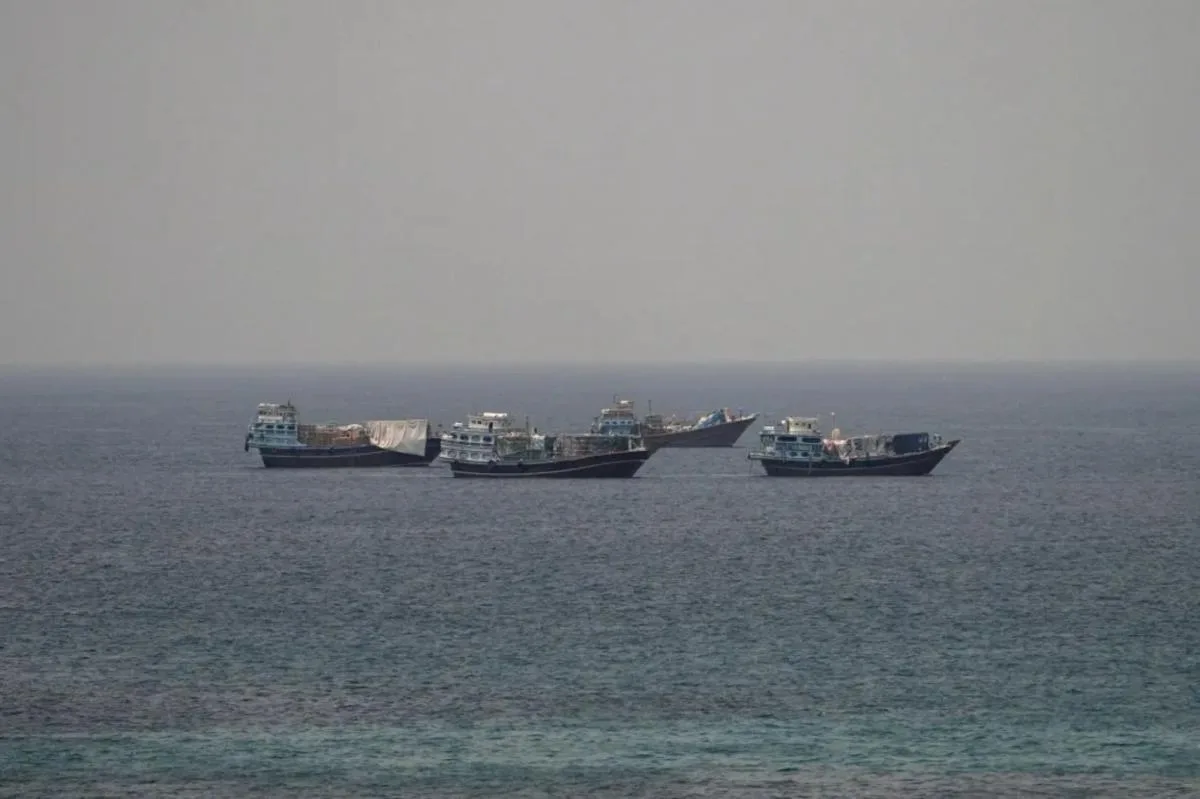
At least two commercial ships suffered significant damage after Iran’s Revolutionary Guards fired missiles near the Strait of Hormuz, a vital maritime corridor for global oil supplies, according to US officials. Despite the attacks, no casualties were reported, highlighting the continued risks facing commercial shipping in this strategic waterway.
The United Kingdom Maritime Trade Operations agency (UKMTO) confirmed that a tanker was struck on its port side by an unidentified projectile near Oman's coast, triggering a fire. The tanker was traveling south roughly eight nautical miles east of Limah when the incident occurred. Authorities reported no casualties or environmental damage following the strike.

This region, which channels about one-fifth of the world’s oil consumption, has experienced repeated incidents targeting commercial vessels despite an interim agreement ensuring safe passage. The latest attack came amid broader conflict triggered by US and Israeli strikes on Iran, complicating efforts to stabilize maritime security.
Indirect diplomatic talks between the US and Iran recently ended without progress, following a 60-day cease-fire aimed at opening channels for negotiation. The stalemate persists alongside provocative statements from Iranian forces, who warned vessels via radio that their missiles and drones remain poised for attack. One targeted vessel, the liquefied natural gas tanker Al Rekayyat—managed by Qatar’s Nakilat QGTS and QatarEnergy—reported a fire in the engine room after being hit near the Gulf of Oman, though the crew remained safe and accounted for.
Investors and international observers continue to monitor tensions closely, wary of further disruption to oil shipments through the Strait amid ongoing geopolitical uncertainty. US Central Command has not publicly commented on the missile strikes, while Iran’s defiant posture signals continued volatility in the region’s security outlook.