

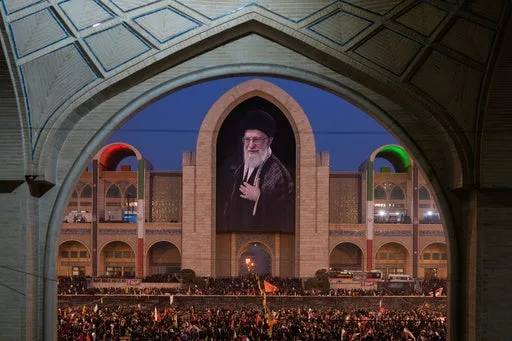
Hundreds of thousands gathered at Tehran’s Imam Khomeini Mosalla Grand Mosque for funeral prayers honoring Ayatollah Ali Khamenei and other victims of a recent airstrike that escalated tensions in the region. The event drew not only vast crowds but also several key Iranian officials and Khamenei’s brothers, signaling a display of unity and resilience despite ongoing conflict pressures.
The absence of Ayatollah Mojtaba Khamenei, the new supreme leader and eldest son of the late Ayatollah Ali Khamenei, was notable. Reports indicate he remains in hiding and may have sustained wounds during the airstrike. His continued seclusion comes amid heightened threats, including warnings from Israel targeting top Iranian leaders and efforts by the U.S. to negotiate a ceasefire and nuclear rollback tied to control of the Strait of Hormuz.

Other sons of the late leader—Masoud, Meysam, and Mostafa Khamenei—made rare public appearances at the mosque, accompanied by senior figures from the Revolutionary Guard and Iran’s political leadership. This group included Gen. Ahmad Vahidi and Esmail Qaani, head of the Quds Force, as well as President Masoud Pezeshkian and Parliament Speaker Mohammad Bagher Qalibaf, the latter involved in U.S. negotiations.
The funeral atmosphere was charged with protest chants and calls for revenge. Mourners expressed hostility toward the U.S. and Israel, chanting slogans condemning both nations and calling out specific leaders such as former U.S. President Donald Trump and Israeli Prime Minister Benjamin Netanyahu. Posters and graffiti made direct references demanding retaliation, reflecting persistent anti-Western sentiment amid the conflict’s escalation.
A respected Shiite cleric, Ayatollah Jafar Sobhani, led the prayers, emphasizing the religious significance of the ceremony. Attendees like nurse Ziba Naderi urged adherence to directions from the new supreme leader before any action, highlighting uncertainty about Iran's next steps.
Negotiations involving the U.S. remain on hold during the funeral proceedings, underscoring the fragile balance between ongoing talks and military threats. The Iranian leadership’s public demonstration of unity contrasts with the unseen presence of their highest authority, illustrating the complexities faced by Iran as it navigates internal and external pressures following the death of its longtime supreme leader.