

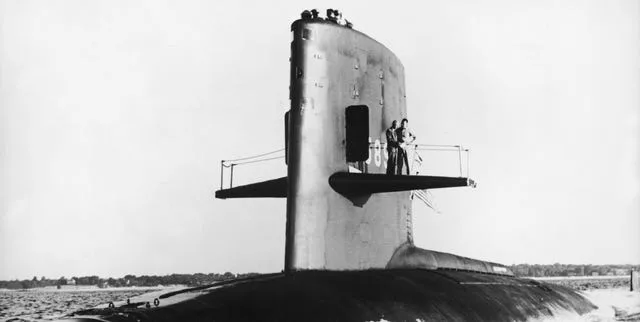
The disappearance of the USS Scorpion during a clandestine Cold War mission stands as one of the most puzzling tragedies in U.S. naval history. The nuclear-powered submarine and its entire crew of 99 vanished without clear explanation, leaving the Navy and investigators to piece together what happened over 50 years ago in the depths of the Atlantic Ocean.
At the time of loss, the Scorpion was on a high-stakes espionage patrol tasked with intercepting a Soviet naval task force believed to be gathering intelligence on NATO ships. The submarine had recently completed exercises with the U.S. Sixth Fleet in the Mediterranean before being redirected to shadow Soviet vessels approximately 400 miles southwest of the Azores. Though it checked in by radio once, the sub never returned and was never recovered, along with its nuclear reactor and two onboard nuclear weapons.

USS Scorpion was a Skipjack-class attack submarine, a generation notable for its advanced nuclear propulsion and streamlined teardrop hull designed for high underwater speeds. This design enabled the submarine to remain submerged for extended periods, limiting exposure and detection risks. Powered by a single Westinghouse S5W nuclear reactor generating 11,000 kilowatts, the Scorpion could reach speeds up to 33 knots underwater—about one-third faster than its predecessors. It was equipped with six torpedo tubes carrying anti-submarine and anti-surface weapons.
The Scorpion was not the first vessel of its name to be lost; a prior submarine also carried the name but was presumed sunk during World War II. The 1968 incident elevated the mystery surrounding Scorpion due to the lack of concrete evidence explaining its sinking. The Navy has conducted extensive investigations and analyses but has yet to provide a definitive cause.
Several theories have been proposed, ranging from catastrophic mechanical failure to the possibility of a confrontation with Soviet forces, but none have been conclusively proven. The location of Scorpion’s wreckage on the Atlantic floor, along with the sensitive nature of its mission and onboard nuclear armaments, contribute to the enduring uncertainty. Despite years of study, the fate of the USS Scorpion and its crew remains officially unresolved, representing a haunting chapter in U.S. naval operations.