MYCELX Technologies has shifted its strategic focus to the Permian Basin, bringing water treatment systems designed to recover oil from produced water while preparing it for disposal or reuse. The company, co-founded in 1994 by Hal Alper and petroleum industry veteran John Mansfield Sr., traces its origins to a polymer developed by Alper in response to the 1989 Exxon Valdez oil spill. The MYCELX polymer chemically bonds hydrocarbons on contact rather than simply filtering them, marking a departure from conventional treatment approaches.
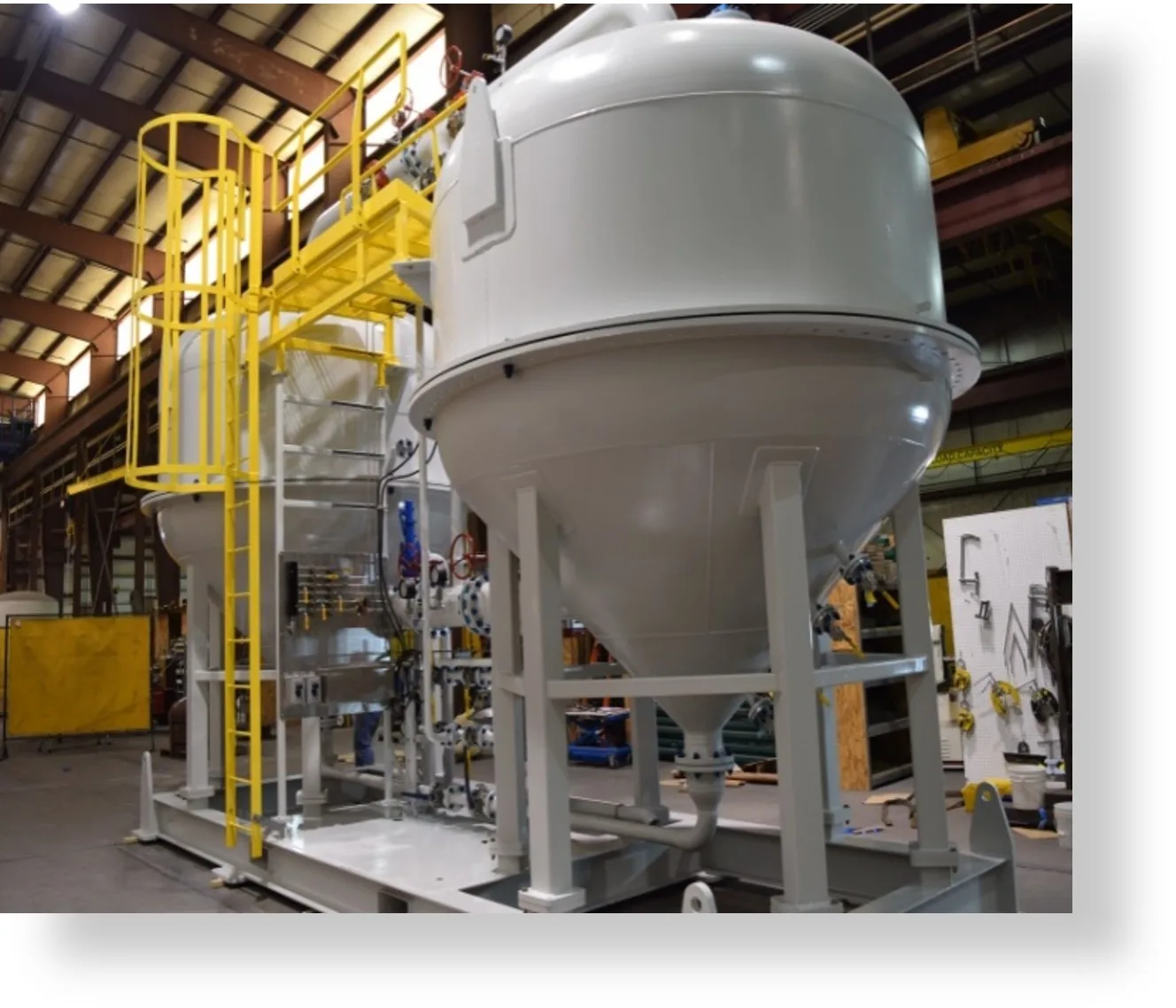
MYCELX offers two primary systems for Permian Basin operators: the MAC, or MYCELX Advanced Coalescer, and REGEN, the Regenerative Media Filter. According to Garrett Rasor, the company's business development manager for oil and gas, the technologies used together can recover 99 percent sales-quality oil from produced water while collecting suspended solids. The systems can operate before water is sent to saltwater disposal wells or serve as pretreatment for technologies designed to process produced water for beneficial reuse, desalination, or evaporation.

The REGEN system is a backwashable media filter that produces recycle-quality water suitable for frac ponds or sale to midstream and treatment companies. Rasor noted the system operates within a small physical footprint. Both technologies require no chemicals, produce no emissions, and operate with minimal labor because they are fully automated, making them cost-effective compared to alternative approaches.
Jim Weidler, executive vice president of business development, reported that MYCELX secured its first field-scale Permian Basin project using REGEN technology in November from a major midstream operator. Operations are scheduled to begin in the third or fourth quarter. Weidler described the project as a showcase that has generated substantial market interest.
The company recently completed a pilot study with a supermajor operator in the Delaware Basin using the combined MAC and REGEN system. Over three months and 55 days of testing, the paired technologies received produced fluids from the pipeline and exceeded the less-than-15-parts-per-million specification for oil and grease, achieving an average effluent oil-in-water measurement of 11.64 parts per million. Looking ahead, Weidler indicated the company plans to offer PFAS treatment technology to the Permian Basin market.