

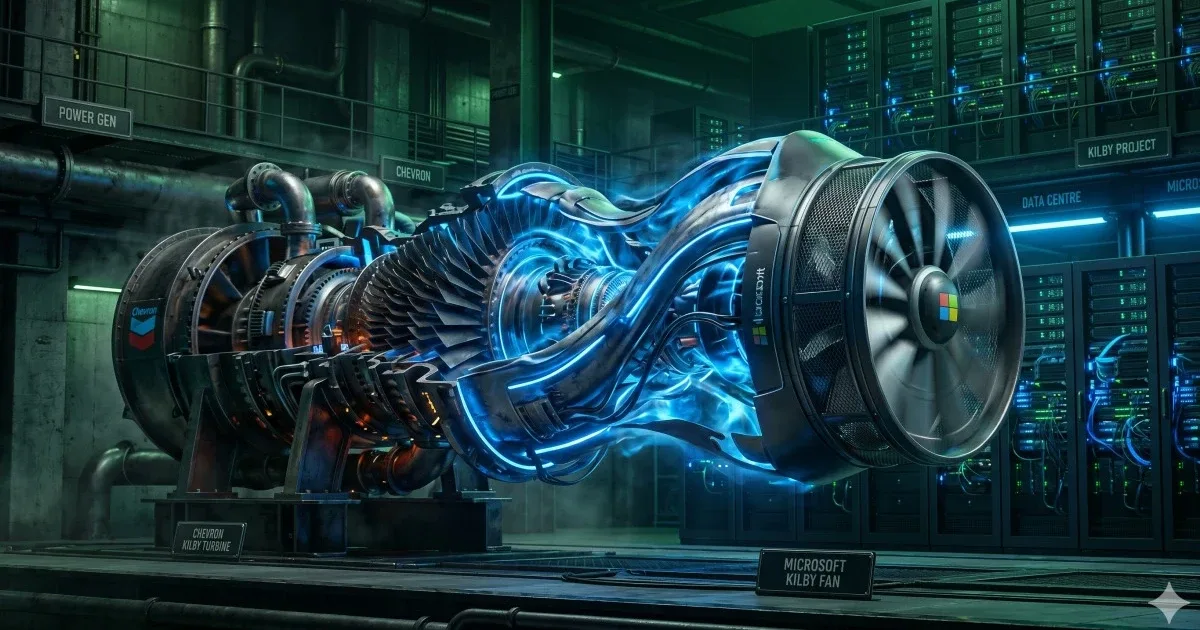
Chevron has forged a significant 20-year power contract with Microsoft to supply approximately 2.67 gigawatts of electricity to a new data center project in West Texas, marking the energy giant’s entry into the expanding market for data center power. Scheduled to begin delivering electricity in 2028, the project represents a major pivot for Chevron as it moves beyond traditional fossil fuel sales toward providing consistent power directly to high-demand sectors.
The facility—known as Project Kilby—will be developed by Energy Forge One LLC in partnership with Engine No. 1 and is planned in phases using large-scale GE Vernova turbines supplemented by additional capacity from Solar Turbines, a Caterpillar subsidiary. It is expected to generate substantial economic benefits, including billions in tax revenue and thousands of jobs, reinforcing the regional impact of such energy infrastructure developments.

Chevron views Project Kilby as the first of many such ventures, actively pursuing similar data center power deals nationwide in regions like the Midwest, the Rockies, and the Gulf Coast. This strategy leverages Chevron’s existing natural gas assets and infrastructure to provide round-the-clock electricity, filling a growing gap in reliable power supply amid surging data center needs.
The surge in demand is driven largely by artificial intelligence workloads and expanding cloud services, putting unprecedented pressure on the U.S. electric grid. According to the U.S. Energy Information Administration, electricity consumption in the country is projected to rise sharply over the next several years, elevating concerns about grid reliability. The Department of Energy has highlighted data centers’ energy consumption as a critical factor in impending power system stress.
Other oil and gas majors, including ExxonMobil, are also entering this emerging market. ExxonMobil aims to power low-carbon data centers by combining natural gas generation with carbon capture and sequestration technologies, utilizing its extensive pipeline network in the Gulf Coast region. This approach aligns with industry efforts to balance rising electricity demand with climate goals.
Industry analysts estimate the U.S. could encounter a shortfall of reliable power capacity for data centers ranging from 50 to 80 gigawatts by 2030. Gas-fired plants configured with carbon capture have become attractive due to their speed of deployment, cost-effectiveness, scalability, and reduced carbon footprint. For Chevron, expanding into this segment promises a new revenue stream that capitalizes on changing energy economics rather than traditional fuel sales alone.