

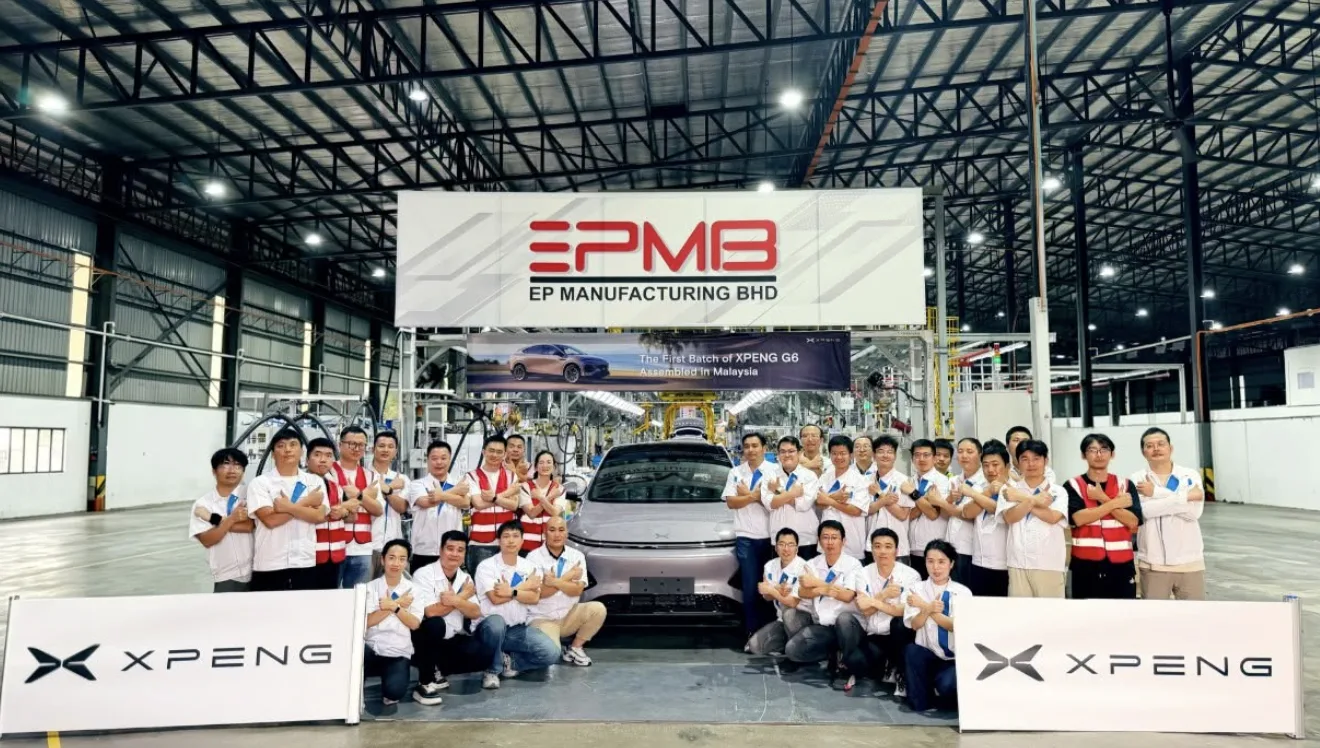
Malaysia is emerging as a key player in Southeast Asia’s electric vehicle (EV) manufacturing landscape, marked by the recent rollout of the first locally assembled XPENG G6 at EP Manufacturing Berhad’s (EPMB) facility in Melaka. This milestone signals not only the start of completely knocked-down (CKD) production for XPENG, one of China’s fastest-growing EV companies, but also highlights Malaysia’s broader ambition to become a regional EV hub.
The partnership between XPENG and EPMB, established less than six months prior to the G6 launch, covers the assembly of the G6 electric SUV, the premium X9 MPV, and its range-extended PowerX REEV variant. Importantly, the agreement grants EPMB assembly rights for three future XPENG models, suggesting a strategic long-term manufacturing commitment to Malaysia rather than sporadic assembly or export activity. XPENG categorizes Malaysia among its select overseas production bases alongside China, Indonesia, and Austria through Magna Steyr.

This development reflects a shifting strategy among Chinese automakers, who previously exported fully built EVs into Southeast Asia from China but now increasingly favor local production. Locally assembling vehicles cuts shipping costs, shortens delivery times, fortifies supply chains, and enables flexible responses to regional regulations and consumer preferences.
Malaysia’s appeal extends beyond its automotive manufacturing history. The country benefits from an established supplier network, advanced industrial infrastructure, and expertise in producing right-hand-drive vehicles for both domestic use and export markets. Supportive government policies actively encourage EV investments, enhancing Malaysia’s attractiveness for manufacturers eager to diversify beyond China.
XPENG is part of a wave of Chinese automakers establishing or expanding local EV production in Malaysia. Leapmotor has chosen Malaysia as its ASEAN production base by partnering with Stellantis’ facility in Gurun, Kedah. MG began assembling its S5 EV locally through EPMB in Melaka, while Great Wall Motor also produces electrified vehicles at EPMB’s site. Additionally, BYD has announced plans to start manufacturing operations in Malaysia, aiming to meet growing regional demand.
These collective investments are fostering an emerging industrial ecosystem in Malaysia, positioning the country as a vital EV manufacturing hub within Southeast Asia rather than a peripheral market. This cluster development underscores Malaysia’s evolving role in the global EV supply chain, driven by strategic partnerships and supportive policy frameworks.