

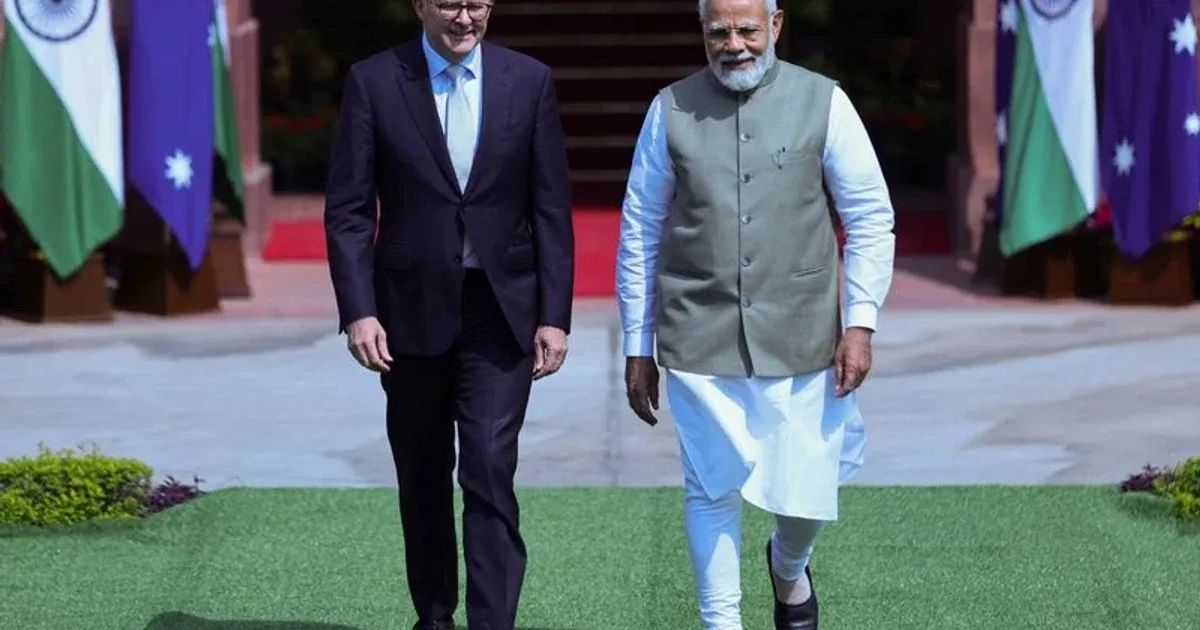
Narendra Modi’s recent visit to Australia placed a spotlight on the possibility of formalizing uranium exports from Australia to India, marking a significant step in bilateral energy cooperation. This move could transform a 2015 nuclear agreement into a practical fuel supply arrangement, highlighting the evolving strategic and economic relationship between the two countries.
During his visit to Melbourne, Modi met with Australian Prime Minister Anthony Albanese to discuss a broad agenda emphasizing critical minerals, trade expansion, defense collaboration, and security partnerships. At the heart of these discussions was the uranium export issue, which tests Canberra’s willingness to advance civil nuclear cooperation despite longstanding export restrictions tied to global non-proliferation rules.

Australia’s uranium export regulations require recipient nations to be parties to the Nuclear Non-Proliferation Treaty, maintain International Atomic Energy Agency safeguards, and participate in Australia’s nuclear cooperation network. India’s 2015 nuclear agreement with Australia fits within this framework, stipulating that uranium supplied is solely for peaceful purposes. The challenge lies in operationalizing this commitment, a goal outlined in the 2014 Australia-India security framework that anticipates early civil nuclear energy cooperation and protected uranium supplies for Indian reactors.
Beyond uranium, the visit underscored efforts to strengthen overall trade and industrial ties. India ranks as Australia’s fifth-largest trading partner, with deep cultural connections through a substantial Indian diaspora in Australia. Modi addressed the India-Australia CEOs Forum, promoting investment and collaboration in manufacturing and defense sectors, aiming to move beyond raw material trade toward integrated industrial partnerships.
The visit also occurred amid heightened political sensitivities at home, as a large diaspora event in Melbourne attracted tens of thousands and triggered security concerns due to planned protests focusing on Modi’s human rights record. This underscored how domestic political issues increasingly intersect with international diplomacy.
Modi’s stop in Australia was part of a broader regional tour targeting strategic realignments in the Indo-Pacific. Prior engagements in Indonesia included signing defense and agricultural agreements, notably involving the BrahMos missile system. Following Australia, Modi planned to visit New Zealand, further extending his diplomatic outreach in the region.