

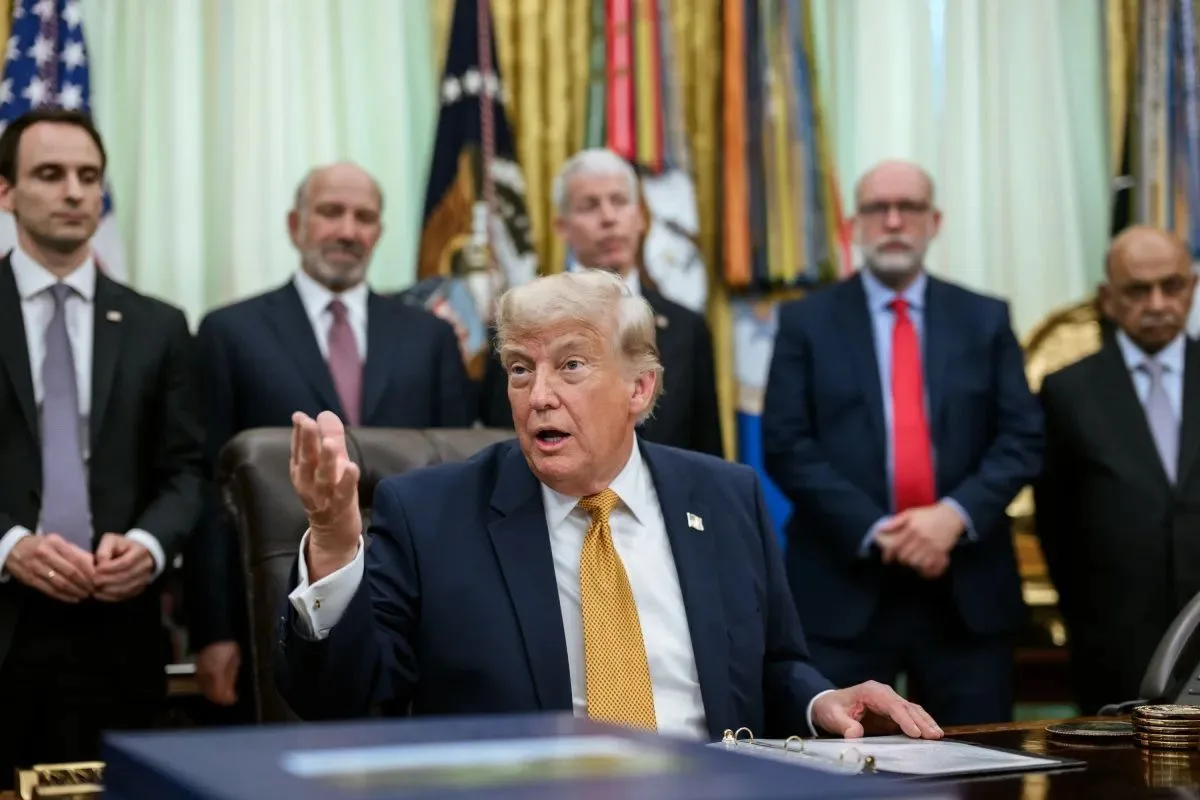
President Donald Trump attributed the surge in US manufacturing investment to his administration’s tariff policies, which he claims have encouraged companies across various industries to shift production back to the United States. Speaking after a NATO summit, Trump highlighted that this shift represents the largest industrial expansion in American history, with businesses investing trillions of dollars in new factories and production facilities.
Trump cited specific examples such as Toyota relocating from Mexico to Texas to build a massive new car plant, driven by the cost of meeting import tariffs set at 25 percent on goods produced abroad. He emphasized that similar investment trends have emerged in sectors including pharmaceuticals and semiconductors, naming major drug companies like Eli Lilly and Merck as building new domestic plants at "record levels."

The president warned that companies manufacturing outside the US would face escalating import duties, potentially reaching 100 percent to 250 percent depending on the product, especially for cars, chips, and pharmaceuticals. He positioned these tariffs as incentives for companies to produce domestically, thereby avoiding those additional costs.
In addition to manufacturing, Trump spotlighted growth in artificial intelligence infrastructure, explaining that the administration required technology companies to construct their own power sources instead of relying on the national grid. He argued this step was necessary as AI industries demand more energy than the country’s current production. Trump asserted that the US is maintaining a lead over China in AI development, bolstered by these investments.
The steel and aluminum sectors also benefited from tariffs, according to Trump. He noted improved performance in steel production and announced plans for what he described as the world's largest aluminum plant opening soon in Oklahoma, attributing these gains to tariff measures.
Overall, Trump described his tariff strategy as a driving force behind the revival of American manufacturing, making domestic production financially advantageous for companies and discouraging imports through higher duties.