

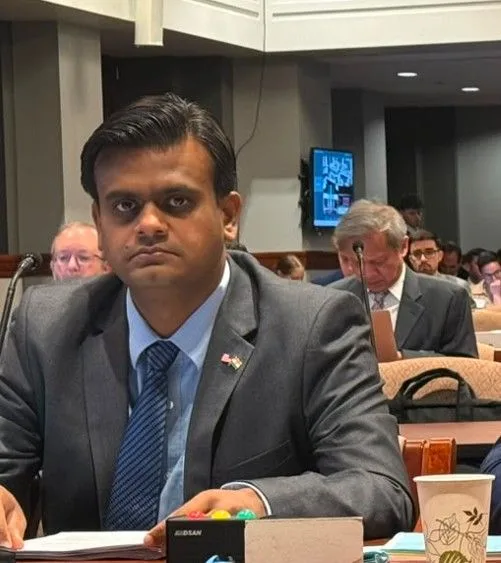
India urged U.S. trade officials to prioritize collaborative measures over tariffs to tackle forced labour concerns linked to Indian exports. Speaking at a U.S. Trade Representative (USTR) hearing, Shuchita Sonalika from the Confederation of Indian Industry (CII) advocated for enhanced compliance mechanisms rather than blanket additional duties under the Section 301 investigation.
Addressing questions from USTR representatives, Sonalika highlighted that cooperation-based approaches would more effectively eliminate unfair labour practices than punitive trade barriers. She emphasized CII’s ongoing partnerships with international bodies like the International Labour Organisation (ILO) and the United Nations Development Programme (UNDP) to encourage responsible business practices. The CII also welcomed deeper collaboration with U.S. authorities to further advance India’s compliance frameworks.

Indian companies have implemented extensive internal safeguards against forced labour throughout their supply chains. Sonalika pointed to documented ethics policies, supplier codes of conduct, and environmental, social, and governance (ESG) standards adopted voluntarily by many firms. She also mentioned the Business Responsibility and Sustainability Reporting (BRSR) framework, mandated by the Securities and Exchange Board of India (SEBI) for the top 1,000 listed companies, along with a lighter BRSR version for small and medium enterprises.
In her prepared remarks, Sonalika affirmed India’s commitment to eradicating forced labour from global trade and reiterated that such practices have no place in international supply chains. However, she argued the proposed additional tariff of 12.5% lacked sufficient evidentiary support and risked penalizing compliant Indian industries.
India’s legal framework prohibits forced labour through constitutional protections, specific labour laws, and criminal penalties. The country has also ratified core International Labour Organisation conventions addressing forced labour. Furthermore, Sonalika stressed ongoing industry accountability through rigorous global compliance, citing examples like human rights due diligence by aluminium producers and regular audits of textile exporters by U.S. buyers.