

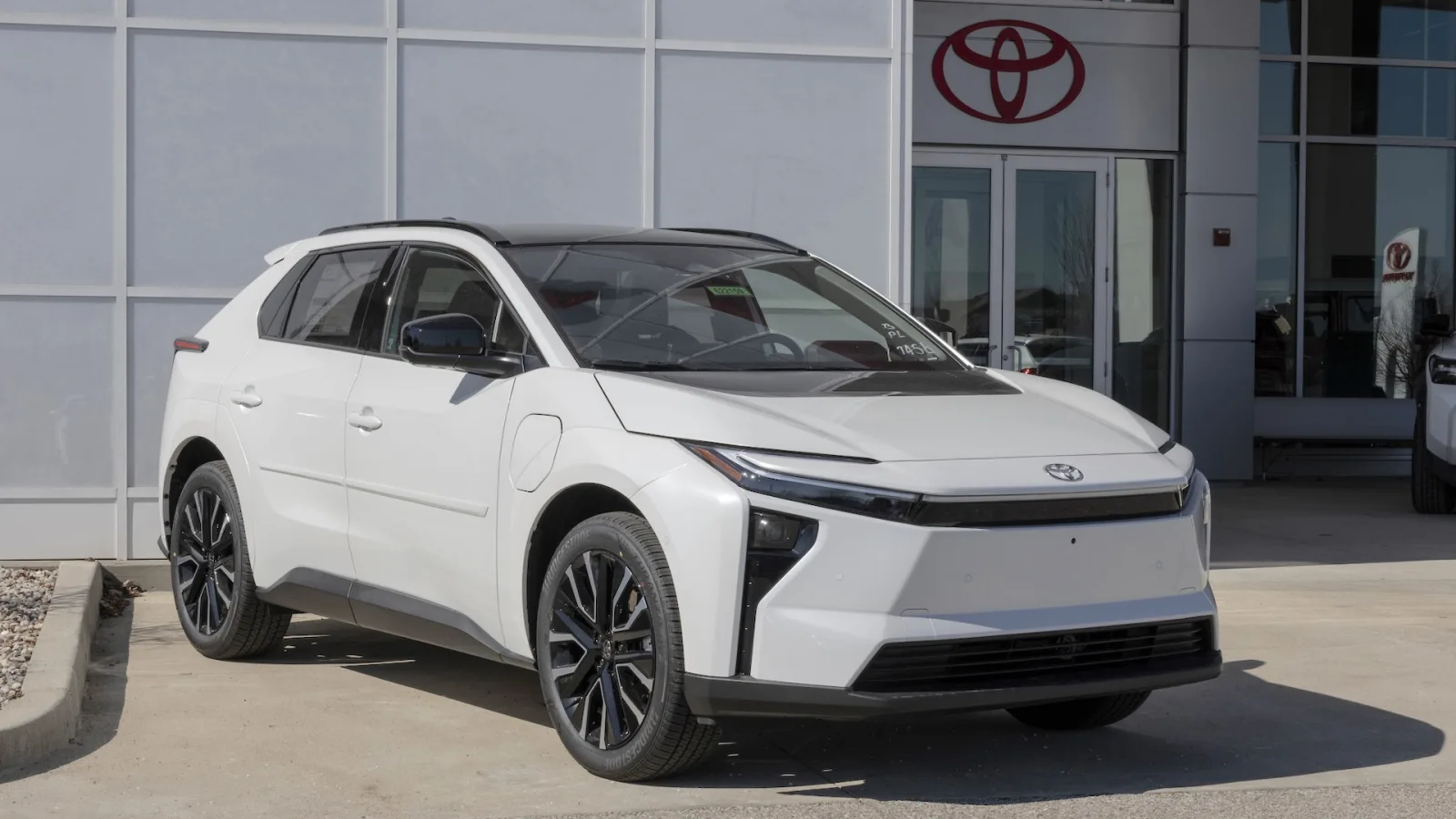
Toyota’s 2026 bZ electric SUV has emerged as a standout in the company’s EV portfolio, surpassing sales of traditional gas-powered staples like the Land Cruiser and Sequoia during the first half of 2026. With over 17,500 units sold so far, the bZ has moved ahead of the Land Cruiser’s 16,400 and the Sequoia’s nearly 14,000, reflecting growing consumer appetite for the brand’s electrified offerings.
This surge coincides with significant updates to the bZ model, known overseas as the bZ4X. The refreshed version boasts an extended driving range of up to 314 miles, a roughly 25% improvement over its predecessor. Enhancements include more powerful electric motors, battery preconditioning to improve efficiency in varying conditions, and a new standard charging port compatible with Tesla Superchargers, eliminating the need for adapters and broadening access to fast charging networks.

Toyota’s electric vehicle lineup has expanded beyond the bZ, now featuring models like the C-HR and the bZ Woodland in the U.S., along with Lexus’s RZ and new ES EV. Through mid-year, the C-HR reached nearly 3,750 sales, the bZ Woodland logging just over 500, and Lexus’s RZ moving more than 7,800 units. The bZ itself has secured a top-three spot among U.S. EVs, narrowly outselling the Chevy Equinox EV but still trailing behind the Hyundai IONIQ 5, which has surpassed 20,000 sales.
The increasing availability of affordable and practical EVs such as the bZ, which starts at approximately $35,000, highlights the shift mainstream automakers are making toward vehicles that appeal to everyday drivers rather than niche early adopters. Besides the lower upfront price compared to some competitors, electric vehicles generally offer reduced fueling costs and lower maintenance expenses, as they lack many of the complex moving parts and fluid requirements of internal combustion engines.
As charging infrastructure continues to improve in accessibility and affordability—especially for home installations that are more economical than public options—consumer confidence in transitioning to electric vehicles is expected to rise. Tools like instant installation estimates for Level 2 home chargers are helping streamline this process for buyers.
Looking ahead, Toyota and Lexus plan to introduce their first fully electric three-row SUVs later in 2026, with the launch of the 2027 Highlander BEV and the Lexus TZ. These additions will further diversify Toyota’s electric lineup and aim to capture a broader segment of the market seeking more spacious EV options.