

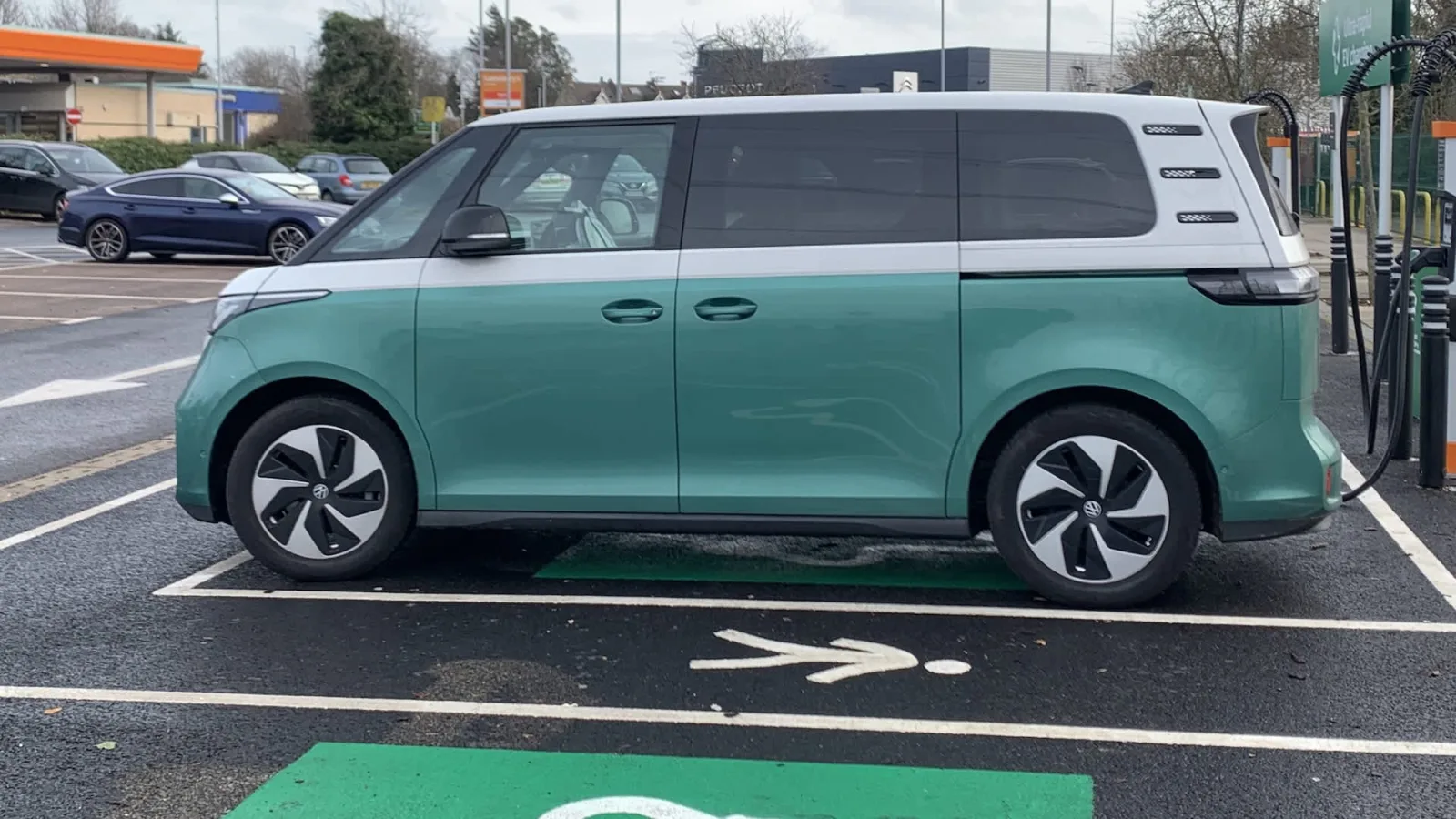
A recent 8,222-mile road trip across the United States, completed in a Volkswagen ID. Buzz electric van, offers compelling evidence that electric vehicles (EVs) with modest driving ranges can effectively handle long-distance travel. Covering 30 states over five weeks, the trip involved 76 charging stops and addressed persistent doubts about the practicality of EVs with ranges around 230 to 250 miles.
The journey began near Seattle and included stops in key locations such as Moab, Santa Fe, Atlanta, Boston, New York, Chicago, and Montana before returning to the start. The driver, who shared details on Reddit and nicknamed the vehicle "Otto von Buzzmarck," emphasized that the trip’s goal was to respond to skepticism regarding EV range during serious road trips.

Charging the ID. Buzz for the entire route cost approximately $1,389, with the vehicle consuming 3,123 kilowatt-hours of electricity. This equated to roughly 2.62 miles per kilowatt-hour, highlighting good efficiency over diverse terrain and driving conditions. Compared to a gas-powered Ford Transit van averaging 14 to 18 miles per gallon, the electric trip saved an estimated $700 to $800 in fuel costs alone.
In addition to cost savings, the environmental benefits were significant. The driver calculated that the electric trip produced around 1.5 tons of carbon emissions, versus nearly five tons for an equivalent gasoline vehicle—about a 70% reduction. Importantly, frequent fast charging throughout the trip did not appear to degrade the battery capacity, which reassures concerns about the impacts of rapid charging on EV longevity.
The driver noted that careful planning was as critical as the vehicle’s range for a smooth experience. Utilizing route-planning and charging apps helped minimize wait times and reduced range anxiety. The average charging session lasted 23 minutes, with only one instance requiring waiting for an available charger. Most charging stops offered backups nearby, except for two sessions in remote areas.
Charging infrastructure along popular routes notably enhanced convenience. The driver singled out the Ohio and Indiana Turnpikes for their integrated charging stations in service areas, making stops more efficient and less stressful. Another practical tip offered was to stay at campgrounds with 50-amp RV service, enabling a full Level 2 overnight charge at no cost.