

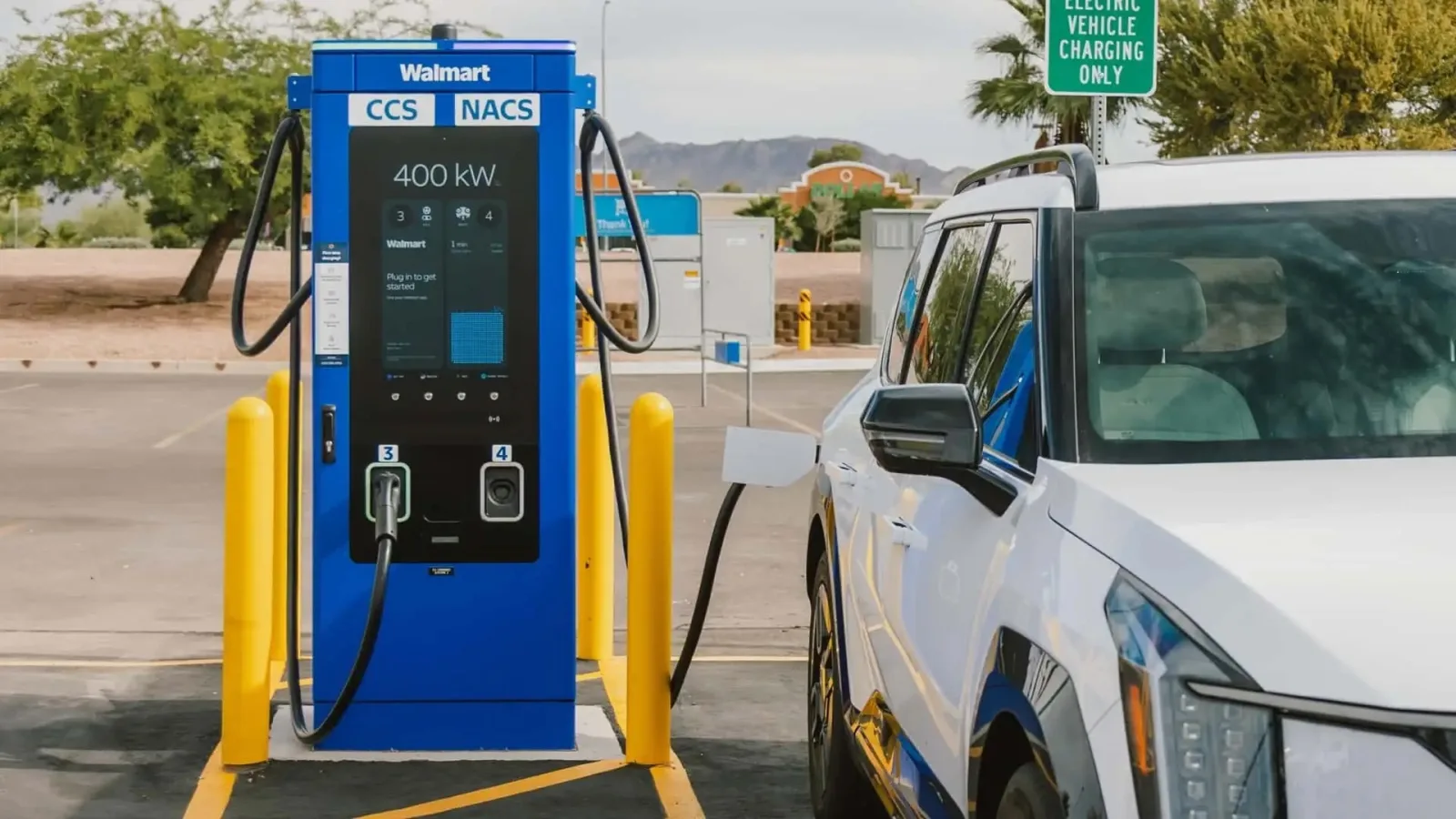
Walmart has significantly accelerated the rollout of its electric vehicle (EV) fast-charging network, now spanning 17 states with 612 charging connectors installed at 73 store locations. This rapid expansion, completed roughly 15 months after the retailer initially launched the initiative, aims to offer convenient charging options for customers while they shop.
The network has nearly doubled in size in just two months, up from around 300 ports at 50 stores in May, reflecting Walmart's strong commitment to scaling EV infrastructure. Walmart exclusively uses 400-kilowatt fast chargers from ABB and Alpitronic, equipped with both CCS and NACS plugs to support a broad range of EV models currently on the road.

Charging is primarily managed through Walmart’s smartphone app, although the company is testing some units with integrated card readers for easier payments. Pricing generally averages around $0.46 per kilowatt-hour, with a 10% discount for Walmart Plus members and potentially even lower off-peak rates available, making charging both accessible and cost-effective for users.
By situating fast chargers at familiar retail locations, Walmart addresses a key hurdle in EV adoption: convenient public charging, especially for drivers without reliable home charging access or those on long trips. The growing network supports the economic benefits of EV ownership, which include lower fuel and maintenance costs compared to traditional vehicles.
Home charging remains an economical option for EV owners, but often requires Level 2 charger installations for faster charging, which some companies like Qmerit provide. Despite some projections of slower EV adoption growth in the short term, Walmart’s continuous investment signals confidence in increasing demand for accessible fast-charging solutions nationwide.
Walmart is positioning this EV charging expansion as a long-term infrastructure investment rather than a temporary pilot, with plans to continue installing thousands of chargers across its nationwide store base. This strategy not only supports existing EV drivers but also encourages broader consumer adoption by improving charging convenience at popular shopping destinations.