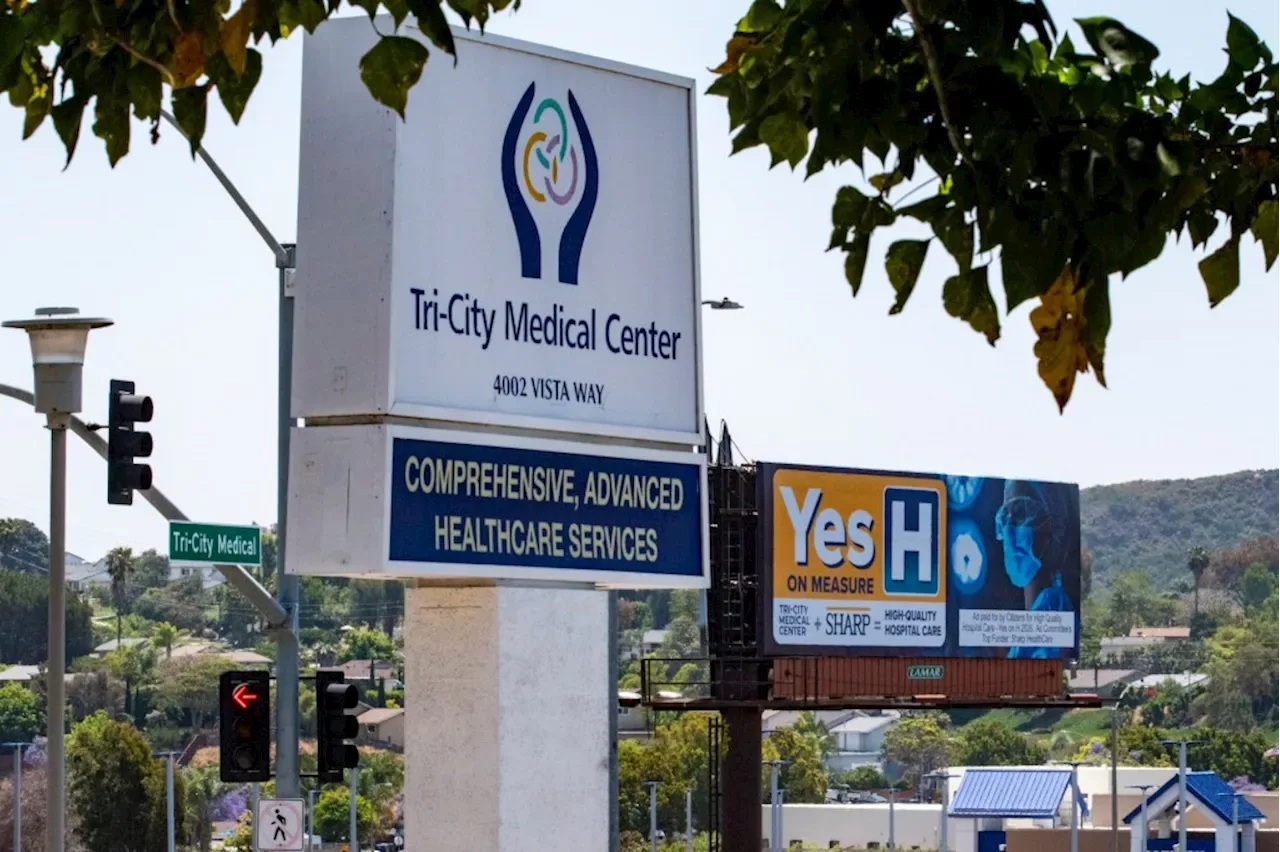
Tri-City Medical Center is asking Oceanside-area residents to approve Measure H, a ballot initiative that would lease the hospital's assets to Sharp HealthCare for three decades. The deal represents a significant shift for a facility that has faced mounting financial pressures and declining patient volumes over the past decade. If approved, Sharp would assume $80 million in existing Tri-City debt and invest at least $100 million in facility improvements and new services.
The hospital's struggles reflect broader changes in the regional health care market. Total patient discharges fell from 15,383 in 2015 to 8,901 in 2025, according to state financial reports. Facing expensive seismic upgrade requirements and intense competition for labor, the hospital closed its behavioral health department in 2018 and its labor and delivery department and neonatal intensive care unit in 2023. These closures underscore how Tri-City's market share has shrunk dramatically. The hospital captured just 2 percent of the region's total net revenue in 2025, compared to 5.3 percent in 2000.

The partnership would create a new 15-member board to oversee operations, with 10 members appointed by Sharp and five appointed by Tri-City's elected directors. Notably, the arrangement requires no increase in property tax levies. Unlike previous bond measures that needed two-thirds voter approval, this lease requires only a simple majority to pass.
The measure faces a markedly different political landscape than three earlier ballot attempts in 2006 and 2008. Those bond proposals, seeking hundreds of millions for construction and seismic upgrades, all failed. Measure H, by contrast, has drawn support from the California Nurses Association, the Service Employees International Union, the San Diego County Medical Society, and the San Diego Taxpayers Association. Hospital officials reported polling showing approximately 70 percent approval. The measure has attracted no organized opposition, a stark contrast to the earlier campaigns.
Sharp has invested heavily in the campaign, contributing $150,000 in monetary support and $177,645 in non-monetary contributions for promotional billboards, targeted social media advertisements, and direct mailers. Hospital staff have voiced strong backing for the deal. Astrid Warner, a registered nurse at the facility's infusion center, noted that workers support the partnership because of concerns about Tri-City's long-term viability. She highlighted plans to restore labor and delivery services and expand oncology care as reasons for internal enthusiasm.
A consultant advised Tri-City's board nearly three decades ago that the hospital needed to partner with a larger health system or face financial ruin. The hospital explored mergers in the late 1990s and early 2000s, but those discussions fell apart over concerns about lost independence. Now, facing accelerating consolidation in health care driven by managed care insurance plans, the current board has concluded that long-term security depends on affiliation with a regional provider capable of competing with large systems.