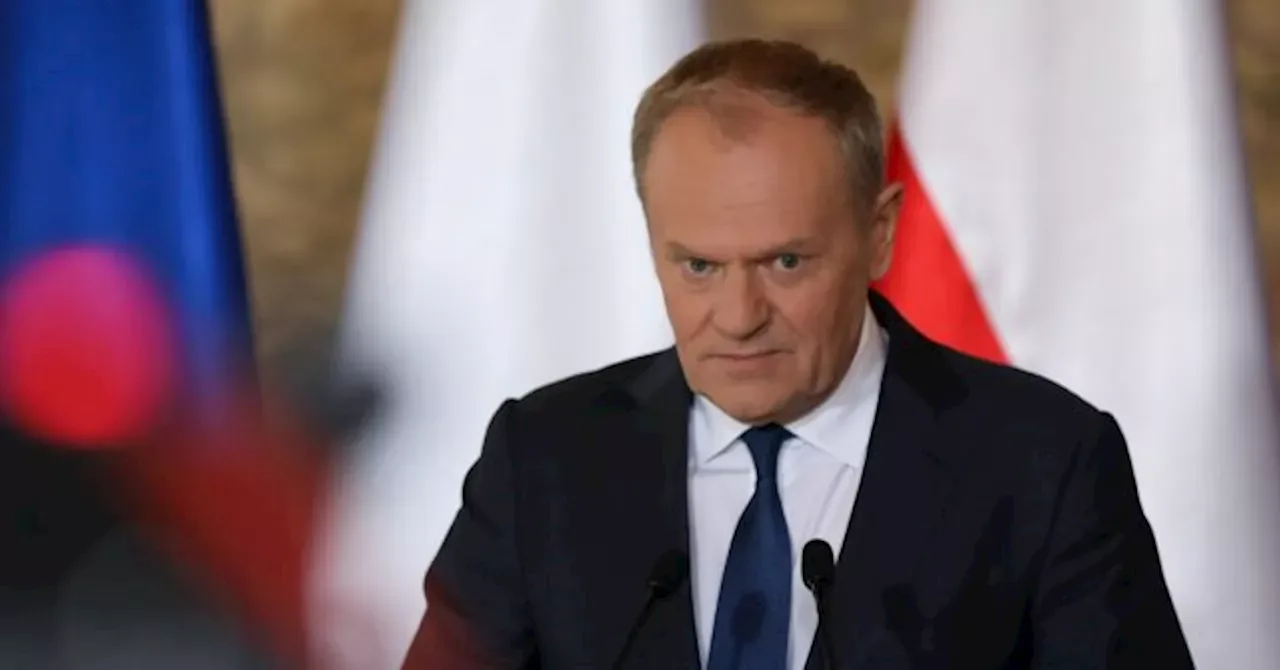
Polish Prime Minister Donald Tusk warned Friday that the NATO alliance faces the threat of "disintegration" in response to U.S. troop reductions from Europe. The Pentagon announced that approximately 5,000 soldiers would be relocated from German bases over the next year as part of a broader shift in American forward deployment strategy. President Donald Trump suggested the withdrawal from Germany would be substantially larger, though he did not provide specific numbers regarding the roughly 36,000 U.S. troops currently stationed in the country.
Trump has also indicated interest in relocating American forces from Italy and Spain, accusing both nations of disloyalty over their response to the conflict involving Iran. Poland, which hosts some 8,500 U.S. troops, has not been mentioned as a target for withdrawal, yet Tusk voiced deep concern about the alliance's trajectory. "The greatest threat to the transatlantic community are not its external enemies, but the ongoing disintegration of our alliance. We must all do what it takes to reverse this disastrous trend," Tusk stated.

Tusk's warning follows his public questioning of American commitment to Europe last week. He expressed uncertainty about whether Washington would uphold Article 5 of the NATO treaty, which obligates member states to defend one another if attacked. Despite Trump repeatedly affirming U.S. support for its allies, Tusk questioned whether "the United States is ready to be as loyal as it is described in our treaties." He acknowledged uncertainty, saying: "I want to believe that is still valid, but sometimes, of course, I have some problems."
The Polish leader has positioned himself as a central figure in efforts to strengthen European defense capabilities independent of the United States. Tusk, who previously headed the European Council, has advocated transforming the European Union into a fully-fledged defensive alliance with its own military infrastructure. He recently met with French President Emmanuel Macron to explore extending Paris's nuclear weapons umbrella across Europe and potentially stationing French nuclear weapons in Poland.
Macron is engaged in parallel discussions with other major European powers, including Germany, about extending French nuclear coverage. Germany has pledged to develop the strongest military force in Europe by 2039, with plans to field 460,000 combat-ready troops, though it has faced challenges meeting recruitment targets.