

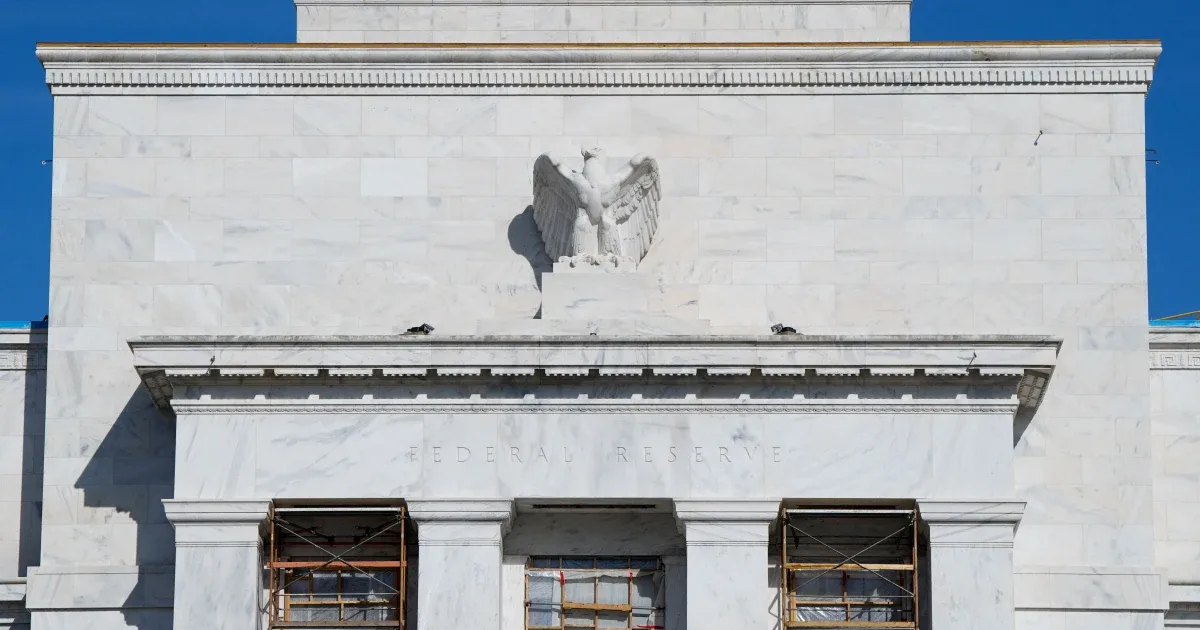
Federal Reserve interest rates are expected to remain steady through 2026, as a majority of economists surveyed by Reuters see no imminent increases. This outlook contrasts with financial markets, which continue to price in at least one rate hike over the same period, signaling ongoing uncertainty about the Fed’s approach to inflation and economic growth.
The Federal Open Market Committee (FOMC) reinforced this pause in its recent unanimous decision to keep benchmark rates in the range of 3.50% to 3.75%. This policy stance reflects solid economic expansion, stable unemployment, and persistent inflationary pressures, particularly influenced by supply shocks tied to energy prices. However, the Fed’s latest statement notably omitted forward guidance, a strategic shift explained by the new chair, who views this tool as less effective given the current complex economic environment.

Consumer inflation remains above 4%, more than twice the Fed’s target of 2%, sustaining concerns over cost pressures. Although energy prices have retreated closer to levels last seen before recent geopolitical conflicts, the central bank weighs these developments against strong labor markets and steady capital investments. Economists largely agree that maintaining rates is the most prudent course, signaling a “higher-for-longer” phase in borrowing costs.
The Fed itself shows some internal division: nearly half of policymakers involved in the June economic projections anticipate at least one rate increase by the end of 2026, even as official futures markets embed similar expectations. This split contributes to uncertainty that directly affects consumers and businesses.
For households, elevated borrowing costs mean mortgage rates are likely to remain high. Consumers with revolving credit, such as credit cards, face sustained expensive interest payments. Meanwhile, companies may find higher financing costs a deterrent to hiring, equipment acquisition, and expansion efforts, especially if inflation resists quick decline and the Fed opts for patience rather than easing.