

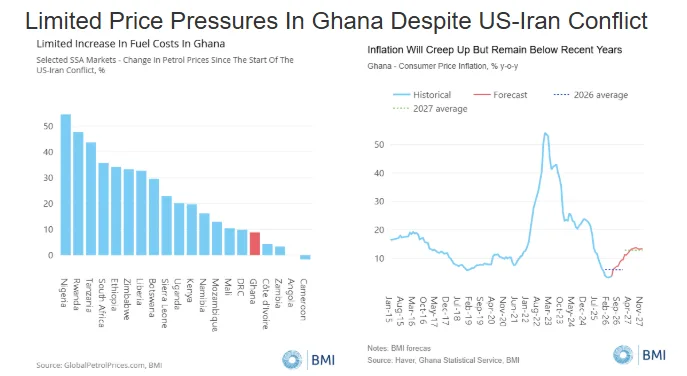
Ghana’s inflation is projected to average 12.8% in 2027, a marked increase from an estimated 6.0% in 2026, according to Fitch Solutions. This surge is expected to erode household purchasing power and dampen private consumption across the country.
The UK-based analytics firm highlights the role of a restrictive US Federal Reserve monetary policy responding to elevated inflation globally. This tightening is likely to depress gold prices, a critical export commodity for Ghana, which in turn would weaken the Ghanaian cedi. The currency depreciation would add inflationary pressures domestically, especially in the latter half of 2026 and into 2027, further restricting economic activity.

Early 2026 maintained an unusually low inflation environment, mainly due to the strong year-on-year performance of the cedi, which helped offset rising costs of imported goods. However, Fitch notes that these favorable base effects will diminish by mid-2026, creating upward pressure on inflation rates.
The El Niño weather phenomenon expected to begin in the second half of 2026 poses additional risks. Reduced rainfall and higher temperatures are forecast to impair crop yields, driving food prices higher. This climatic disruption could also negatively affect cocoa production, a vital export, and strain electricity generation due to lower water levels at the Akosombo Dam.
Inflation recently rose to 3.7% in May 2026 from 3.4% the previous year, largely influenced by seasonal food supply shortages and an unfavorable baseline. Looking ahead, these combined monetary and environmental factors suggest a challenging inflation outlook for Ghana through 2027.