

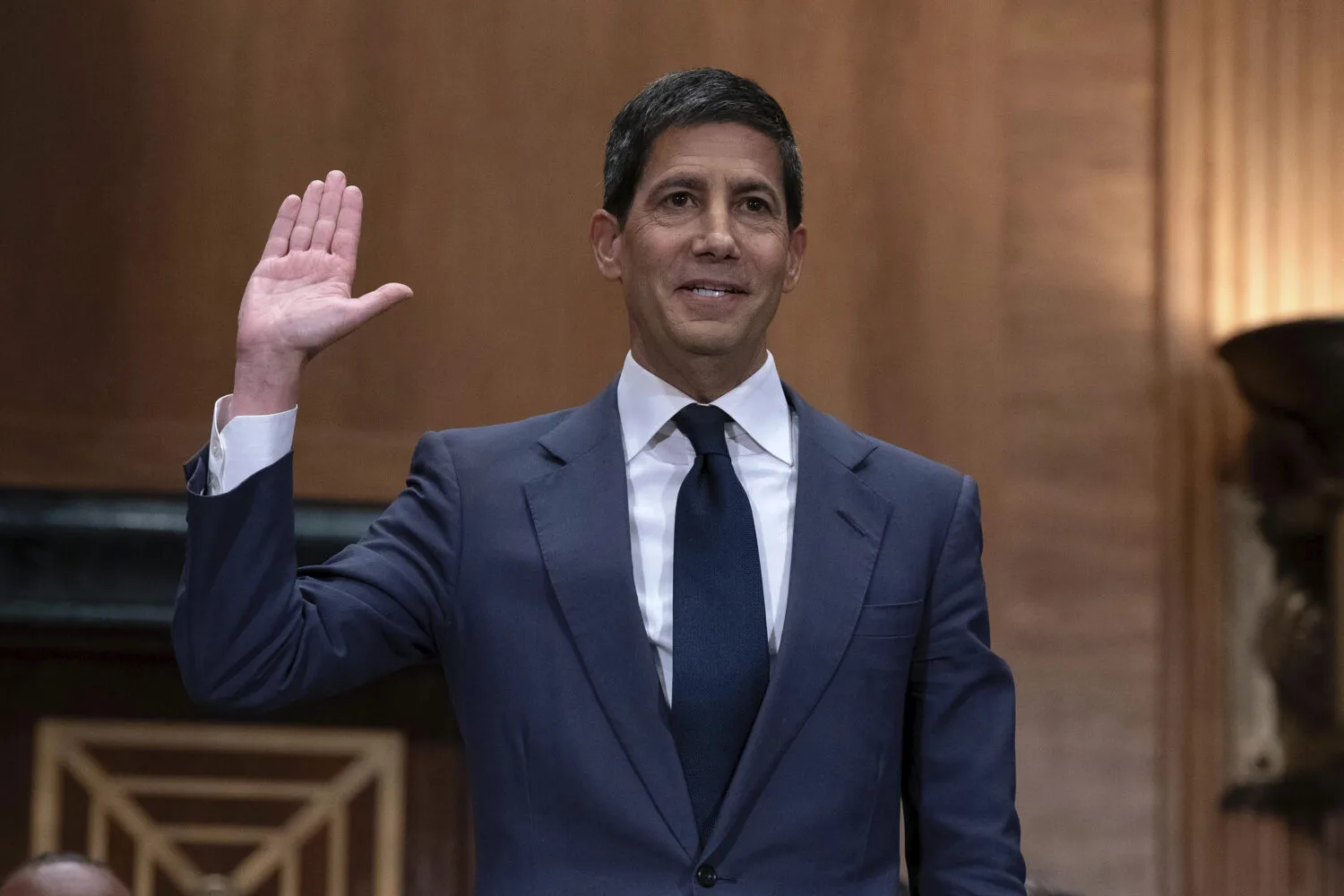
The U.S. Senate confirmed Kevin Warsh as the new chair of the Federal Reserve, a move that places him at the helm during a turbulent period for the nation’s monetary policy. His appointment follows President Donald Trump’s decision to replace Jerome Powell, aiming to align the Fed’s actions more closely with the administration’s economic agenda, particularly on interest rates.
Warsh inherits a central bank split over handling rising inflation exacerbated by geopolitical tensions involving the U.S., Israel, and Iran, which have driven up energy costs. While economic conditions call for potentially higher interest rates to tame inflation near the Fed’s 2% goal, Trump has persistently pushed for lower rates to stimulate growth. Warsh’s earlier reputation as an inflation hawk contrasts with his recent alignment with Trump’s optimism about technology-driven productivity gains that might ease inflationary pressures.

The confirmation process was marked by unusual legal and political complexities. The Justice Department’s investigation into the Fed — seen by many as an effort to remove Powell — delayed Warsh’s confirmation until the probe was dropped. Powell, whose chairmanship ended with Warsh’s confirmation, surprised observers by deciding to remain on the Fed’s governing board until his term expires, raising questions about potential internal friction as Warsh attempts to steer monetary policy.
Warsh is perceived as a traditional choice in terms of credentials, holding degrees from Stanford and Harvard Law. He has ties to the Republican establishment through his marriage to Jane Lauder, connecting him to a family known for major political donations. Despite this, Senate Democrats criticized him for a lack of full transparency regarding his personal wealth during the confirmation hearings.
Warsh previously contended for the Fed chairmanship in 2017 but lost to Powell, a decision Trump later regretted, suggesting he had received poor advice. Now, Warsh faces the challenge of navigating a central bank under presidential pressure to cut rates despite inflationary risks, making his tenure a critical test of balancing political demands and economic realities.