

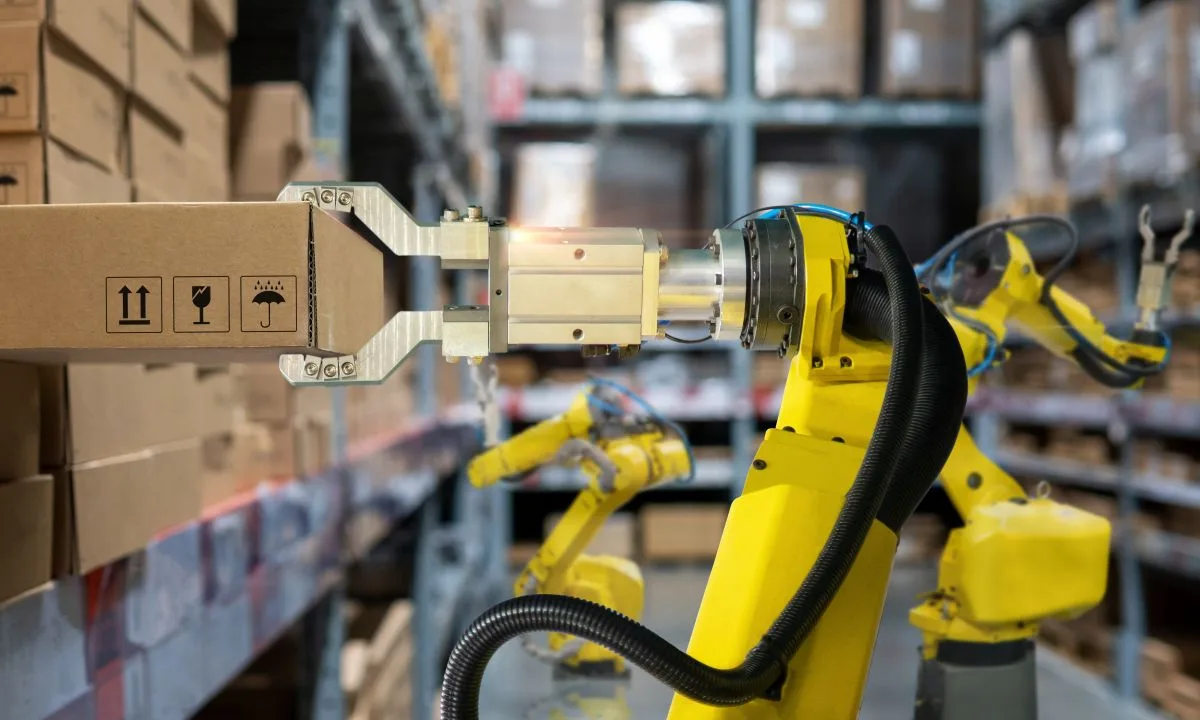
Global industries face a mounting challenge as labor shortages drive adoption of physical AI to maintain productivity. By 2030, U.S. manufacturers alone are expected to have over two million unfilled positions, a gap economists estimate could cost the economy trillions annually. Construction firms also report millions in workforce demand just to keep up with current needs.
Rather than reducing headcount, companies are deploying AI-driven humanoid robots and autonomous machinery to fill critical roles where workers are unavailable. Agility Robotics’ Digit robot, for instance, has moved more than 100,000 items in real-world commerce, operating across major Fortune 500 companies. Similarly, Figure AI’s robots have logged thousands of hours on automotive assembly lines, handling repetitive, precise tasks traditionally done by human operators.

These trends are especially pronounced in countries like Japan, where demographic declines have eroded the share of working-age adults for over a decade. Experts cite physical AI as a necessary continuity tool to keep factories, warehouses, and service operations functional despite shrinking labor forces.
Technology companies have responded by integrating AI into collaborative robotics on an industrial scale. Nvidia’s Omniverse platform supports several innovators building robotic factories to address labor gaps. Industry leaders describe this as a pivotal moment akin to the rise of conversational AI but for physical tasks.
Government initiatives also reflect the urgency: Japan’s Ministry of Economy, Trade and Industry has pledged billions to advance AI-robotics integration, targeting a significant global market share. Financial analysts predict exponential growth for humanoid robots, projecting the market to surge from a few billion to tens of billions in the next decade. Manufacturing costs for these robots have dropped markedly, accelerating their widespread adoption across supply chains and service sectors.
As the global workforce contracts, physical AI emerges less as a replacement and more as a vital supplement, enabling industries to sustain output and meet demand amid persistent labor shortfalls.