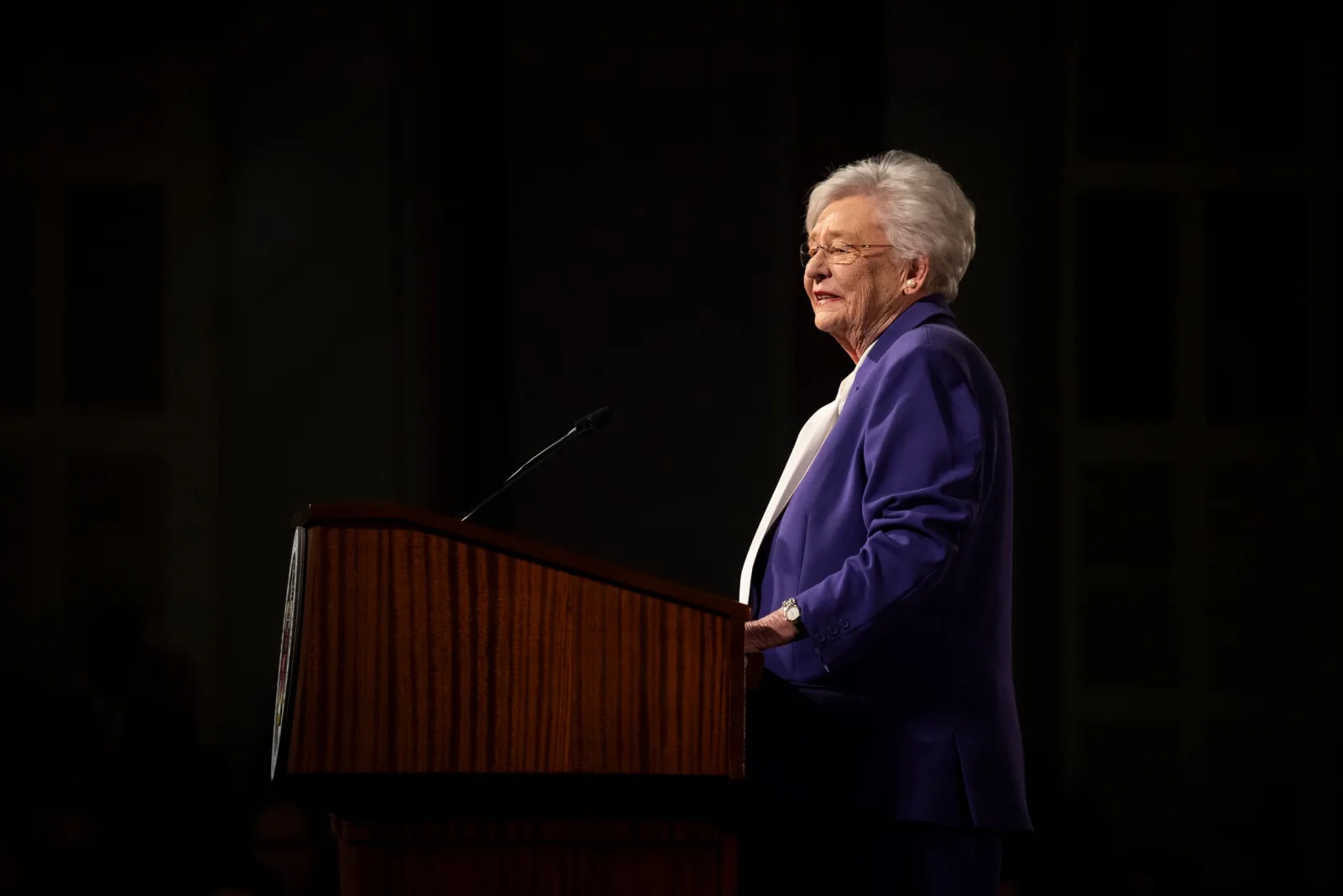
Alabama Gov. Kay Ivey called legislators back to Montgomery starting Monday to approve contingency plans for special primary elections, hoping the state can switch its congressional maps ahead of the November midterms. Tennessee Gov. Bill Lee announced a separate special session beginning Tuesday for the GOP-controlled Legislature to reconfigure the state's congressional districts. Both moves followed the Supreme Court's decision striking down a majority-Black congressional district in Louisiana, ruling that the map relied too heavily on race.
Alabama Republicans said the redistricting effort would "give our state a fighting chance to send seven Republican members to Congress." The state's current seven-member delegation includes two Democrats. In Tennessee, Republicans are targeting the state's one Democratic-held House district, which is centered on Memphis, a majority-Black city.

The Supreme Court ruling has set off a wave of redistricting activity across Southern statehouses. Florida approved new districts the day of the decision. Louisiana moved quickly to postpone its May 16 congressional primary, drawing lawsuits from Democrats and civil rights groups. South Carolina's governor suggested his state might also reconsider its congressional map.
President Donald Trump encouraged the redistricting efforts on social media Sunday, stating his party could gain 20 seats in the House and urging state legislatures to act. "We should demand that State Legislatures do what the Supreme Court says must be done," Trump said. "That is more important than administrative convenience." Trump also publicly pressured Tennessee's governor Thursday, writing on social media that Lee had promised to work hard to deliver Republicans an additional seat.
Federal judges had previously ordered Alabama to use a court-selected map containing a second district with a substantial number of Black voters, with instructions to use the new map until after the 2030 Census. Alabama is appealing that decision and hopes the Louisiana ruling will allow it to revert to a 2023 map drawn by state lawmakers. "Alabama knows our state, our people and our districts best," Ivey said.
Democrats and voting rights advocates have condemned the redistricting push. Sen. Raphael Warnock of Georgia called the court decision and the redistricting scramble an attempt to roll back the Civil Rights Movement, comparing it to Jim Crow era tactics. "They said we're going to allow partisan politicians to gerrymander you, so that even when you show up, your voice won't have as much impact because we'll play with the lines," Warnock said Sunday from the pulpit at Ebenezer Baptist Church.
In Tennessee, Democrats noted that the state Supreme Court checked additional redistricting in 2022 because it was too close to an election, and they argued the court could intervene again. "We cannot keep doing things like this and calling ourselves a democracy," Democratic State Sen. Ramesh Akbari said at a news conference outside the Civil Rights Museum in Memphis.
Alabama Democrats also sharply criticized the decision. Former Sen. Doug Jones, a Democratic candidate for Alabama governor, called the special session "a blatant power grab by Republican leadership in Montgomery to eliminate seats held by Black Democrats."