

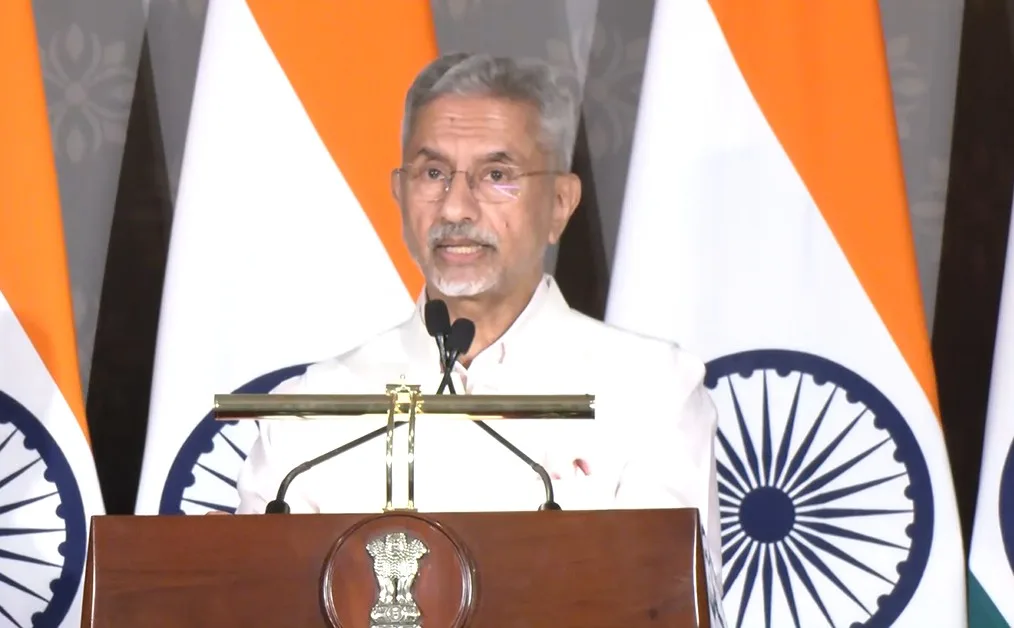
India presented a comprehensive five-point strategy addressing critical regional and global challenges during high-level discussions with US Secretary of State Marco Rubio. The plan underscores dialogue and diplomacy as primary tools for resolving conflicts, alongside robust support for uninterrupted maritime commerce.
External Affairs Minister S. Jaishankar emphasized that India and the United States maintain continuous strategic coordination across multiple sectors, reflecting a deepening partnership grounded in shared national interests. Despite Rubio’s first official visit to India, communication between both sides has been steady through various international platforms and bilateral engagements.

Jaishankar’s five-point framework outlines India's core principles: advocating diplomacy to solve disputes, ensuring safe and unimpeded maritime trade, insisting on strict adherence to international law, opposing the weaponization of markets and resources, and valuing trusted global partnerships complemented by resilient supply chains to mitigate economic risks. These pillars reflect a response to shifting geopolitical challenges, especially in maritime domains and economic interdependence.
The minister also detailed the scope of recent discussions with Rubio, which touched on delicate regional dynamics in West Asia, the Indian subcontinent, and East Asia, as well as the implications of recent geopolitical developments in the Caribbean. Ahead of the upcoming Quad summit, Indo-Pacific security remains a key agenda item, highlighting India’s commitment to multilateral dialogue and cooperation.
Defence and strategic cooperation featured prominently, with Jaishankar recalling the renewal of the decade-long major defence partnership agreement between India and the United States. The talks also spotlighted the signing of a comprehensive roadmap for underwater domain awareness, aimed at strengthening maritime security and surveillance capabilities.