

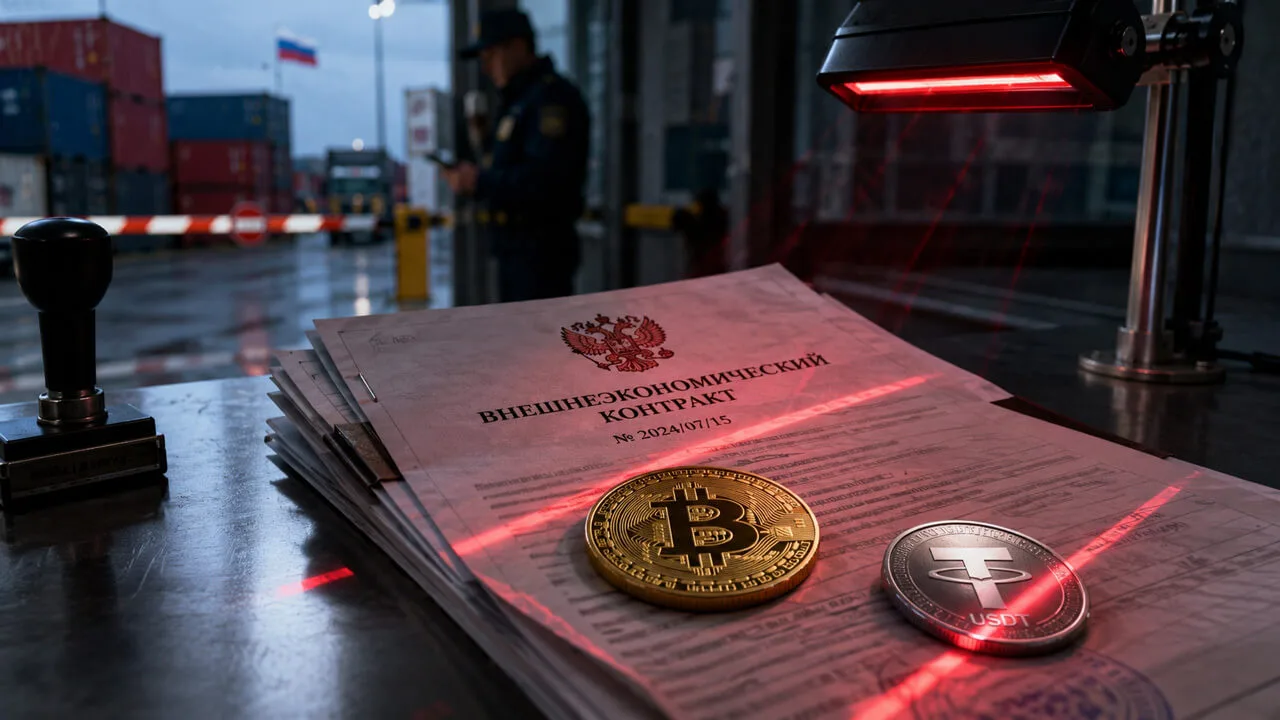
Russia has introduced an authorized framework allowing certain exporters and importers to conduct cross-border payments using cryptocurrencies under a controlled, experimental regime. This initiative marks a shift from informal crypto workarounds to a regulated pilot within the country’s foreign-trade settlement system.
The corridor operates under federal law permitting specific digital currency transactions linked to foreign trade contracts, with participant eligibility and transaction limits managed by the Bank of Russia’s experimental legal regime (ELR). While this creates a domestic legal basis for crypto payments, it faces significant constraints outside Russia’s jurisdiction, where external service providers and compliance demands remain critical obstacles.

Converting international trade payments into cryptocurrency—whether in Bitcoin or dollar-backed stablecoins—requires more than Moscow’s legal approval. Buyers and sellers must mutually agree on the asset used, and market participants need to navigate liquidity sourcing, custody, regulatory compliance, and conversion back into usable liquidity. This raises complex concerns because many infrastructure elements lie beyond Russia’s control.
Bitcoin’s decentralized nature eliminates issuer involvement but still requires counterparties, exchanges, and custody services that could be subject to compliance scrutiny. On the other hand, stablecoins offer the advantage of easier pegging to the dollar but bring issuer-linked restrictions and regulatory monitoring, including potential exposure to sanctions.
The corridor thus represents both a legal and a market-driven challenge. Despite Russia’s internal authorization, firms outside the country must decide whether to engage with the corridor amid potential sanctions violations or perceive it as a compliance risk to avoid. This dynamic translates into ongoing uncertainty about the corridor’s practical utility for circumventing sanctions imposed on Russia’s traditional banking channels.
Key stages of the crypto settlement process highlight where sanctions pressures may still apply:
- Russian legal authorization: Only selected firms under the ELR can legally use crypto for foreign trade transactions, under strict participant and transaction type limits.
- Asset selection: Bitcoin offers issuer-free settlement but depends on counterparties, while stablecoins facilitate dollar accounting but link to issuer controls and monitoring.
- Counterparty acceptance: Foreign buyers or sellers must consent to accept or route crypto payments, risking secondary sanctions or compliance barriers from their financial institutions.
- Conversion and offramps: Crypto payments often require conversion into usable currency or inventory value, involving exchanges, OTC desks, custodians, and payment processors subject to varying degrees of sanctions enforcement.
While Moscow’s experimental corridor creates a domestic legal channel for digital asset use in cross-border trade, its overall effectiveness largely hinges on the willingness and regulatory environment of global market participants. The venture underscores the limits of sanctions evasion through crypto absent widespread network cooperation.