

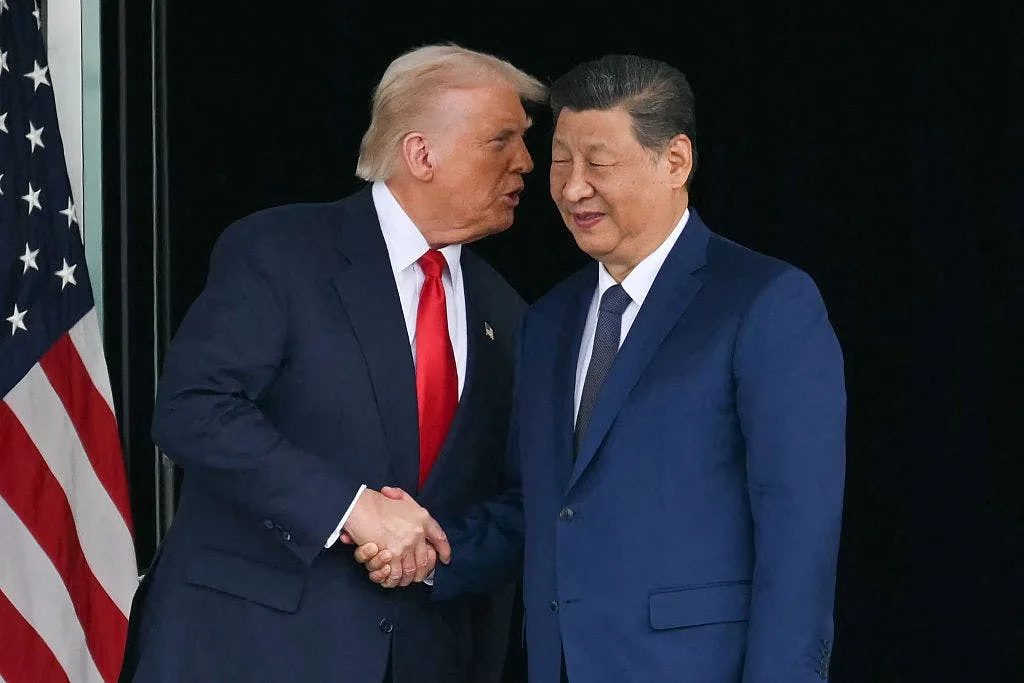
President Donald Trump’s forthcoming visit to China will confront sensitive issues beyond trade, notably pressing human rights abuses and geopolitical challenges. Human rights under the Chinese Communist Party (CCP) remain a central agenda, as millions endure oppression, with Christian communities among the most severely targeted.
One critical human rights case involves Pastor Ezra Jin, detained without charges since his arrest alongside several congregants. His prolonged imprisonment reflects the CCP’s broader crackdown on religious freedom, including the harassment of Jin’s legal defense. Trump’s awareness of the case owes much to advocacy from Jin’s daughter, who has actively pressured the administration. The president has committed to raising this issue directly with Chinese leader Xi Jinping.

Another high-profile figure Trump intends to discuss is Jimmy Lai, the Hong Kong pro-democracy businessman sentenced to two decades behind bars. Lai, holding a British passport, remained in Hong Kong to champion autonomy despite Beijing’s systematic erosion of promised freedoms since the city’s handover. Trump’s promise to advocate for Lai’s release underscores US support for global liberty and human rights.
Trade relations will also dominate talks, as the United States continues to manage the complex fallout from the trade war initiated under Trump’s first administration. Despite imposing tariffs exceeding 100% on Chinese goods, China remains one of America’s largest trading partners. With mounting pressure to secure tangible economic gains, Trump faces a delicate balance: any new trade deal must unequivocally benefit the US, given China’s history of reneging on prior agreements.
Beyond trade and human rights, geopolitical tensions will loom large. Taiwan’s status remains a flashpoint, with China threatening the island that supplies the majority of the world’s advanced microchips. Trump’s diplomatic approach treats China less as a potential partner and more as a strategic competitor, demanding vigilance amid rising security concerns.