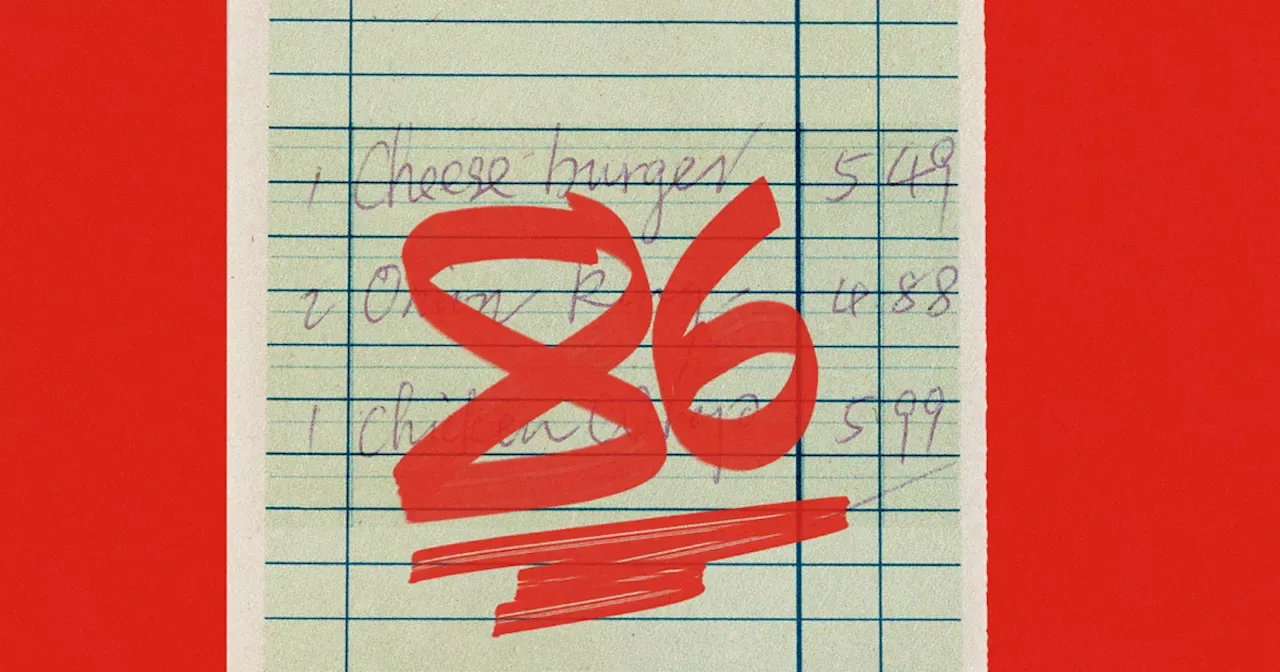
James Comey has been indicted in North Carolina on two counts of threatening the president's life after posting a picture of seashells arranged to read "86 47" on Instagram last year. Federal prosecutors argued that "a reasonable recipient who is familiar with the circumstances would interpret" the post as "a serious expression of an intent to do harm to President Trump." However, workers across the food service industry are pushing back against that interpretation, characterizing "86" as everyday language with no connection to violence.
Mike Reyes, an operational excellence consultant at FLIK Hospitality Group with decades of hospitality experience, called the term "probably the most overused word in hospitality." He explained that "86" simply means an item is unavailable and needs to be replenished or replaced. Reyes said he first heard the term at age 14 when starting his first restaurant job.
David Brungoli, owner and chef at Pavin 86, an upscale Italian restaurant on Manhattan's Upper East Side, dismissed the prosecution's interpretation as "ridiculous." He chose the number for his restaurant's name because of its location on East 86th Street and its ties to the hospitality industry. "The term '86,' we use only when the staff runs out of an item," Brungoli said, noting it "has been used forever." He stated he never equated the term with death or murder.
John Coppola, a chef who runs Bread & Spread Sandwich in Brooklyn, described "86" as having multiple grammatical uses—it functions as a noun, verb, and in various tenses. If a dish didn't meet standards, he said, a chef would order to "86 it, meaning make it disappear." Coppola acknowledged the term could be perceived as threatening in certain contexts but emphasized that in the restaurant world, it carries no lethal meaning.
The origins of "86" remain unclear, though its use in hospitality dates back at least to the 1930s. Nicole Holliday, a linguistics professor at the University of California-Berkeley, said the term was used at soda fountains to indicate sold-out items. One origin story credits Delmonico's restaurant, where a popular steak at position 86 on the menu sold out quickly. Another account traces it to Chumley's, a speakeasy with multiple entrances, including one at 86 Bedford Street. During Prohibition raids, customers were told to "86"—meaning leave via the Bedford Street exit. Merriam-Webster defines the term as slang for "to throw out," "to get rid of," or "to refuse service to."
Zach Jensen, content development manager for the Mob Museum in Las Vegas, said there is no documented evidence linking "86" to organized crime, despite popular urban legends. He noted that while "86-ing somebody" has been used as a reference to murder in late 1960s and 1970s contexts, this usage was not common and did not originate the term. "It's mainly used as a metaphor, to get rid of something," Jensen said, adding that the museum's speakeasy uses the term when items run out.
President Trump offered a different account to reporters in the Oval Office, claiming "86" is a mob term for killing. He said mobsters use the phrase in movies, though Jensen's research found no evidence supporting this claim as a historical origin for the slang.