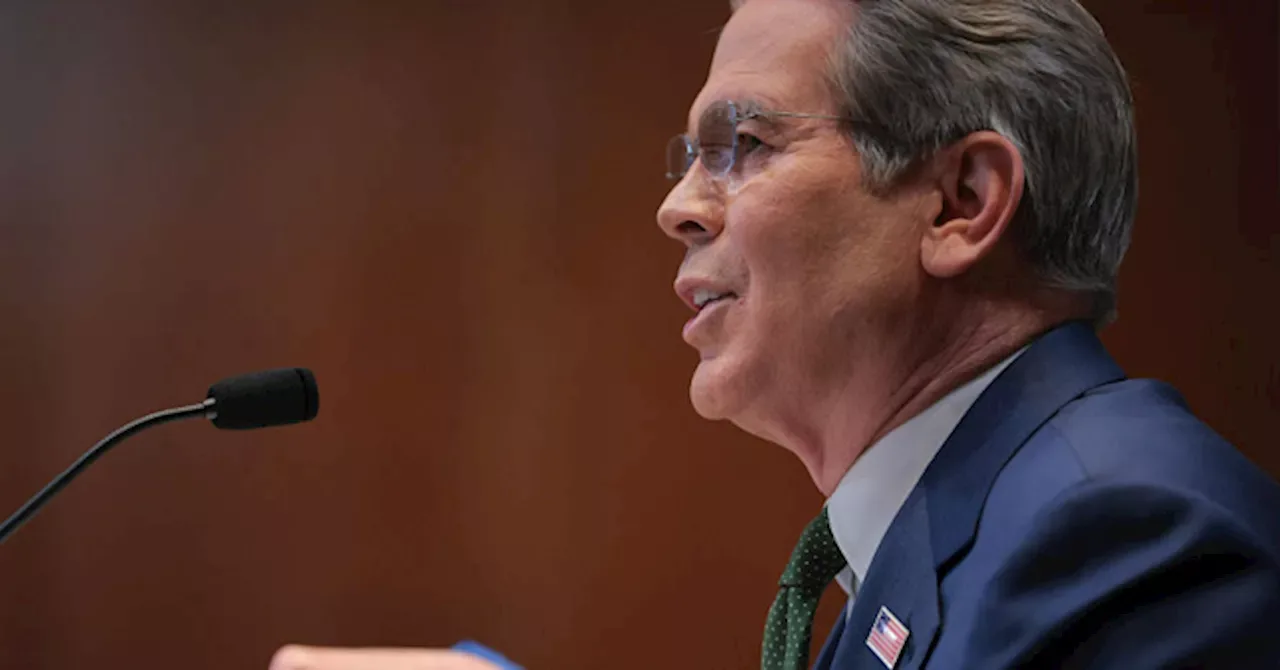
The U.S. Treasury Department's Office of Foreign Assets Control announced new sanctions against 35 entities and individuals on Tuesday, targeting what it described as Iran's shadow banking infrastructure. The designated targets oversee networks that facilitate the movement of tens of billions of dollars, according to OFAC, enabling Iran's armed forces and the Islamic Revolutionary Guard Corps to access the international financial system.
Treasury Secretary Ryan Bessent characterized the shadow banking system as a critical financial lifeline for Iran's military operations. "Iran's shadow banking system serves as a critical financial lifeline for its armed forces, enabling activities that disrupt global trade and fuel violence across the Middle East," Bessent said. The networks allow Iran to receive payments for illicit oil sales, purchase weapons components, and transfer funds to regional proxies, OFAC stated.
The sanctions target what Iran calls "rahbar companies"—shell companies that coordinate with Iranian exchange houses and front companies across multiple jurisdictions to facilitate payments for sanctioned trade. These entities work to circumvent Iran's exclusion from the formal international financial system by opening accounts with foreign banks. OFAC warned that any foreign financial institution engaging with these networks faces secondary sanctions.
Bessent said the broader Treasury operation, termed Operation Economic Fury, has targeted Iran's international shadow banking, cryptocurrency access, shadow fleet operations, weapons procurement networks, and funding for regional proxies. The campaign has also targeted Hengli Petrochemical, one of China's largest independent refineries, along with approximately 40 shipping companies and vessels involved in transporting Iranian oil.
According to Treasury's assessment, the blockade strategy has created a critical pressure point at Iran's primary oil export terminal on Kharg Island, where storage capacity is nearly exhausted. Bessent stated that Iran faces approximately $170 million in daily lost revenue from forced production cuts, with potential permanent damage to oil infrastructure. Iranian oil wells can sustain permanent damage from prolonged production reductions of that magnitude.
Iranian state media recently published reports suggesting the regime acknowledges the mounting pressure. The Society of Seminary Teachers in Qom described the death of former Supreme National Security Council secretary Ali Larijani as an irreplaceable loss, characterizing him as "one of the most capable managers of the revolution."
Bessent noted that under what he called Trump's maximum pressure campaign, Tehran's inflation has doubled and its currency has depreciated significantly. He indicated that financial impacts lag behind physical sanctions by approximately two to four months, as oil typically requires two months to reach foreign ports and another two months for payment processing—a delay that theoretically provides Iran a window to negotiate with the United States.