Chief Justice John Roberts took the stage at Georgetown University Law Center to push back against what he called a widespread "misunderstanding" about his court's record on precedent. The statistics he cited were accurate: the Roberts court had explicitly overruled fewer precedents than any of its modern predecessors, averaging less than two per year. Yet within days, the court's actions suggested a more complicated picture.
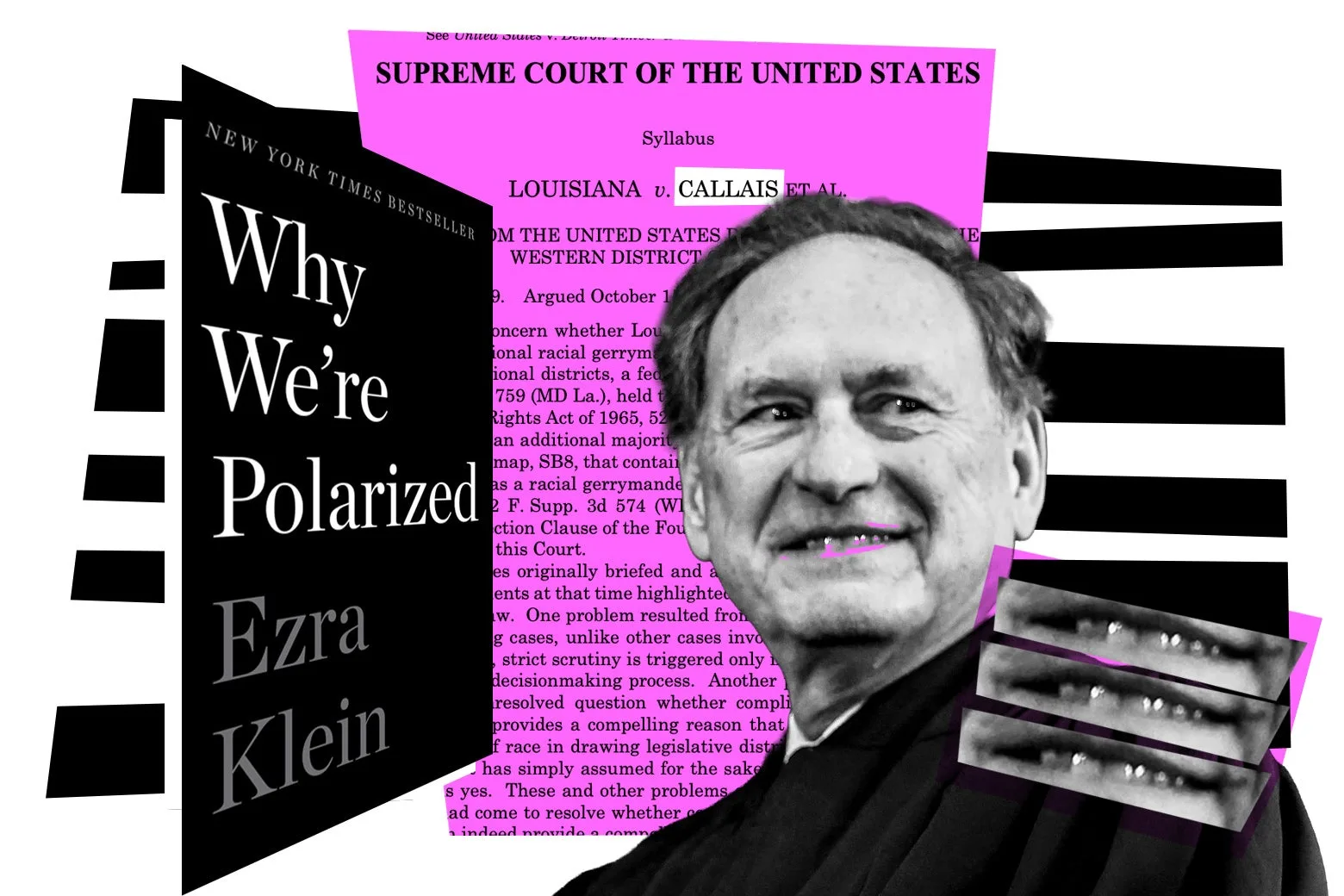
Just ten days after Roberts's defense, the Supreme Court allowed President Donald Trump's firing of two senior labor officials to stand, effectively sidestepping a 1935 precedent known as Humphrey's Executor that had long protected independent agency leaders from presidential dismissal without cause. More dramatically, the court issued a 6-3 decision in Louisiana v. Callais that fundamentally altered voting rights protections, requiring voters to prove lawmakers intentionally discriminated against minorities rather than simply show the discriminatory effect of redistricting.

The distinction between formally overturning a precedent and practically dismantling it has become the central tension in debates over the court's direction. Justice Elena Kagan wrote in dissent that the majority had "overturned Congress's studied determination" about remedying racial inequalities in elections, even as Justice Samuel Alito's majority opinion insisted it had not overruled prior case law. Three years earlier, in Allen v. Milligan, the same court had rejected Alabama's argument that lawmakers need not consider race when drawing districts, permitting challenges based on discriminatory effects. Now the burden had shifted entirely.
Steve Vladeck, a Georgetown law professor and Supreme Court analyst, described Wednesday's decision as "the latest example of a ruling from the Roberts court that, in the same breath, largely neuters a precedent without formally overruling it." The practical impact, he argued, differs sharply from explicit overruling. "When only the lawyers understand what is and isn't left of a prior decision, that makes it much harder to build the case for why the court, Congress or any other actor should respond."
Academic research underscores the gap between formal and functional overruling. Data collected by law professor Lee Epstein from 2005 to 2013 found that explicit overrulings occurred in only 4% of cases where advocates challenged prior decisions. Yet departures from precedent—instances where courts veer away without formally killing the rule—happened in roughly 28% of those same cases.
Richard Pildes, an election law expert at New York University, called the phenomenon "stealth overrulings." He told CNN that "in Callais, there's no question the court has completely rewritten the framework prior cases had established for interpreting the Voting Rights Act."
The court has handled some precedents with explicit clarity. When overturning Roe v. Wade in 2022, Chief Justice Roberts joined an opinion stating plainly: "Roe was egregiously wrong from the start." Two years later, Roberts himself wrote that Chevron v. Natural Resources Defense Council, a 1984 decision empowering federal agencies to interpret ambiguous statutes, "is overruled."
Yet the court's approach to other longstanding precedents remains ambiguous. The justices recently declined to formally reconsider a key 1990 ruling, Employment Division v. Smith, despite religious groups viewing it as insufficiently protective of their rights. One interpretation is that a majority has not settled on what should replace it. Another suggests the precedent has already lost so much force through prior rulings that formal overturning matters little. The same logic appears to apply to Humphrey's Executor as the court reviews Trump's challenge to independent agency structures.