

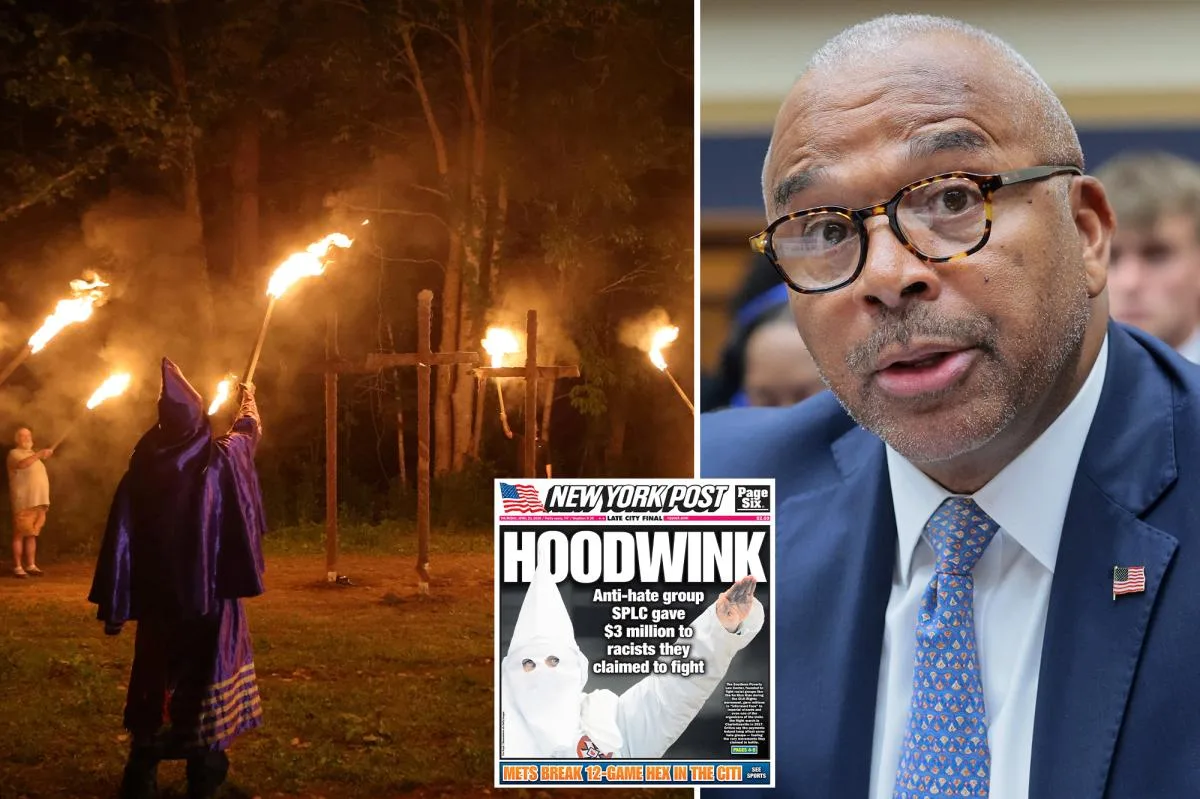
Southern Poverty Law Center’s interim CEO, Bryan Fair, appeared for a prolonged and contentious hearing before the House Judiciary Committee to address serious allegations that the organization secretly funded extremist groups, including the Ku Klux Klan and Aryan Nations. The Justice Department’s indictment, filed earlier this year, accuses the center of funneling millions in donor money to known hate groups over more than a decade.
Throughout nearly four hours of questioning, Fair repeatedly declined to comment on the specific charges, instead insisting that all allegations would be fully examined in the legal process underway in the Middle District of Alabama. Despite intense scrutiny, Fair broadly denied that the SPLC funds hate groups, describing the center’s payments as related to informants rather than direct support.

Republican Representative Wesley Hunt challenged Fair on the SPLC’s funding of informants tied to the Ku Klux Klan, noting that some informants were allegedly encouraged to maintain active leadership roles in the Klan, recruited new members, and were reimbursed for expenses such as cross-burning ceremonies. Hunt detailed how one informant reportedly received a monthly salary to stay involved, contradicting the SPLC’s stated anti-racism mission.
Another lawmaker, Rep. Harriet Hageman, pressed Fair regarding the SPLC’s alleged involvement in facilitating transportation to the 2017 “Unite the Right” rally in Charlottesville, Virginia, an event that culminated in violence leaving an anti-racism activist dead and two police officers killed in a helicopter crash. Fair denied funding hate groups but refrained from discussing the tragic incident in detail, deferring again to the ongoing DOJ investigation.
The accusations against the SPLC allege a pattern where financial support intended for informants tied to extremist organizations instead enabled their continued participation—and in some cases leadership—in those groups. Far from distancing itself, the SPLC is accused of incentivizing these informants to remain active, raising questions about the center’s role in both monitoring and inadvertently empowering extremist elements.
Fair’s testimony was supported by a prominent defense attorney, underscoring the organization's intention to vigorously contest the charges. The legal battle unfolds while the SPLC faces mounting congressional skepticism over its transparency and the true use of donated funds. The committee’s inquiries highlighted broader concerns about how anti-racism organizations collaborate with informants embedded in violent and extremist networks.
As the case progresses in the courts, Fair’s congressional appearance reinforced the party line that the SPLC does not support hate groups directly, even as detailed allegations paint a complex picture of financial flows tied to extremist activities spanning years.