

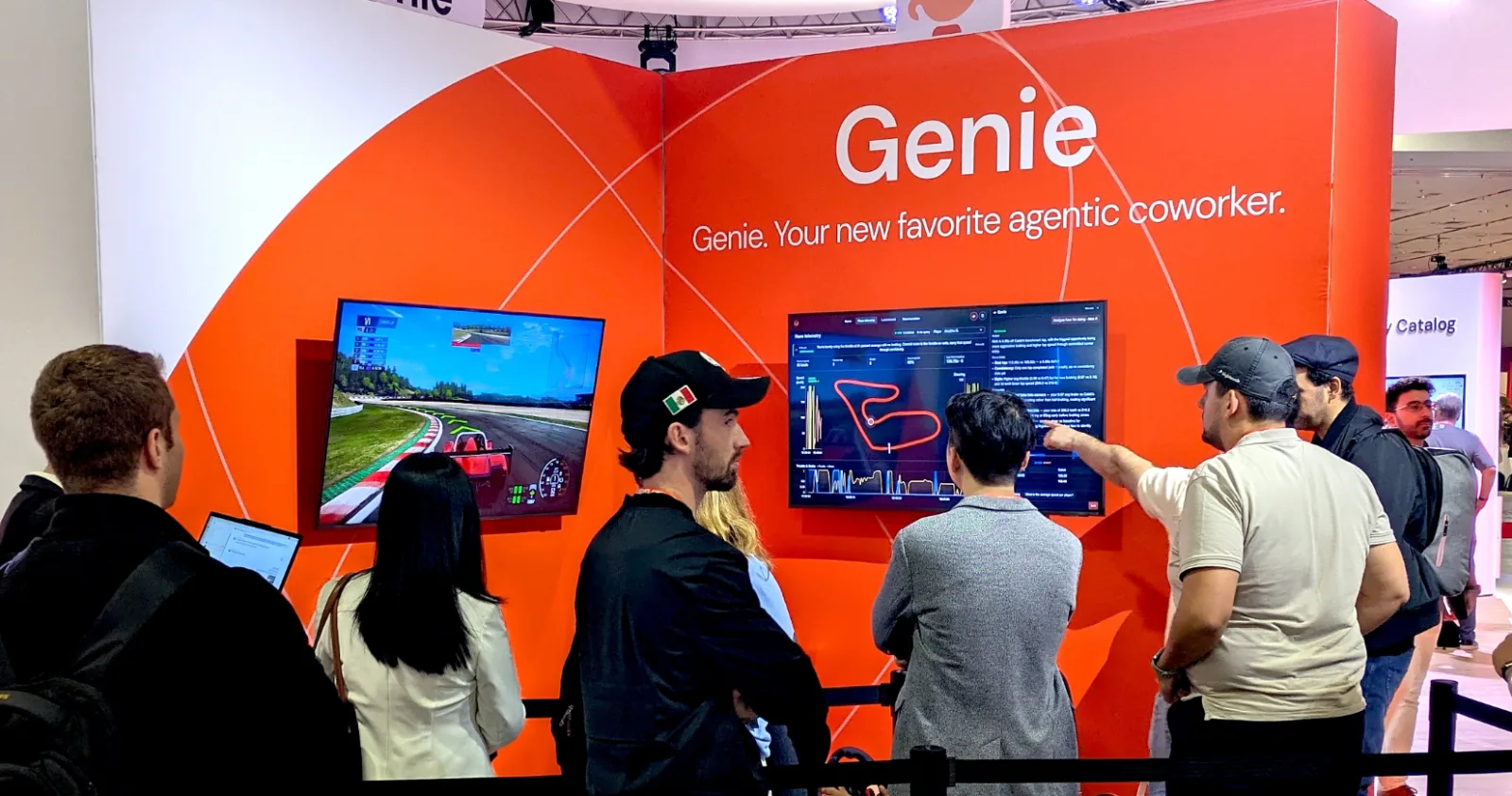
Databricks has launched Genie One, an AI-powered assistant aimed at transforming how businesses automate their workflows and manage scattered information. Unlike traditional AI tools that merely respond to queries, Genie One actively performs tasks by synthesizing data from diverse sources across an organization.
Genie One builds on Databricks’ existing Genie suite but moves beyond conversational analytics to become a fully agentic coworker. It processes both structured and unstructured data, including information outside the Databricks ecosystem, such as business documents, communication tools, and enterprise applications. This capability helps it navigate the fragmented nature of business knowledge, which is often distributed across multiple platforms and employee expertise.

At the company’s recent Data + AI Summit in San Francisco, Databricks also announced Lake Transactional/Analytical Processing, a new architectural framework that merges operational and analytical workloads into a unified data lake. Co-founder and CEO Ali Ghodsi explained that Genie One addresses the shortcomings of conventional AI copilots, which usually struggle without centralized and comprehensive context, especially outside software development where data is siloed.
Central to Genie One’s functionality is the Genie Ontology, a dynamic context layer that continuously scans and maps an organization’s knowledge base. This layer integrates data from Databricks and external sources such as workplace apps, files, tickets, chats, and meetings. By maintaining an up-to-date, evolving representation of business information, Genie One can generate accurate responses and execute tasks confidently, reducing the risk of errors that often arise with AI guessing in regulated industries.
Thanks to this embedded “ground truth,” Genie One offers faster and more reliable automation for critical business functions—including sales, marketing, finance, and operations—where fragmented data has historically hindered AI effectiveness. The assistant’s ability to adapt through self-improvement enables it to respond to complex business demands rather than providing generic or uncertain answers.