

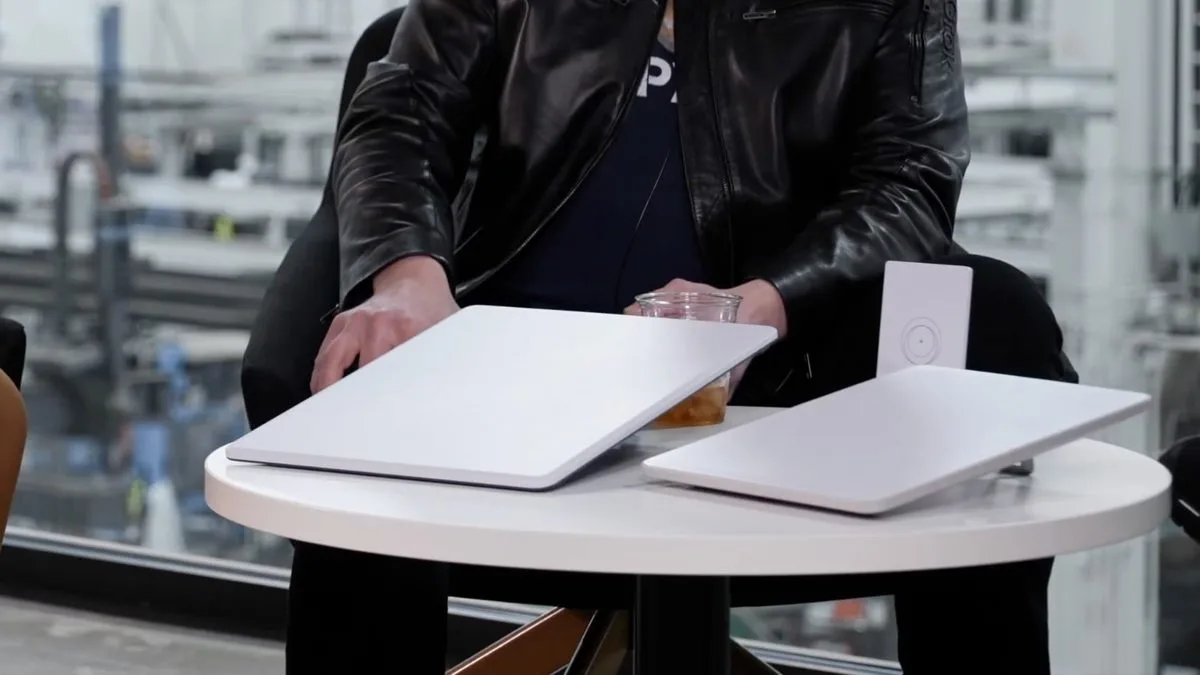
SpaceX is preparing to introduce two redesigned Starlink dishes that promise enhanced portability and thinner profiles, according to a recent video interview featuring CEO Elon Musk. These new models, showcased alongside Musk, represent a significant shift toward more travel-friendly satellite internet terminals.
Musk noted that these upcoming Starlink terminals have already been produced in higher volumes than the current generation. While specific pricing and launch details remain undisclosed, their reduced size suggests they could easily fit into a backpack, making them especially convenient for customers who require mobile internet access.

Hints about these new dishes first emerged through firmware updates spotted by Ukrainian analyst Oleg Kutkov, revealing two models: a successor to the standard dish, referred to as "rev5," and a ruggedized variant of the smaller Mini dish. Notably, the new Mini model is expected to come with a built-in battery and a USB-C port, enhancing its usability for on-the-go users.
SpaceX’s strategic rollout of these dishes coincides with the company’s drive to expand Starlink’s user base. Recent filings show Starlink exceeded 12 million active customers, with a paid subscriber count doubling year-over-year to over 10 million. However, average revenue per user declined, indicating competitive pressures or pricing adjustments amid rapid growth.
Alongside the dish announcement, Musk also highlighted SpaceX’s work on orbiting data centers powered by “AI satellites.” These satellites, with a new design featuring a 70-meter wingspan, are intended to support artificial intelligence workloads from space. Musk emphasized that these AI satellites are simpler than traditional Starlink satellites, lacking complex phased array and parabolic antennas.
Musk addressed concerns about orbital congestion tied to SpaceX’s request to deploy up to one million AI satellites, dismissing them as manageable. The company appears to be positioning both hardware innovations—the portable Starlink dishes and the AI satellites—as key elements in its upcoming IPO, which could raise billions to fuel future expansion.