

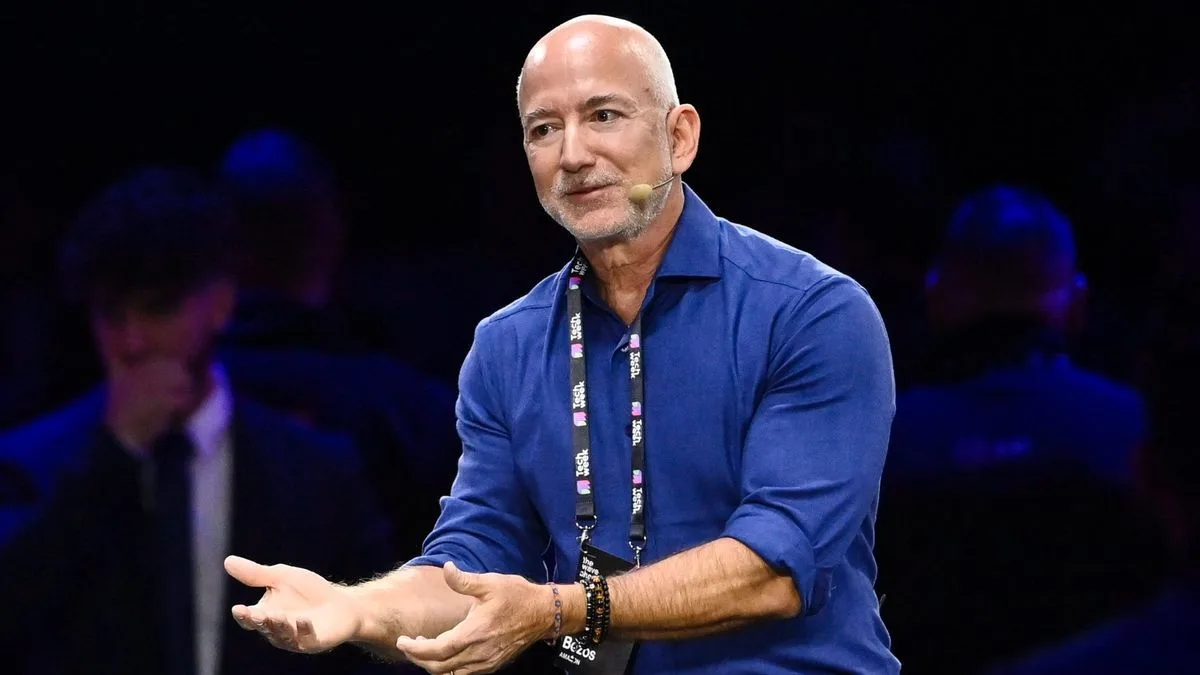
The common narrative that artificial intelligence will lead to massive job cuts faces significant skepticism from Amazon founder Jeff Bezos, who foresees a contrasting future. Speaking at the VivaTech conference in Paris, Bezos dismissed concerns that AI will make human workers obsolete. Instead, he argued AI advancements will enhance productivity and drive a shortage of labor.
Bezos highlighted that AI’s ability to reduce the time required for complex tasks will empower workers, making them more effective rather than redundant. This increased efficiency, he suggested, will contribute to more job openings as businesses expand and adapt. Such a perspective runs counter to recent headlines about companies cutting thousands of jobs amid AI-driven restructuring, including firms like Pinterest, Block, Atlassian, Meta, and Cisco Systems.

The concern around AI replacing human jobs has grown as numerous organizations undergo workforce reductions linked to AI integration. However, Bezos’ outlook finds support in growing entrepreneurship trends and evolving workforce dynamics. The U.S. Chamber of Commerce reports a surge in new business applications in recent years, reflecting shifting labor patterns toward flexibility and new forms of employment.
Experts like finance professional Oluwapelumi Joseph echo this view, noting history’s pattern of innovation-triggered job transformations rather than permanent unemployment. AI, according to Joseph, will foster new employment types and opportunities rather than just eliminating existing roles.
Moreover, ongoing studies reinforce how AI augments human decision-making and accelerates skill acquisition, helping novices perform at expert levels in fields such as coding, data analysis, and writing. This suggests a labor environment increasingly shaped by AI collaboration rather than displacement.
While fears persist about AI’s impact on human jobs, Bezos presents a future where AI-induced productivity gains make labor a scarcer commodity. Workers' voluntary withdrawal from the workforce for diverse reasons could intensify this shortage, further complicating the employment landscape.