

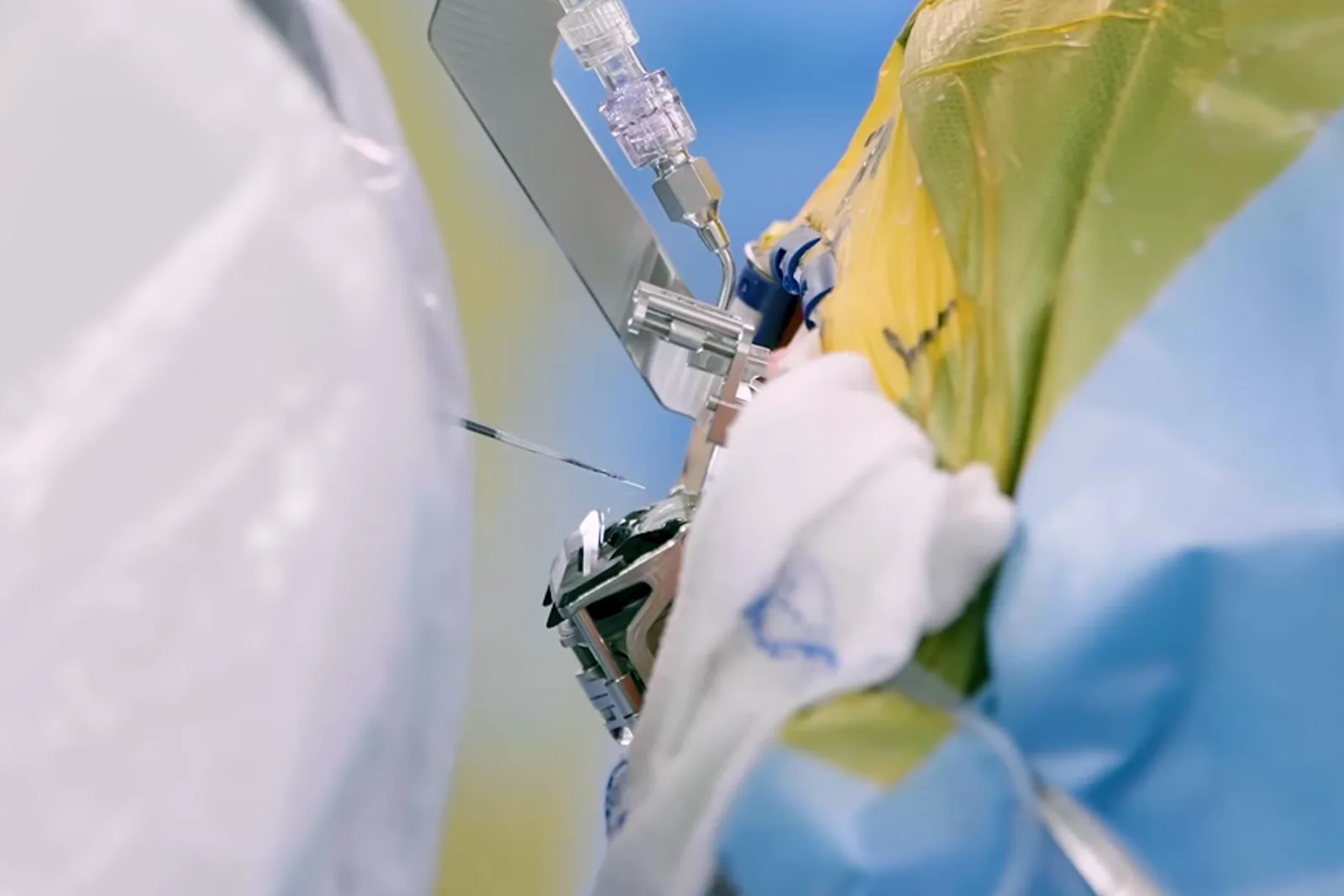
Neuralink has introduced a significant breakthrough in brain-computer interface (BCI) surgery by successfully implanting electrode threads through the dura mater without cutting or removing it. This new transdural procedure, conducted during a clinical trial at a Toronto hospital, aims to make brain implant surgeries safer, less invasive, and more scalable.
Previously, Neuralink’s implantations required a durectomy—the removal of the tough, leather-like membrane covering the brain—to access cortical tissue. The new method avoids this delicate surgical step by redesigning the insertion needle to penetrate the dura, which is over ten times thicker than Neuralink’s ultra-fine electrode threads. This innovation represents a critical advance toward automation and routine use of BCIs beyond limited clinical settings.

One of the main challenges in this technique is the brain’s constant motion and the dense network of blood vessels hidden beneath the dura, which necessitates precise imaging to prevent injury. Neuralink addressed this by developing synthetic dura models to test and refine surgical instruments and by employing cutting-edge imaging technologies. Indocyanine green (ICG) video angiography enables real-time visualization of blood flow, while optical coherence tomography (OCT) measures the brain’s surface movements accurately during surgery, allowing safe navigation around vital vessels.
The company highlights that eliminating the durectomy simplifies the operation, potentially making it safer and easier to replicate. Neuralink described the removal of this step as removing “one of the most delicate manual steps” in the implantation process, thus opening the door for procedures to be scaled to a wider population who could benefit from neural implants.
Following the transdural implantation, the participant was able to control a cursor with their thoughts within an hour, and the recovery proceeded according to expectations. This outcome signals important progress toward functional, scalable BCI technology designed initially for patients with neurological impairments affecting movement or communication.
This development contrasts with other companies such as Meta, which prioritize non-invasive brain imaging combined with AI to decode neural signals, citing scaling challenges of implanted devices. Neuralink’s approach demonstrates a commitment to refining implantable BCIs, aiming to streamline the surgical process and expand accessibility in the future. Both companies currently focus on aiding those with neurological disabilities, yet the growing research investments suggest long-term ambitions to develop consumer neurotechnology.