

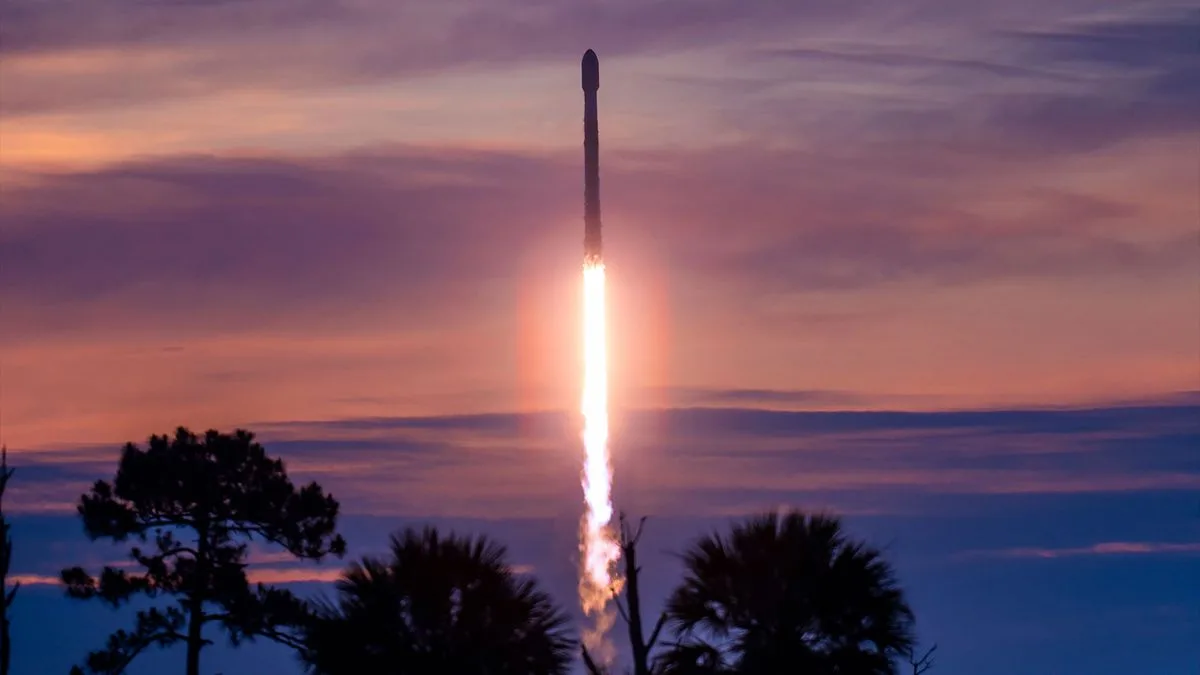
SpaceX has reached a new benchmark in rocket reusability, successfully launching and landing its Falcon 9 booster for the 35th time. The latest mission deployed 29 Starlink satellites into low Earth orbit, extending the company’s satellite internet network and demonstrating the durability of its reusable technology.
The rocket lifted off early from Cape Canaveral Space Force Station in Florida and returned to the droneship A Shortfall of Gravitas stationed in the Atlantic Ocean, marking a flawless landing to complete the record-breaking flight. This milestone brings the Falcon 9’s first stage reuse count closer to NASA’s space shuttle orbiter record of 39 flights.

With this launch, SpaceX has expanded its Starlink constellation to over 10,580 active satellites, a track documented by space analyst Jonathan McDowell. Starlink’s global internet coverage offers broadband access, including in-flight Wi-Fi and direct connections for select mobile carriers. The mission also represents SpaceX's 66th Falcon 9 flight of the year and its 660th mission overall.
Just a day earlier, SpaceX launched another Falcon 9 from Vandenberg Space Force Base in California. That flight was notable for carrying 21 Starlink satellites and two Starshield satellites for U.S. military use. The Falcon 9 booster on that mission was flying for the 10th time, underscoring SpaceX’s ongoing success in reusing rocket hardware to reduce launch costs and increase cadence.