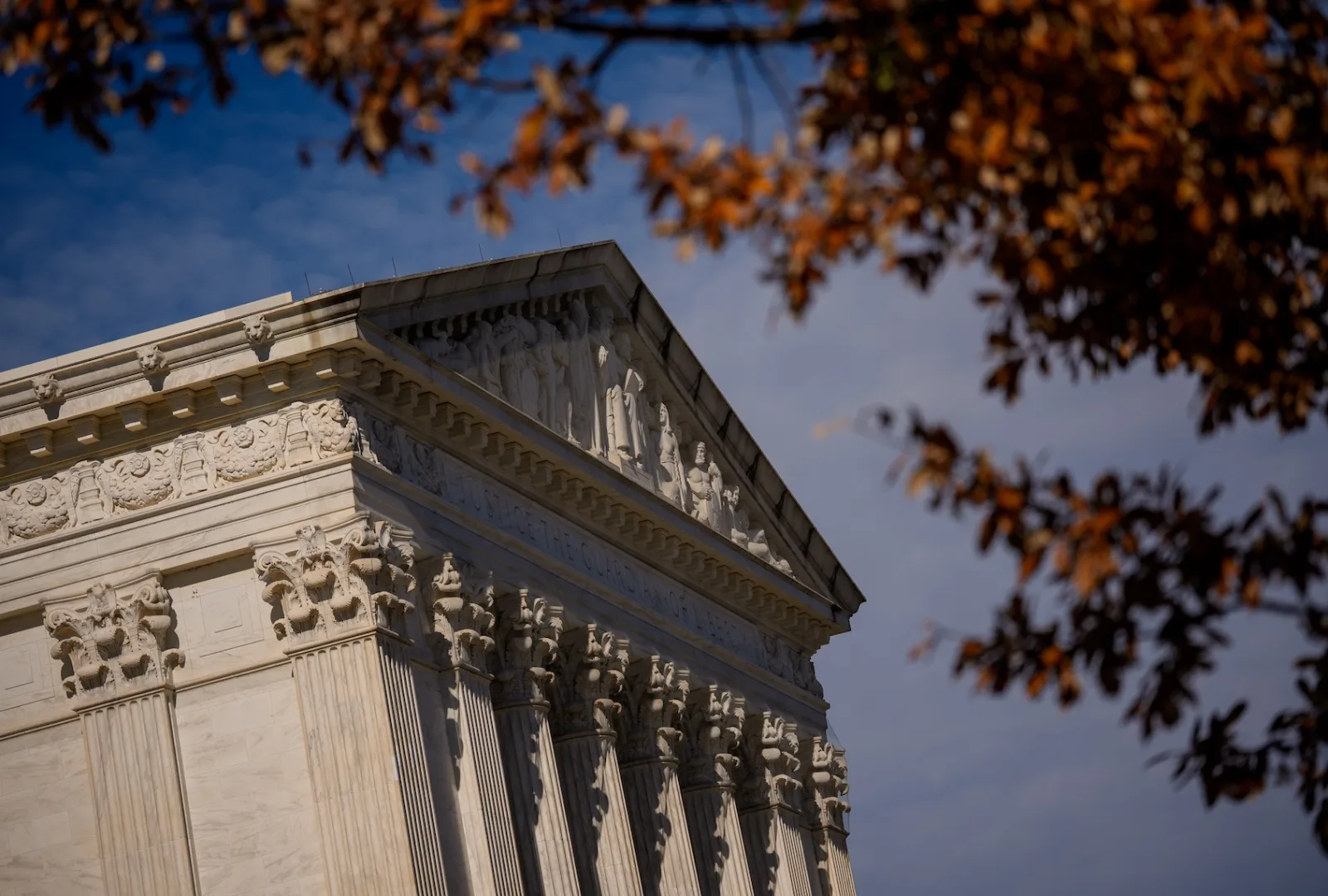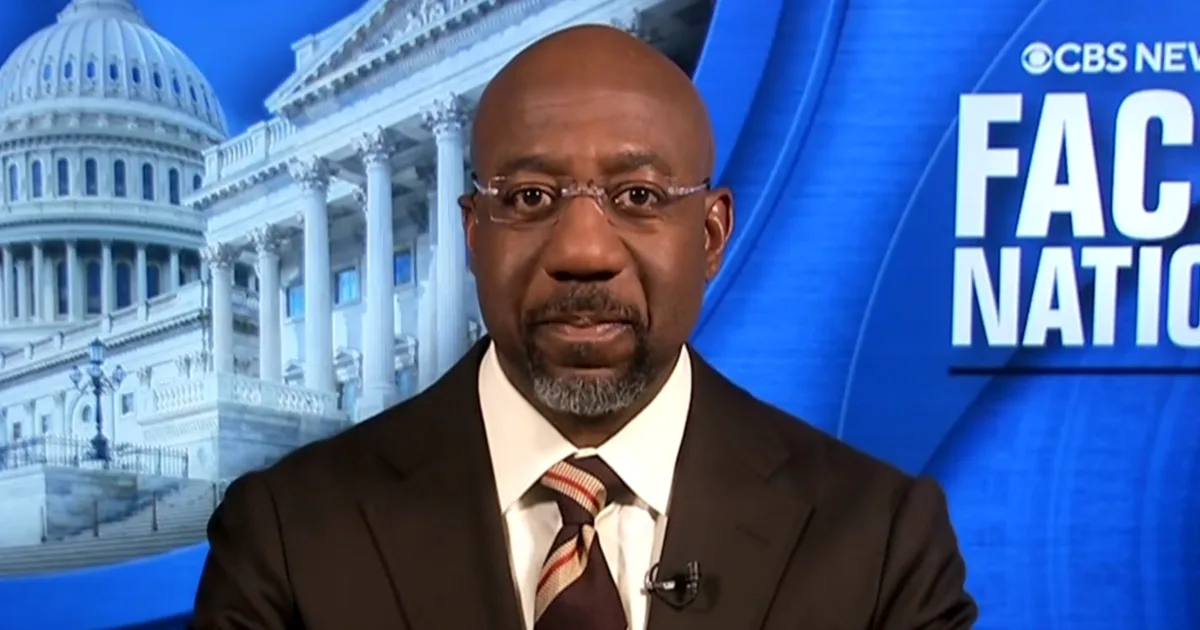
Senator Raphael Warnock, a Georgia Democrat, appeared on "Face the Nation with Margaret Brennan" on May 3, 2026, to discuss a 6-3 Supreme Court decision that struck down Louisiana's congressional map. The ruling eliminated a second majority-Black district created under the Voting Rights Act, prompting the three liberal justices to dissent on the grounds that the decision would "eviscerate" the landmark 1965 law.
Warnock characterized the decision as a "massive and devastating blow" to democracy and people of color in the South. He argued that the court's requirement to prove discriminatory intent in gerrymandering cases ignores American history, particularly the century following the 15th Amendment when voting rights were denied despite ostensibly race-neutral methods. He also pointed to the 2013 Shelby v. Holder decision, which weakened Section 5 of the Voting Rights Act, saying the racial voter turnout gap has grown wider and twice as fast in states formerly under federal preclearance requirements.

When asked whether Congress should update the law rather than restore it to its original 1965 form, Warnock expressed frustration with critics more concerned about the remedy than the disease. He cited former Chief Justice John Roberts' assertion in 2013 that the racial turnout gap had disappeared, which Warnock said was contradicted by subsequent data. He also referenced Justice Ruth Bader Ginsburg's analogy comparing the removal of voting protections to discarding an umbrella during a rainstorm.
Warnock described what he called "21st Century Jim Crow tactics," including moving and closing polling places in Black and Brown communities, longer voting lines, and voter roll purges that disproportionately affect people of color. He stated that the Supreme Court decision gives politicians a green light to manipulate district lines even after voters overcome these barriers.
Pressed on whether he wanted Congress to reinstitute preclearance requirements for Southern states as they existed in 1965, Warnock affirmed the position. He acknowledged that Congress now includes a record 66 Black members, according to Pew Research, but warned that the court's decision will fuel a redistricting arms race between both parties, ultimately harming Black representation and democracy itself.
When confronted about his support for partisan redistricting by Democrats in states like California and Virginia, Warnock argued that his party could not "unilaterally disarm" after former President Donald Trump initiated an aggressive redistricting campaign. He emphasized that the real solution is to ban partisan gerrymandering altogether and noted he has introduced a bill to do so, which has received no Republican support so far.
Brennan noted that governors in Louisiana, Alabama, South Carolina, and Tennessee have already indicated interest in redrawing their congressional maps following the Supreme Court ruling. Warnock responded that the redistricting cycle could end immediately if Congress passed his legislation.