

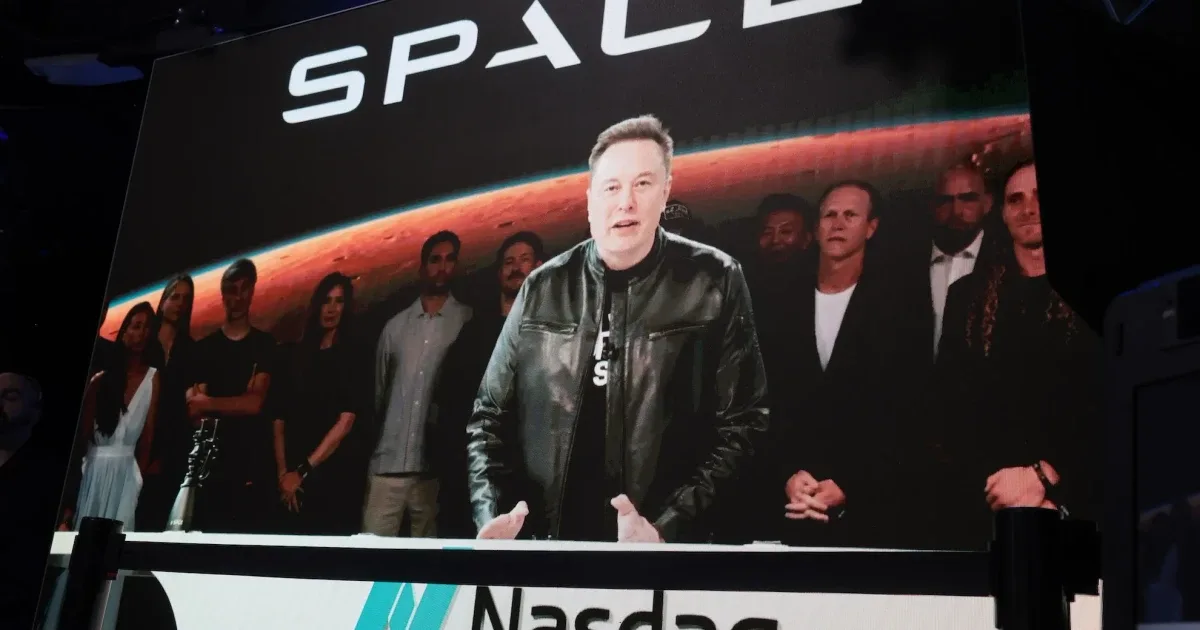
SpaceX’s public market debut sent shockwaves through the space and satellite sectors by briefly raising the company’s valuation above $2 trillion, an unprecedented milestone in the industry. The initial public offering priced at $135 per share valued the company at $1.77 trillion, with market enthusiasm pushing the valuation temporarily higher on Nasdaq trading. This massive influx of capital backed by the success of its Starlink broadband division positions SpaceX with a financial edge few competitors can match.
The driving force behind SpaceX’s breakneck valuation growth is Starlink, its satellite broadband segment, which generated more than 60% of the company’s revenue in fiscal 2025. The star performer hauled in $11.39 billion that year, out of SpaceX’s total $18.7 billion revenue, and contributed roughly 69% of the revenue in the first quarter of 2026 alone. This dramatic shift shows the company’s increasing reliance on broadband services rather than solely on its rocket launch business.

SpaceX’s robust cash flow has allowed it to operate profitably since around 2015, as revealed before the IPO. Recent filings indicate about $8 billion in profit on revenues between $15 billion and $16 billion for 2025. This steady profitability and the war chest raised through the IPO equip SpaceX with the ability to outlast rivals during market downturns, invest aggressively in new technologies, and absorb losses that would threaten smaller players.
The company’s entry into public markets has already disrupted investor sentiment elsewhere in the sector. Shares of smaller, publicly traded space and satellite companies saw declines as investors redirected capital toward SpaceX, highlighting a growing gap between SpaceX’s unparalleled financial backing and competitors’ more constrained resources. This divergence underscores SpaceX’s emerging role as a dominant force across multiple areas: launch services, satellite communications, and adjacent AI-related markets.
As SpaceX embarks on this new chapter with a public listing, its leadership, including President Gwynne Shotwell, has underscored the strategic importance of Starlink’s revenue generation and the company’s broad ambitions within defense, AI applications, and space infrastructure. With an IPO fueling its expansion, SpaceX’s enhanced funding capabilities could significantly reshape competitive dynamics in the space economy for years to come.