

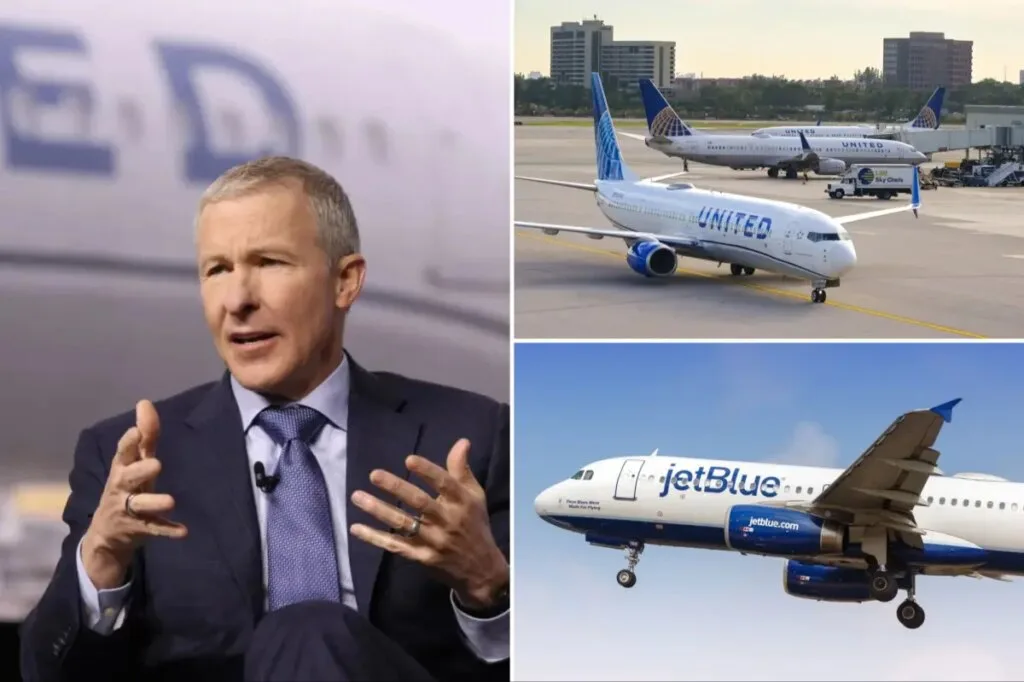
United Airlines does not currently plan to pursue a large-scale merger following American Airlines’ rejection of a merger proposal, according to United’s Chief Executive, Scott Kirby. Despite this setback, Kirby confirmed the company remains interested in acquiring airport slots, gates, or other assets if rising fuel prices force weaker competitors to scale back operations.
Kirby explained that his outreach to American Airlines, which he initiated earlier this year and reportedly discussed with the Trump administration, was declined by American’s leadership over concerns that a merger would be anti-competitive and detrimental to consumers. He emphasized that such a transaction would have needed the cooperation of American’s management, which was not forthcoming.

The United CEO reaffirmed his belief that labor groups, shareholders, and customers would have supported a merger, but American’s public opposition made it unworkable. Kirby stated that any future talks with American would require a willing partner on the other side, leaving the door open for potential discussions down the line, although the likelihood remains low.
Addressing speculation, Kirby denied that United ever proposed granting the U.S. government a “golden share” or special control stake as part of a merger plan.
Fuel prices continue to challenge the airline industry, with higher costs testing profit margins and intensifying the divide between large, established carriers and smaller rivals. Kirby outlined this split as a contrast between airlines with strong customer loyalty and investment in brand and service, and those predominantly competing on price. He maintained that United, alongside Delta, has succeeded by focusing on customer experience, including technology, service quality, and reliability.
The airline expects that ongoing demand will allow it to recover the costs incurred from increased fuel prices later this year, despite higher fares potentially dampening ticket sales to some extent. Kirby dismissed criticism that leading U.S. airlines are suppressing competition, arguing that their market strength is a product of strategic investments valued by travelers.